
Last updated September 23, 2026
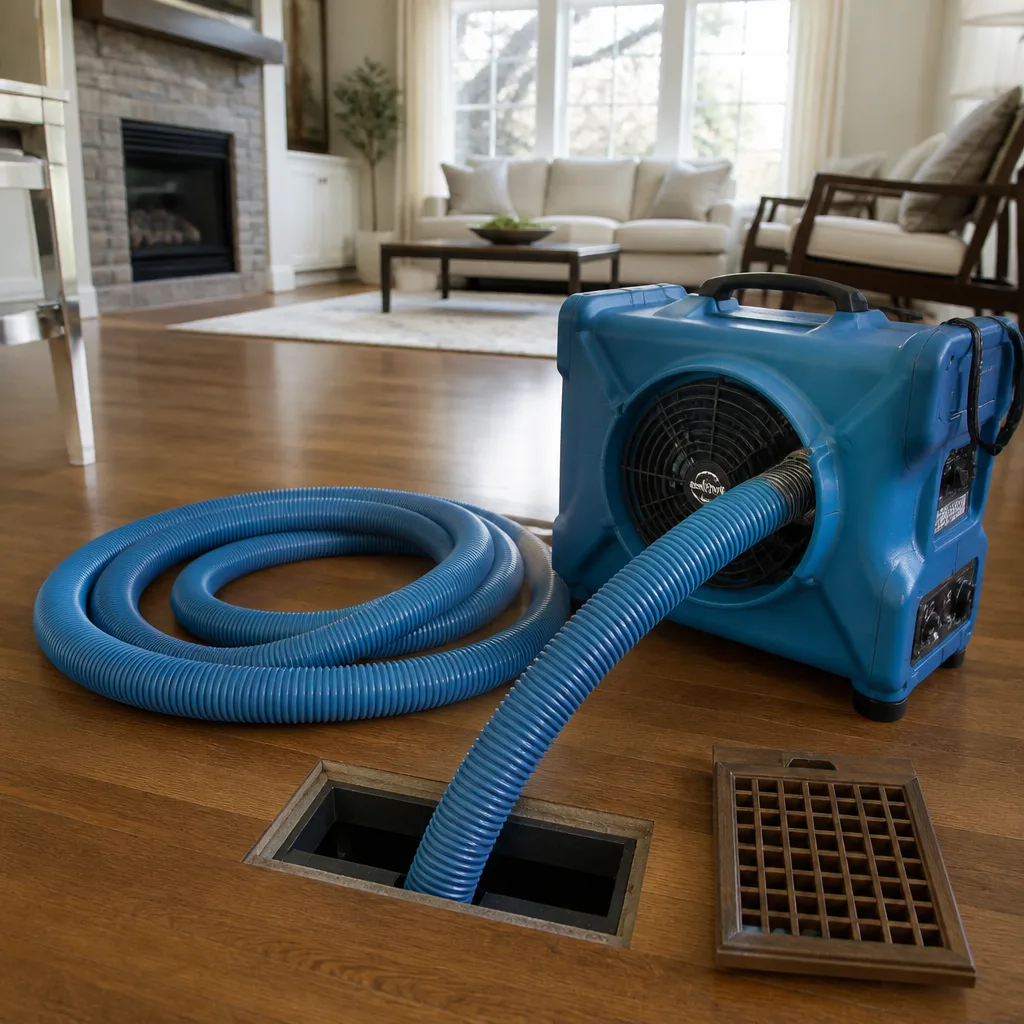
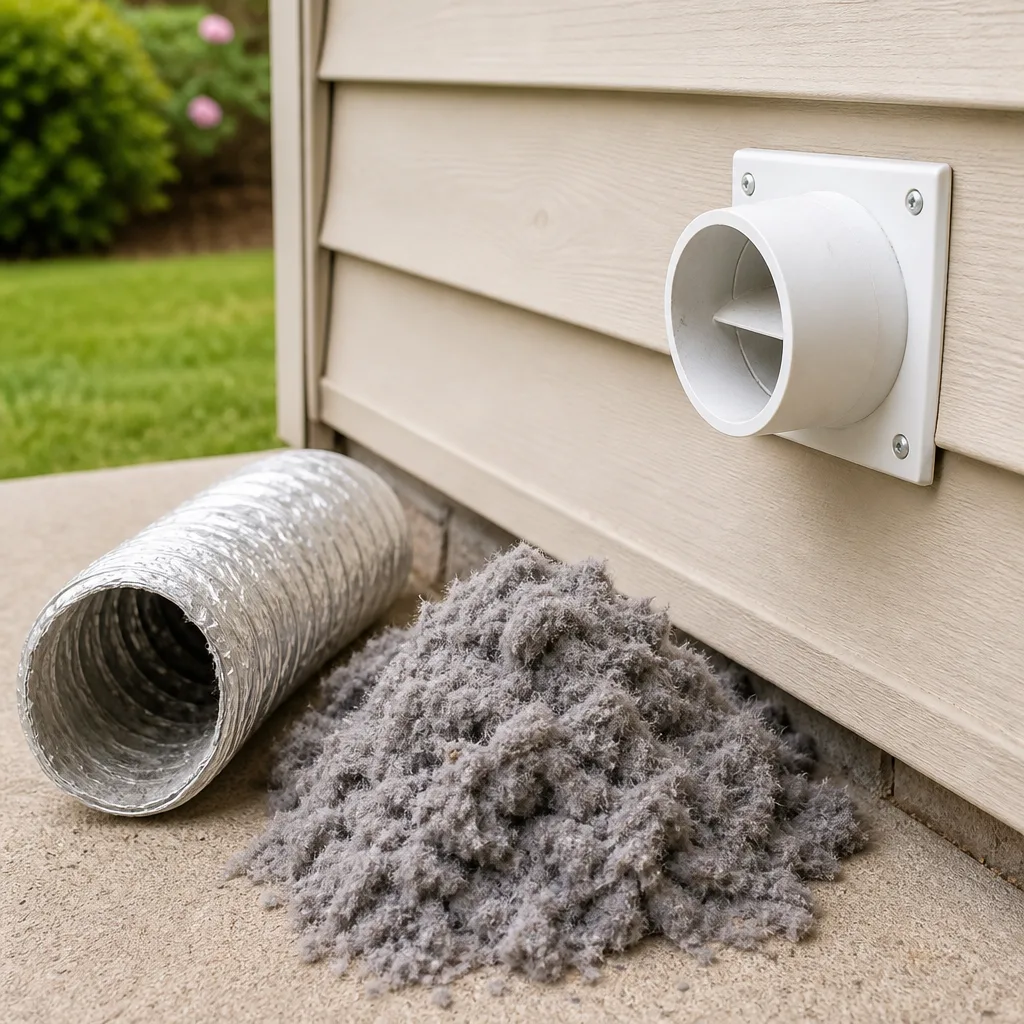
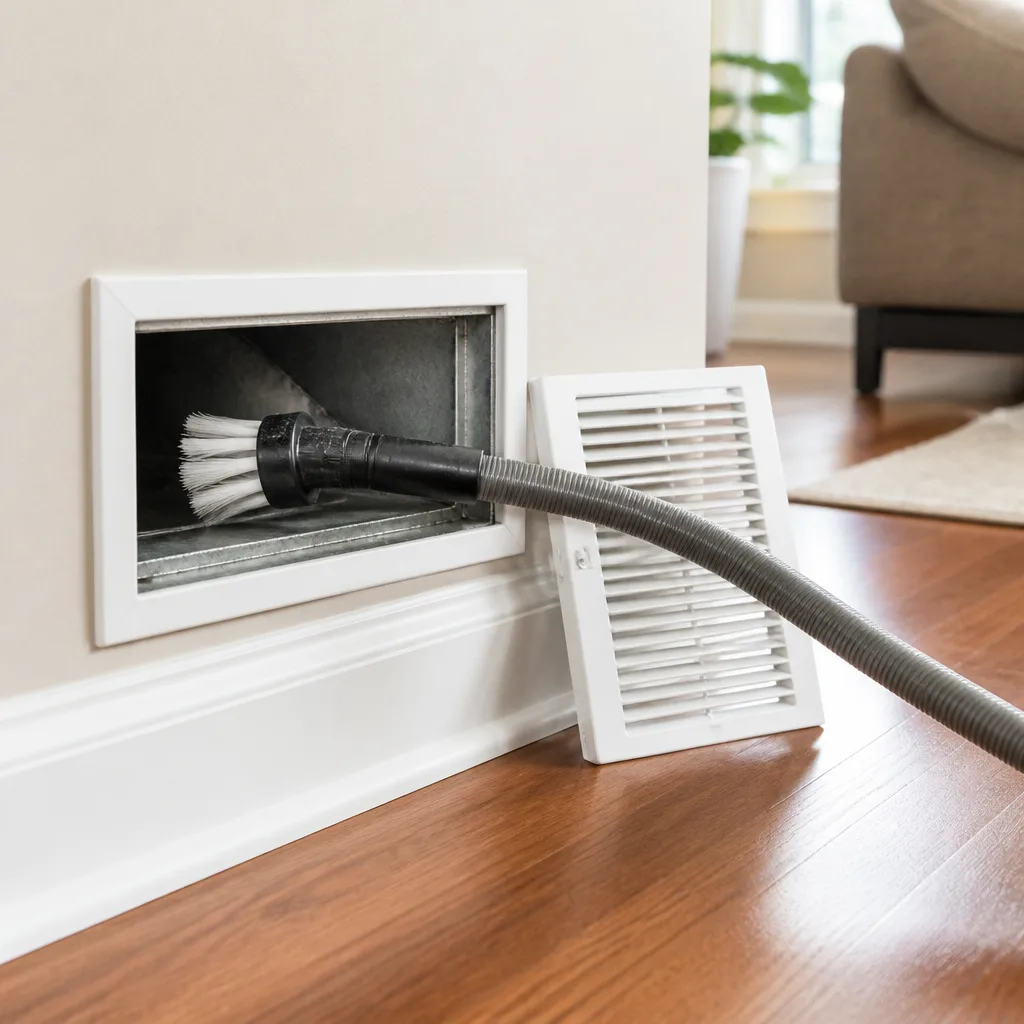
Whole-system duct and dryer vent check with before-and-after photos - you see exactly what came out of your vents
That "$99 whole-house special" is a bait ad - the real number appears once they are in your hallway, or the "clean" is a shop-vac at the register. We photograph the inside of your ducts before and after instead.
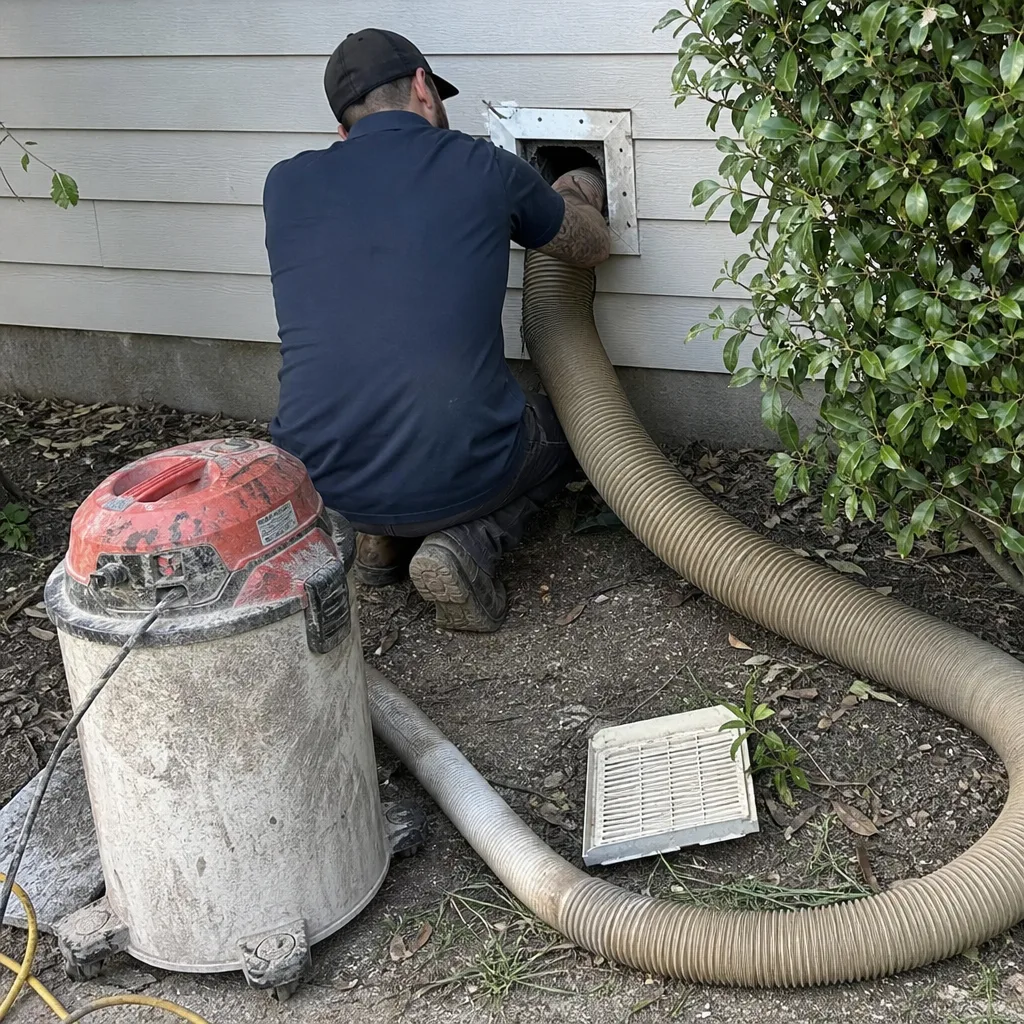 Before
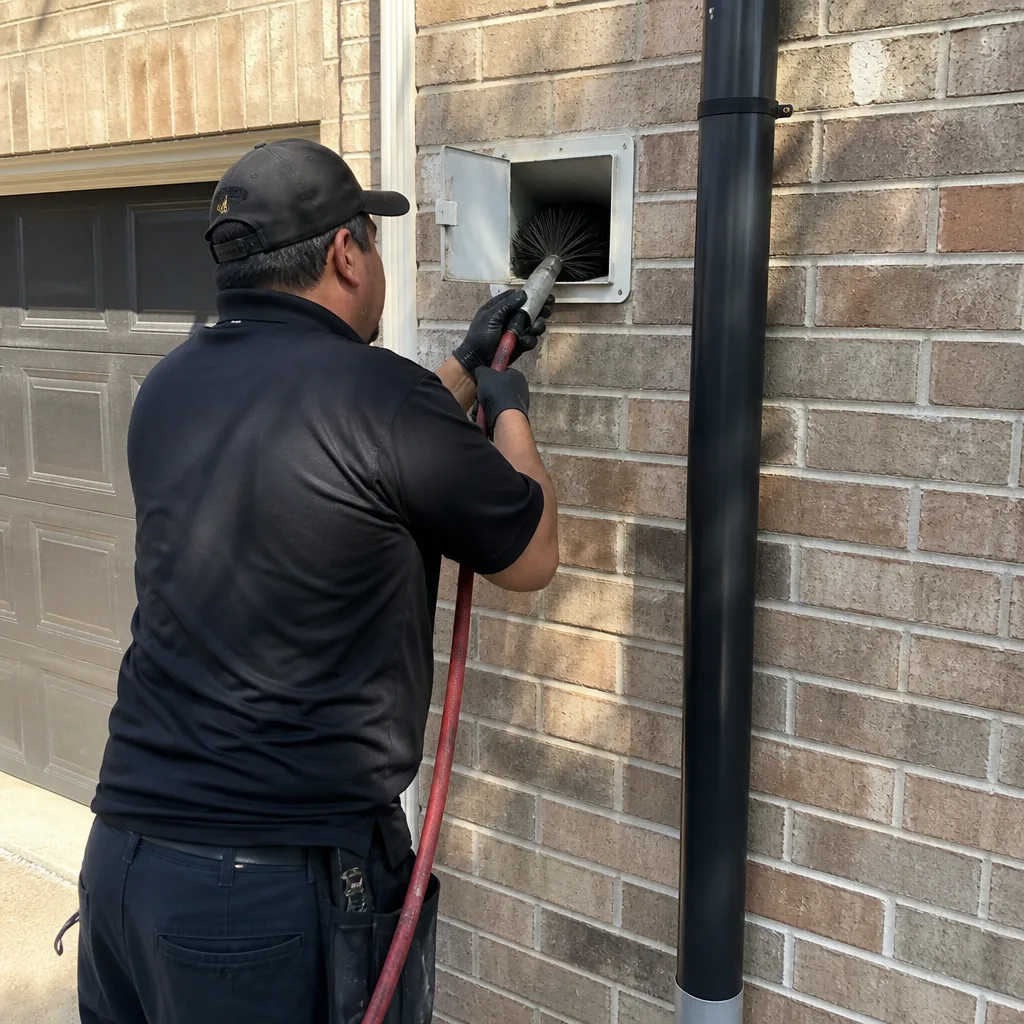 After
After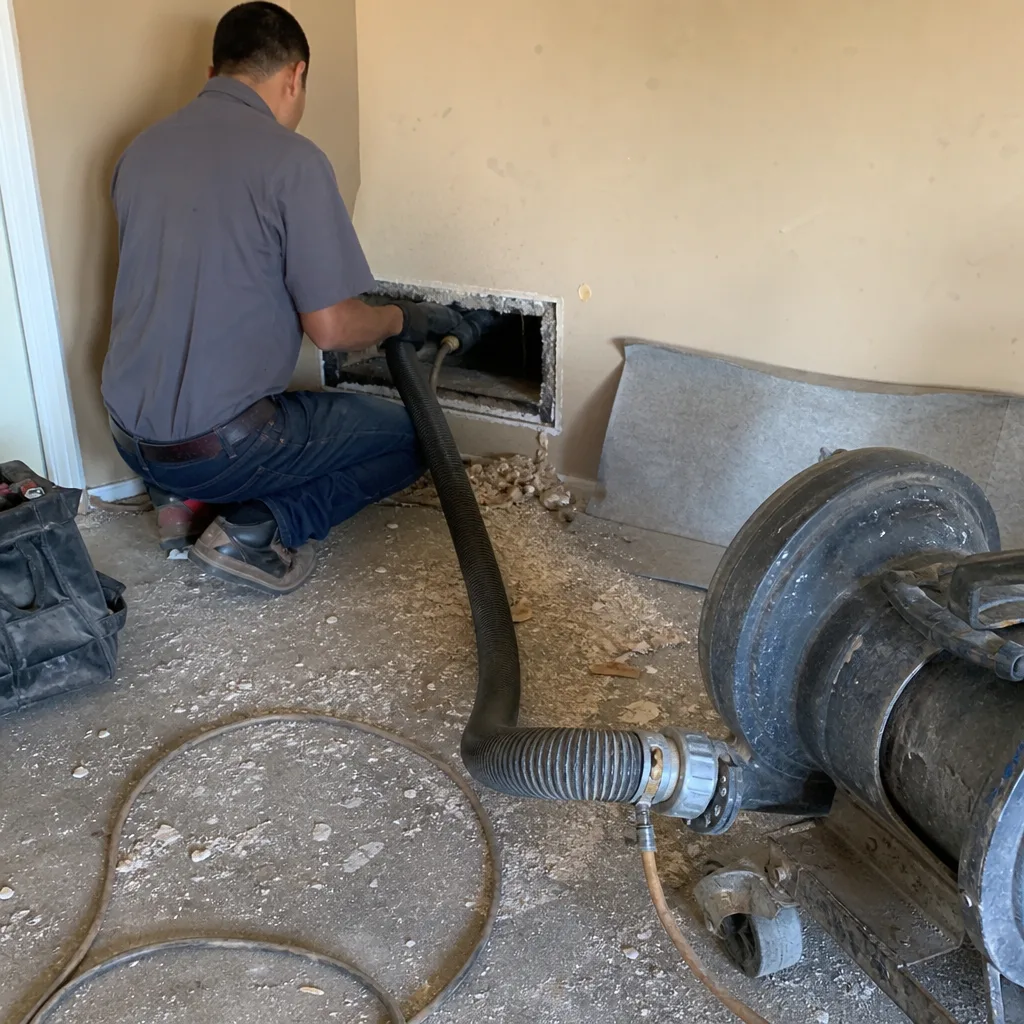 Before
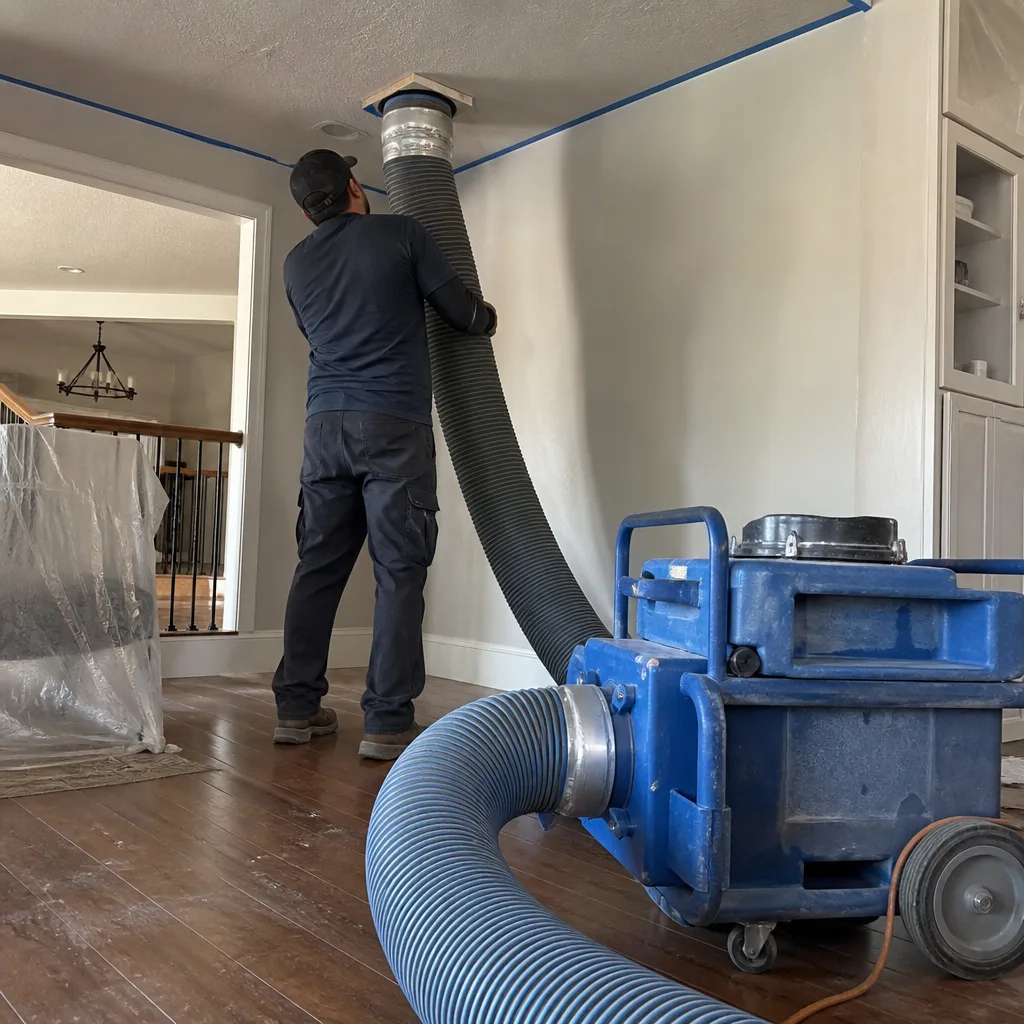 After
After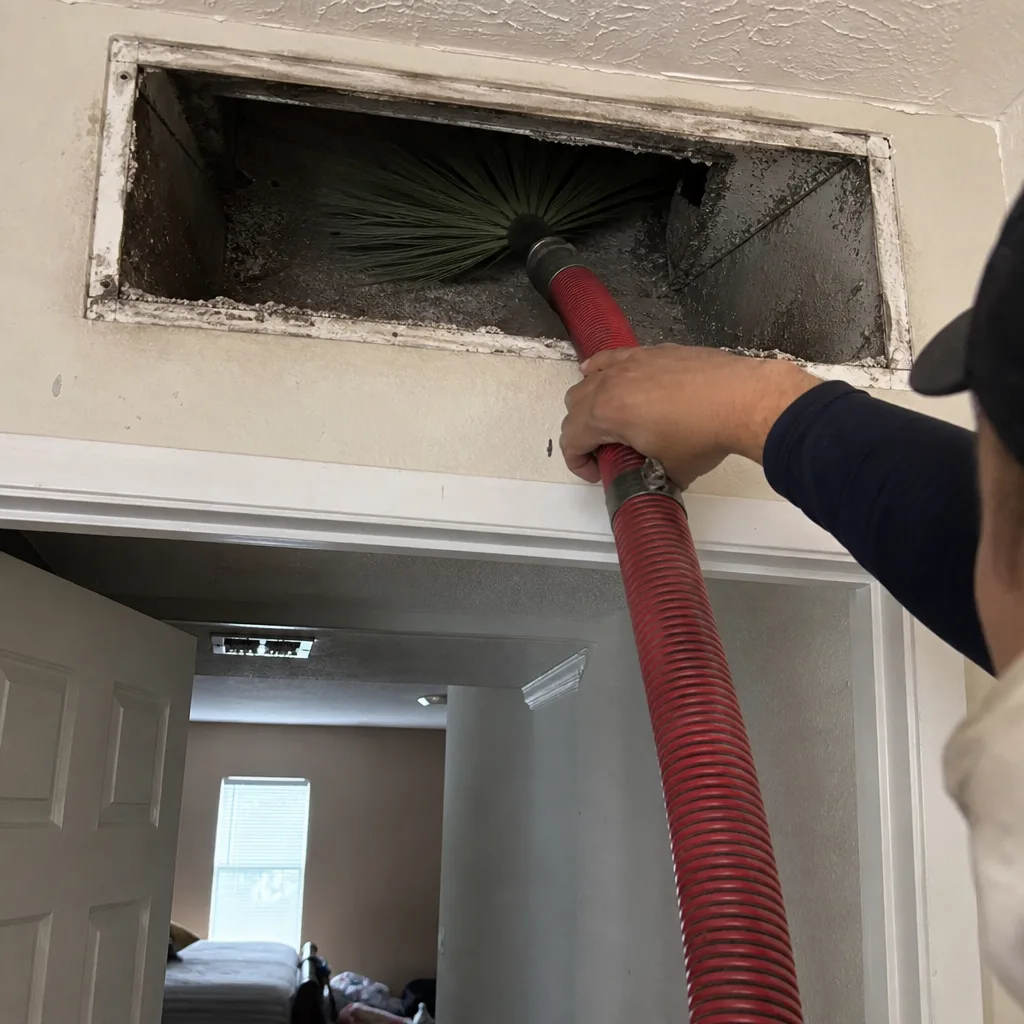 Before
 After
AfterHow to Hire a Air Duct Cleaning Contractor in Katy: A Step-by-Step Guide
There is no Texas state license required to clean air ducts. The barrier to printing a logo on a van and running a Groupon in Katy is exactly zero. That $79 coupon and that $800 quote can come from companies with identical shop vacs and opposite intentions. In this guide and our related Seasonal Air Duct Cleaning Care for Katy: Year-Round Homeowner’s Guide, you’ll learn a four-stage screening process that separates documented capability from sales theater before anyone sets foot in your house.
Quick Answer
Hiring a contractor for Air Duct Cleaning services in Katy requires verifying three credentials (NADCA membership, EPA 608 certification if refrigerants are involved, and general liability insurance of at least $1 million), demanding a written scope of work with line-item pricing before scheduling, and refusing any upsell introduced after arrival. The best contractors photograph every duct run before and after, deliver those photos as a standard job record, and back their work with a written guarantee.
Table of Contents
- Why Katy Homeowners Need a Screening Process
- Stage One: Verify the Three Credentials That Actually Matter
- Stage Two: The Phone Screen - Questions That Expose Incompetence
- Stage Three: How to Read a Quote Like a Contractor
- Stage Four: Red Flags That Appear Only at the Door
- What Your Post-Job Deliverable Should Contain
- How Katy’s Climate Affects Duct Cleaning Timing and Scope
- Common Mistakes to Avoid
- When to Call a Professional
- Frequently Asked Questions
- The Bottom Line
BeforeAfterWhy Katy Homeowners Need a Screening Process
Katy sits at the western edge of the Houston metro, where new construction in Cinco Ranch and Cross Creek Ranch has outpaced infrastructure planning for more than a decade. The homes built between 2015 and 2025, the ones selling at $400,000 to $700,000, share a problem: builders prioritized speed over ductwork quality. We’ve opened plenums, the main distribution box connected to your air handler, and found construction debris left from 2017 that the original HVAC contractor never removed.
The duct cleaning industry knows this. It also knows that most homeowners cannot see inside their ductwork without specialized cameras. The result is a market where appearance and reality diverge sharply. A clean-looking register, the visible grille where air enters your room, tells you nothing about the 3-inch debris layer at the first elbow, the angled fitting that changes duct direction, where airflow drops and particles accumulate.
Our screening process emerged from what we’ve documented across 52,000+ homes since 2013. The homeowners who get genuine value share one trait: they treat hiring a contractor as a vetting problem, not a price problem. They verify before they trust. They demand documentation before they sign. And they understand that a written price, delivered before work starts, is the single strongest protection against the bait-and-switch that defines this industry’s reputation.
The four stages below take roughly 30 minutes total. They can be completed from your kitchen table with a phone and a web browser.
Stage One: Verify the Three Credentials That Actually Matter
Three credentials separate qualified contractors from van-and-vacuum operations. Each can be verified in under five minutes. None are optional.
NADCA Membership
The National Air Duct Cleaners Association sets the only widely recognized standard for duct cleaning methodology, assessment protocol, and technician training. NADCA-certified companies follow ACR 2021, the assessment, cleaning, and restoration standard that defines what “clean” means in measurable terms.
To verify: visit nadca.com and use the Find a Professional search. Enter “Katy, TX” or the company’s name. A legitimate member appears with a certification number. Call NADCA directly at (346) 666-7165 if the search returns no result but the company claims membership. We’ve encountered contractors in the Katy area who display the NADCA logo without authorization; the association will confirm or deny membership within minutes.
What NADCA membership actually means: the company has passed a written examination on HVAC system cleaning, maintains at least one certified Air Systems Cleaning Specialist (ASCS), and agrees to follow ACR 2021 methodology. It does not guarantee honesty. It does guarantee a baseline of technical knowledge that non-members frequently lack.
EPA 608 Certification (If Refrigerants Are Involved)
Duct cleaning does not require handling refrigerant. But many Katy homes need coil cleaning as part of a complete HVAC system service, and the evaporator coil sits inside the air handler where refrigerant lines connect. Any technician who opens refrigerant lines must hold EPA 608 certification under Section 608 of the Clean Air Act.
To verify: ask for the technician’s EPA 608 card number, then cross-check through the EPA’s online verification system. Type I certification covers small appliances. Type II covers high-pressure systems, including residential air conditioning. Universal certification covers all categories. If a contractor proposes coil cleaning but cannot produce a valid EPA 608 number, they are legally prohibited from performing that portion of the work.
General Liability Insurance: $1 Million Per Occurrence Minimum
Texas does not require duct cleaners to carry insurance. This is not a recommendation to hire uninsured contractors. A single foot through a ceiling drywall panel, a disconnected duct run in an attic that goes unnoticed and grows mold, or damage to a $15,000 HVAC system can shift liability to the homeowner if the contractor lacks coverage.
To verify: request a Certificate of Insurance (COI) directly from the contractor’s insurance broker, not from the contractor. The COI should name you as the certificate holder for the date of service and show general liability of at least $1 million per occurrence. In our experience serving Katy, legitimate contractors provide this within 24 hours. Those who delay, offer a “self-insured” claim, or provide only a policy declaration page without your name as certificate holder are signaling that verification may not go their way.
Key Takeaways for Stage One:
- NADCA membership is verifiable online in two minutes; fake claims are common
- EPA 608 is legally required for any refrigerant work; verify the card, not the logo
- Insurance certificates come from brokers, not contractors; $1M per occurrence is the minimum acceptable threshold
- A contractor who resists any of these three verifications has already answered your question about whether to hire them
Stage Two: The Phone Screen - Questions That Expose Incompetence
The phone call before scheduling is your most powerful filtering tool. Competent contractors answer technical questions directly. Incompetent ones deflect, generalize, or become defensive. Ask these five questions in this order. Note the responses.
Question 1: “What equipment do you use to create negative pressure during cleaning?”
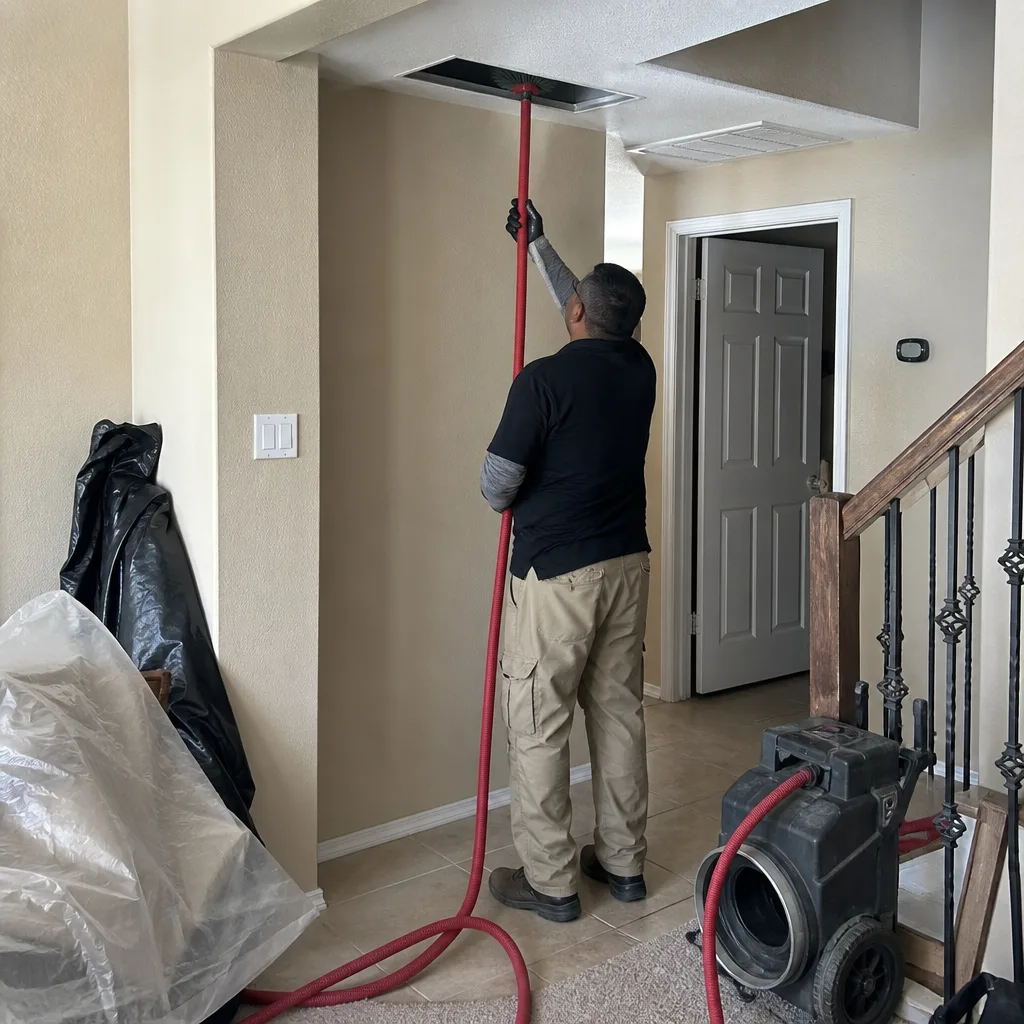
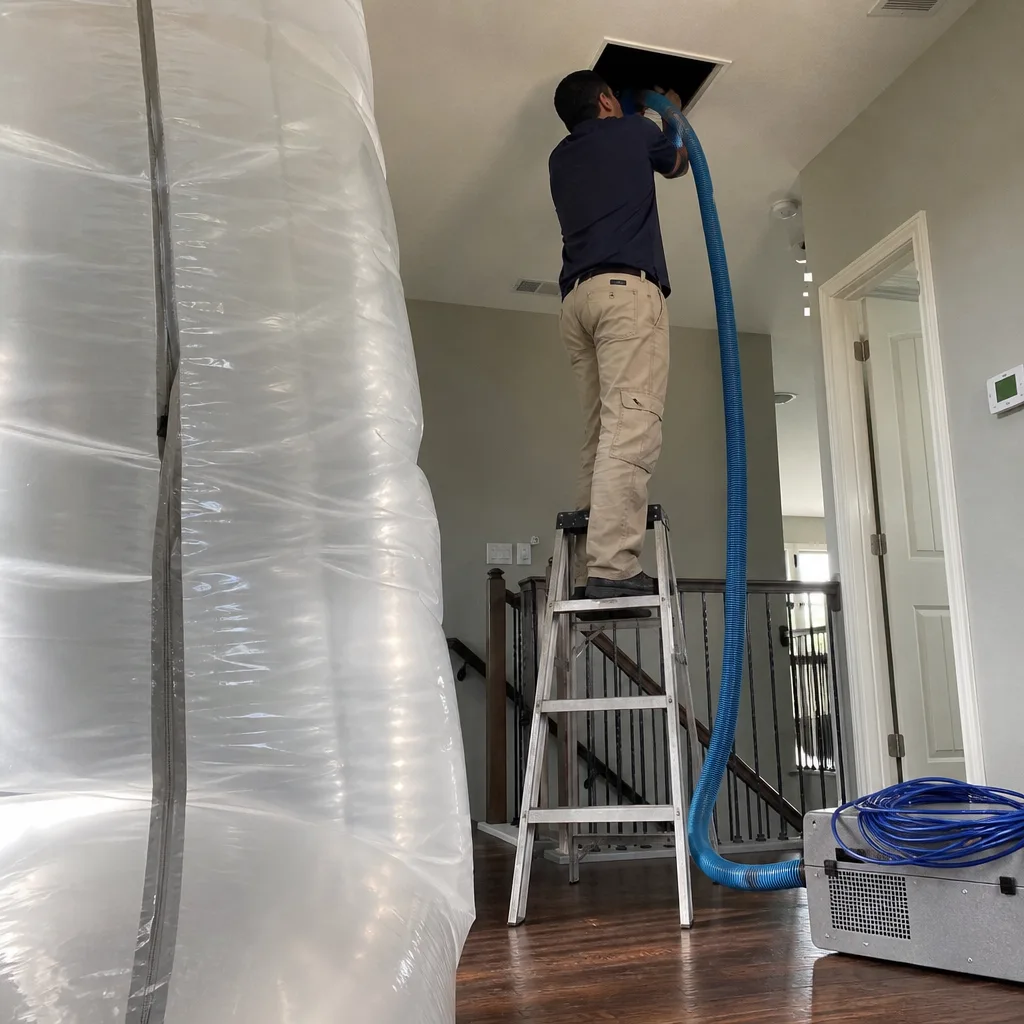
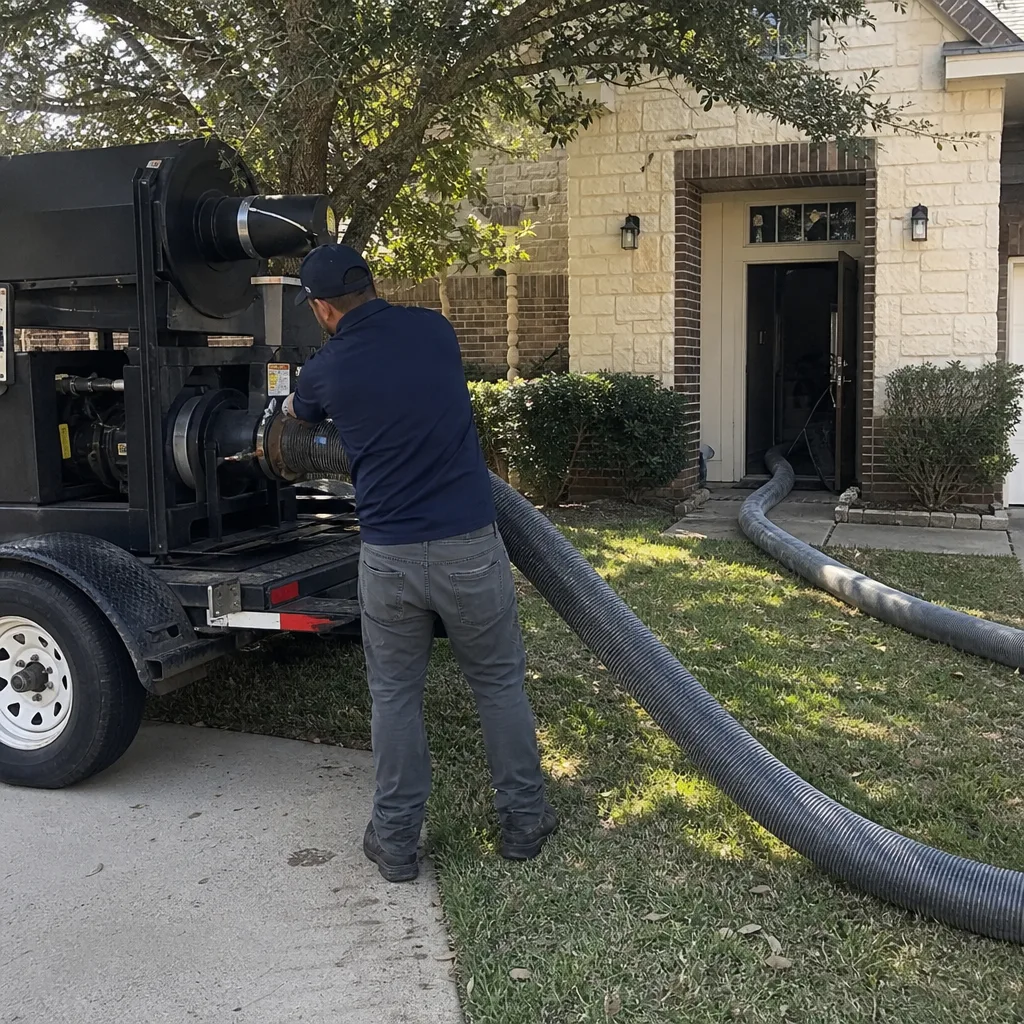
Negative-pressure extraction is the industry-standard method for duct cleaning. A powerful vacuum, typically mounted on a truck or as a portable HEPA unit, creates suction at the air handler or a central access point. This prevents debris from escaping into living spaces during agitation, the mechanical loosening of accumulated material.
Good answers: “We use a Nikro portable HEPA vacuum rated at [specific CFM] with a separate agitation device,” or “Our truck-mounted system pulls 12,000+ CFM through a collection bag with HEPA filtration.” Specific brands and specifications indicate direct equipment knowledge.
Bad answers: “We have professional equipment,” “Our vacuums are commercial-grade,” or any mention of a shop vacuum with a brush attachment. Shop vacuums lack the sealed containment and filtration to prevent cross-contamination. We’ve encountered contractors in Katy using modified wet/dry vacuums from hardware stores; they leave registers dirtier than they found them.
Question 2: “Will you photograph each duct run before and after, and will I receive those photos?”
This question separates documentation culture from sales culture. A contractor who photographs ductwork treats the result as verifiable. One who does not relies on your inability to see inside the system.
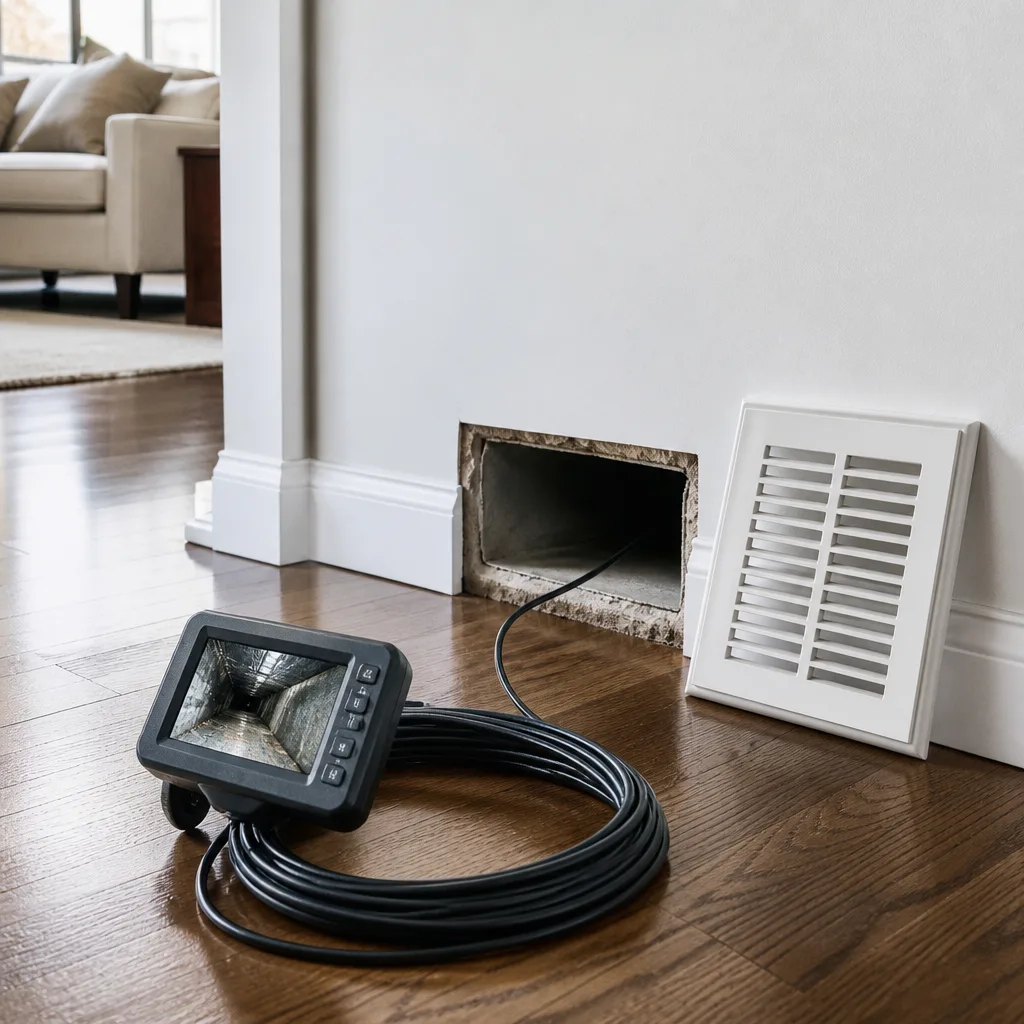
Good answers: “Yes, every run is photographed with a borescope camera, and you receive a digital log within 24 hours,” or “Our standard deliverable includes before and after images of each duct run with a timestamp.”
Bad answers: “We can do that for an extra fee,” “Our technician will show you on his phone,” or “You don’t really need photos if the work is done right.” The last response is particularly revealing. It presumes your trust rather than earning it.
At CleanRun, the Documented Photo Record is standard on every visit, included without additional charge. We’ve held this practice since our first job in 2013. The camera shows a 3-inch debris build-up at the first elbow, or it shows clean metal. There is no interpretation required.
Question 3: “What is your pricing structure, and will I receive a written price before work starts?”
Haven Standard Clause 1 is explicit: written price delivered before any work starts, every time. No exceptions. This is not a marketing position for us; it is the operational standard that governs every technician’s behavior.
Good answers: “We charge $X per system based on square footage and number of returns, and you’ll receive a written quote before we begin,” or “Our estimator will inspect, provide a written scope with line-item pricing, and you approve before work starts.”
Bad answers: “We need to see it first,” “Prices start at $79,” or any refusal to commit to a number before arrival. The $79 coupon is the industry’s most reliable predictor of bait-and-switch pricing. The technician arrives, discovers “unexpected conditions,” and the final invoice multiplies.
For Katy homeowners, honest whole-system pricing for a typical 2,000-3,500 square foot home generally ranges from $400 to $800 for complete duct cleaning with negative-pressure extraction and register-level agitation (see our Air Duct Cleaning Cost Breakdown: The Katy Homeowner’s Reference for 2026). Prices below $300 indicate corner-cutting; prices above $1,200 without specific justification, such as extensive mold remediation or duct repair, suggest padding.
Question 4: “What does your warranty cover, and is it provided in writing?”
Verbal warranties are worthless. A guarantee that cannot be produced in writing is a guarantee that does not exist.
Good answers: “Our 365-Day Done Right Promise covers workmanship and material defects in writing,” or “You’ll receive a warranty document specifying coverage, exclusions, and the claims process.”
Bad answers: “We stand behind our work,” “Just call us if there’s a problem,” or any reference to “satisfaction guaranteed” without defined terms. Vague language protects the contractor, not the customer.
Question 5: “Are your technicians employees or subcontractors, and are they background-checked?”
Haven Standard Clause 3: Verified Crews. The person entering your home should be known to the company, not a day laborer picked up for the job.
Good answers: “All technicians are W-2 employees, background-checked through [specific service], and you’ll receive their name and photo before arrival.”
Bad answers: “We use trusted crews we’ve worked with for years,” “Everyone is screened,” or refusal to specify employment status. Subcontractor networks are common in the duct cleaning industry; they reduce accountability and increase turnover.
Stage Three: How to Read a Quote Like a Contractor
A written quote is a legal document. Its language determines what you are entitled to receive and what recourse you have if the work fails. Most homeowners scan for the bottom-line number and miss the clauses that protect the contractor from delivering value.
Line Items That Should Appear
A legitimate duct cleaning quote in Katy should specify:
- Number of supply duct runs (the branches delivering conditioned air to rooms)
- Number of return duct runs (the branches drawing air back to the air handler)
- Number of registers and grilles to be removed, cleaned, and reinstalled
- Plenum access and cleaning (the main distribution box)
- Air handler cabinet inspection
- Filter replacement or condition assessment
- Method of debris extraction (negative-pressure HEPA, specified CFM)
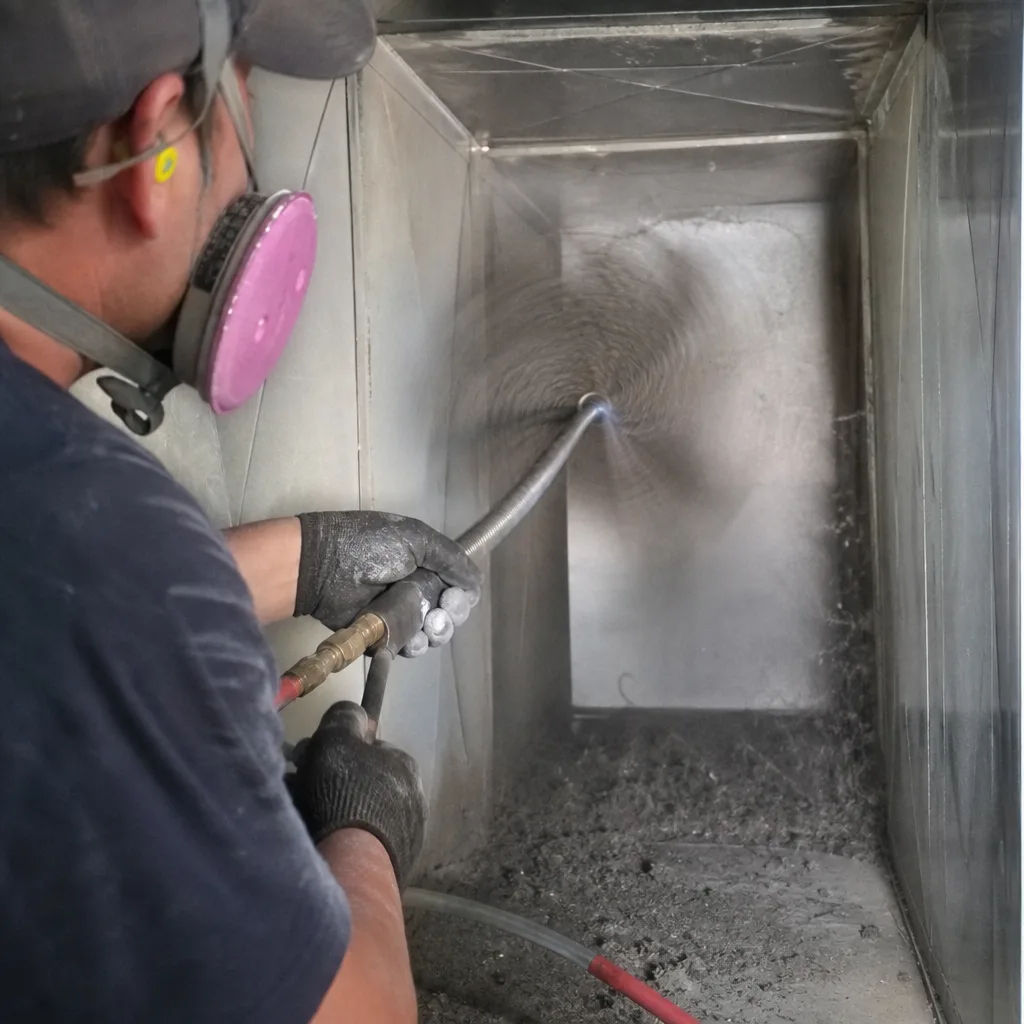
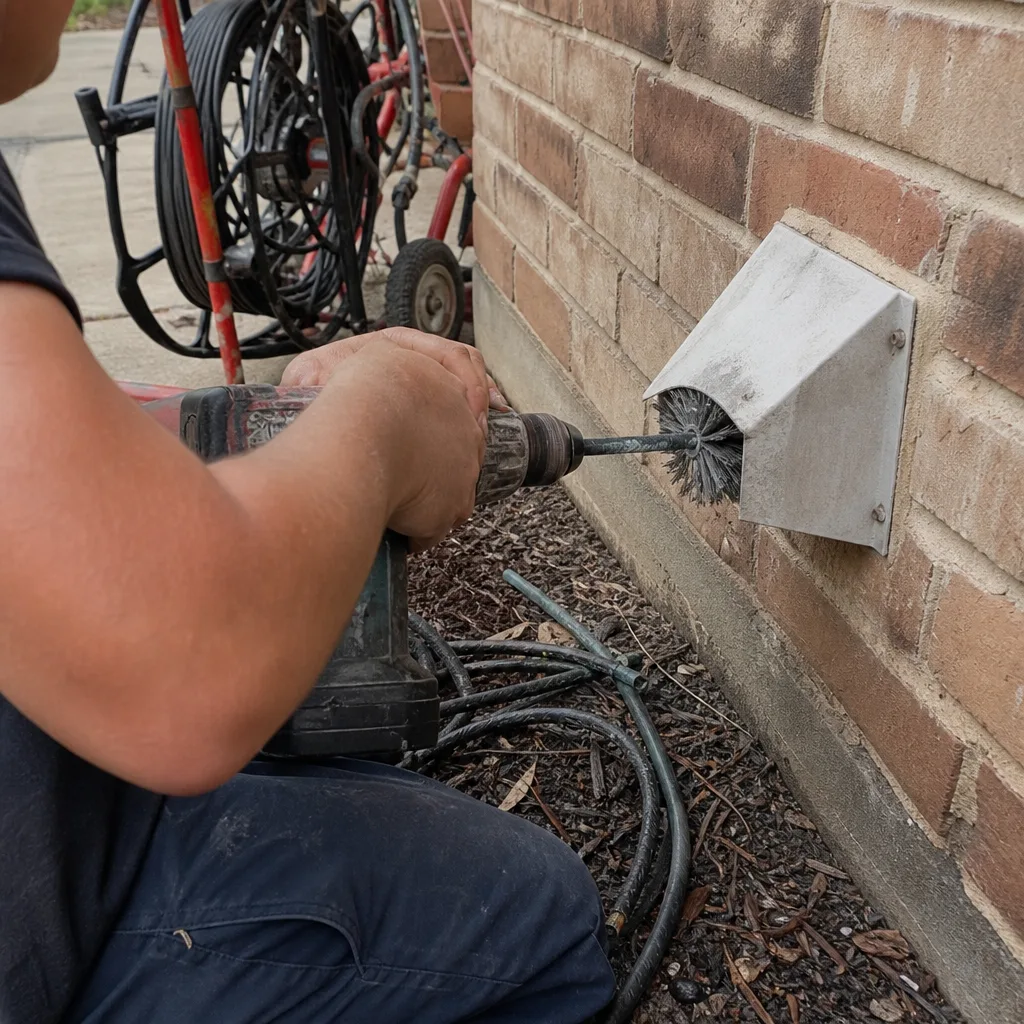
- Agitation method (rotary brush, air whip, or compressed air)
- Equipment to be used (specific brands or categories)
- Photo documentation scope
- Warranty terms with duration and coverage specifics
Vague Language That Signals Trouble
Watch for these phrases. Each creates wiggle room that favors the contractor.
“Whole system cleaning” - Without defining “system” or “cleaning,” this term means whatever the contractor decides it means. We’ve seen “whole system” quotes that excluded return ducts, plenums, and registers.
“Up to X ducts” - The qualifier “up to” allows the contractor to declare fewer ducts were dirty than estimated, reducing work without reducing price. A proper quote specifies exact counts or charges per duct run.
“As needed” - Applied to services like sanitizer application or sealant repair, this phrase permits upselling after arrival. Every service should be priced in the original quote or explicitly excluded with the option to add.
“Additional charges may apply” - This is a blank check. Legitimate variables exist, but they should be enumerated: “Additional charge of $X per register if more than Y registers are present,” or “Mold remediation, if discovered during inspection, quoted separately before proceeding.”
Why Written Scope Protects You Legally
In Texas, a written contract for services over $500 is enforceable under the Texas Business and Commerce Code. A vague scope becomes a “he said, she said” dispute that small claims courts resolve unpredictably. A specific scope with line items, equipment specifications, and photo documentation requirements gives you documentary evidence if the work fails to match the promise.
At CleanRun, every quote includes the Haven Standard Clause 1 acknowledgment: written price, agreed scope, no changes without written amendment. The customer signs. We sign. Both parties retain a copy. This is not elaborate legalism; it is the minimum standard for a transaction involving access to your home, your HVAC system, and your indoor air quality. Explore our more guides & resources for additional homeowner protection strategies.
Stage Four: Red Flags That Appear Only at the Door
The most sophisticated scams pass phone screening. They arrive with NADCA logos, professional uniforms, and polished presentations. The deception begins after entry. These four red flags appear only when the technician is inside your home.
Red Flag 1: Upsells Introduced After Arrival
The technician inspects the system and discovers “mold,” “dangerous buildup,” or “code violations” that were invisible during the phone quote. The original price was $450. The revised recommendation is $1,800 with immediate pressure to decide.
Legitimate mold concerns in Katy exist. Our humidity, particularly from May through October, creates conditions for microbial growth in poorly sealed ductwork. But mold identification requires laboratory analysis, not a flashlight and a worried expression. A technician who claims mold without offering to collect a sample for third-party testing is selling fear, not service.
Your response: “Please document what you’ve found with photographs, provide a written addendum to the original scope, and I’ll consider it without pressure.” A legitimate contractor accommodates this. A scammer escalates urgency.
Red Flag 2: Refusal to Show Before Photos
The technician begins work without showing you the pre-cleaning condition of your ducts. This defeats the entire purpose of documentation. If you cannot see “before,” you cannot verify “after.”
At CleanRun, the technician shows the borescope display before agitation begins. The customer sees the debris layer, the construction residue, the particulate accumulation. This is not courtesy; it is Haven Standard protocol. Any contractor who treats before photos as optional is treating verification as optional.
Red Flag 3: Pressure to Decide on Add-On Treatments Before Inspection Is Complete
The technician opens one register, declares an emergency, and requests immediate authorization for sanitizer, sealant, or “coil rejuvenation” before examining the remaining system. This is scripted sales pressure, not technical assessment.
A complete inspection of a typical Katy home requires 15-25 minutes. The technician should examine multiple supply and return points, assess the plenum, and evaluate the air handler before recommending additions. Any demand for immediate decision-making is a control tactic, not professional judgment.
Red Flag 4: Equipment That Does Not Match Phone Description
The technician described a truck-mounted negative-pressure system on the phone. The equipment that enters your home is a portable shop vacuum with a rotary brush attachment. Or the technician mentioned Nikro or Abatement Technologies equipment, but the labels on the vacuum read brands you’ve never heard of and cannot verify.
Equipment substitution is common in subcontractor-heavy operations. The phone salesperson describes the company’s best equipment. The dispatched crew brings whatever is available. You have the right to refuse service if equipment does not match the quoted specification. This is not being difficult; this is enforcing a contract.
What Your Post-Job Deliverable Should Contain
The job is complete. The technician packs up. What you receive next determines whether you can hold the contractor accountable at 60 or 90 days, when problems often emerge.
A complete post-job deliverable includes four components:
- Photograph Log - Timestamped before and after images of every duct run, with identifying labels (e.g., “Master Bedroom Supply, Run 3”). The log should be delivered digitally, not shown briefly on a phone screen. At CleanRun, this is the Documented Photo Record, standard on every visit since 2013.
- Duct Map or System Diagram - A simple sketch or digital rendering showing the layout of your ductwork, including supply and return locations, plenum configuration, and any access points created or used. This becomes essential if you need future service from a different contractor.
- Written Scope Completion Statement - A document confirming that the quoted scope was completed as specified, with any deviations noted and explained. This protects both parties from scope disputes.
- Warranty Terms in Writing - The 365-Day Done Right Promise, or equivalent, with specific coverage, exclusions, and claims process. Verbal assurances fade; written terms persist.
How to use these documents at 60 or 90 days: if you notice reduced airflow, unusual odors, or visible debris at registers, the photograph log establishes the post-cleaning baseline. The warranty terms define your recourse. The scope completion statement prevents the contractor from claiming the affected area was not part of the original job. Without these documents, you have no leverage.
We’ve returned to homes in Katy where a competitor’s “cleaning” left debris at the first elbow, visible in our borescope but absent from any customer documentation. The previous contractor had no photographs, no scope statement, and no warranty. The homeowner paid twice for the same work.
How Katy’s Climate Affects Duct Cleaning Timing and Scope
Katy’s subtropical humidity is not abstract meteorology. It is a mechanical factor that changes what happens inside your ducts and when cleaning delivers the most value.
From May through October, outdoor dew points regularly exceed 70°F. When air conditioning runs continuously, the evaporator coil operates near saturation. Any duct leakage in the return path draws humid attic air into the system, condensing on cooler duct surfaces and creating conditions for microbial growth. In our experience serving Katy, homes built during the 2015-2020 construction surge show higher rates of return duct leakage than older construction, due to faster build schedules and less rigorous pressure testing.
This affects timing in two ways. First, spring cleaning (March-April) removes accumulated winter debris before peak humidity begins. Second, post-cleaning seal verification matters more in Katy than in drier climates. A contractor who cleans ducts without inspecting for leakage is leaving the root cause of microbial contamination unaddressed.
Neighborhood specifics matter. In CleanRun Air Duct Cleaning Katy home, we’ve documented distinct patterns across Katy subdivisions. Homes in Cane Island and Elyson, with their tighter construction envelopes, often show concentrated debris in fewer duct runs due to reduced infiltration. Older homes in Old Katy and the avenues east of Downtown Katy typically have more distributed accumulation but less severe moisture-related issues due to natural ventilation through less sealed structures.
The equipment used must account for these conditions. Portable HEPA systems from Nikro or Abatement Technologies, with sufficient CFM to overcome the static pressure of humid, debris-laden ducts, are essential. Underpowered equipment in Katy conditions simply moves debris around rather than extracting it.
Common Mistakes to Avoid
- Choosing by price alone. The $79 coupon in Katy typically covers a single register cleaning with a shop vacuum. The remaining system is untouched. By the time the technician finishes the upsell presentation, the invoice exceeds what honest upfront pricing would have cost.
- Assuming new construction means clean ducts. We’ve found construction debris in Katy homes less than two years old: drywall dust, wood scraps, and insulation fragments left by builders who never cleaned the system before occupancy. Age of home does not predict duct condition.
- Accepting verbal warranties. A contractor who “guarantees satisfaction” without written terms retains full discretion to define what satisfies you. The 365-Day Done Right Promise exists in writing precisely because verbal commitments fail when tested.
- Neglecting to verify insurance independently. A contractor who shows you a policy declaration page without naming you as certificate holder has demonstrated nothing. The Certificate of Insurance from the broker is the only valid proof.
- Scheduling without asking about equipment specifics. “Professional equipment” is not an answer. “Nikro portable HEPA at 2,000 CFM with rotary brush agitation” is an answer. The specificity protects you from bait-and-switch dispatch.
- Failing to request the post-job deliverable before scheduling. If a contractor cannot describe what documentation you’ll receive, they do not have a documentation process. This eliminates your ability to verify work or enforce warranty.
- Ignoring neighborhood-specific experience. A contractor who serves Katy but cannot describe differences between Cinco Ranch and Old Katy construction patterns has not paid attention to local conditions. Technical competence includes geographic awareness.
When to Call a Professional
Certain conditions warrant immediate professional assessment regardless of cleaning schedule. Visible mold on registers or in the plenum requires laboratory identification before any cleaning disturbs spores. Persistent musty odors after filter replacement suggest duct contamination or leakage drawing attic air. Unexplained respiratory symptoms that improve when away from home may indicate degraded indoor air quality from accumulated particulate.
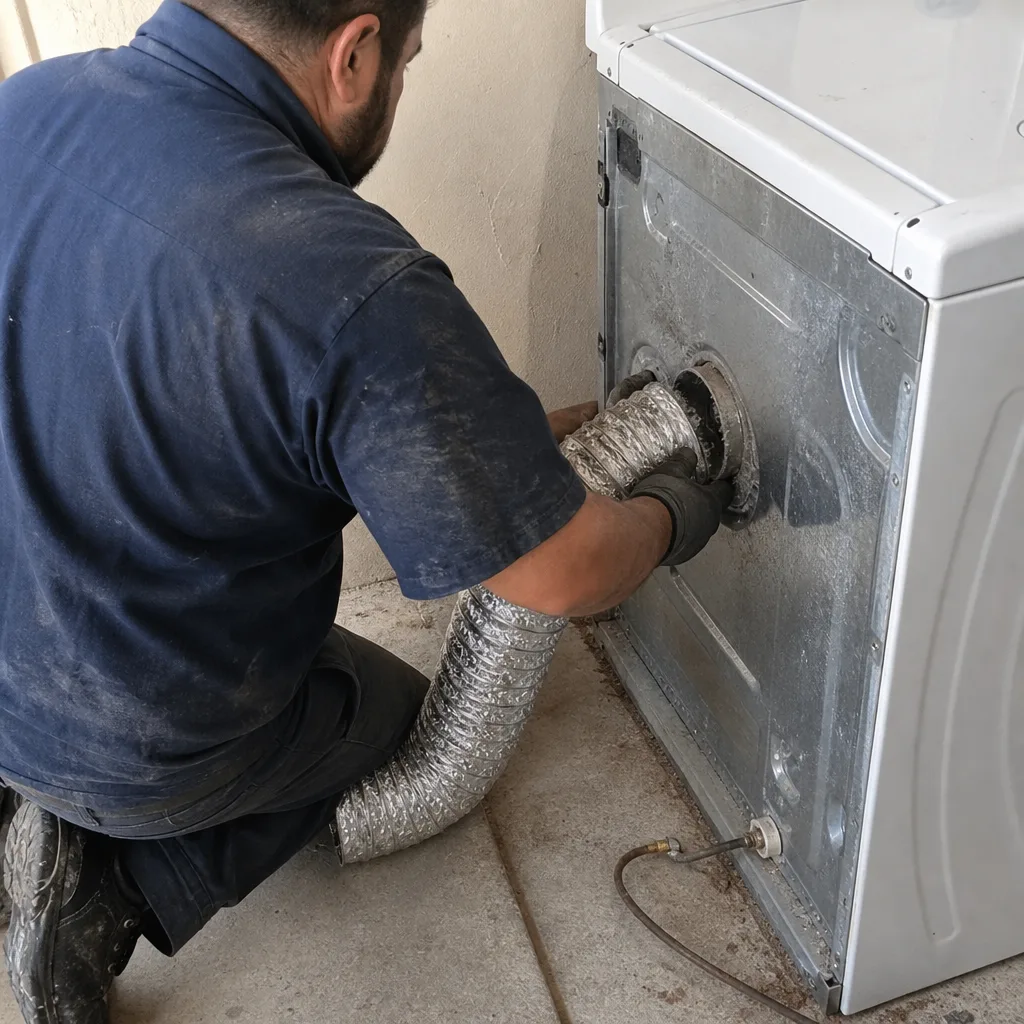
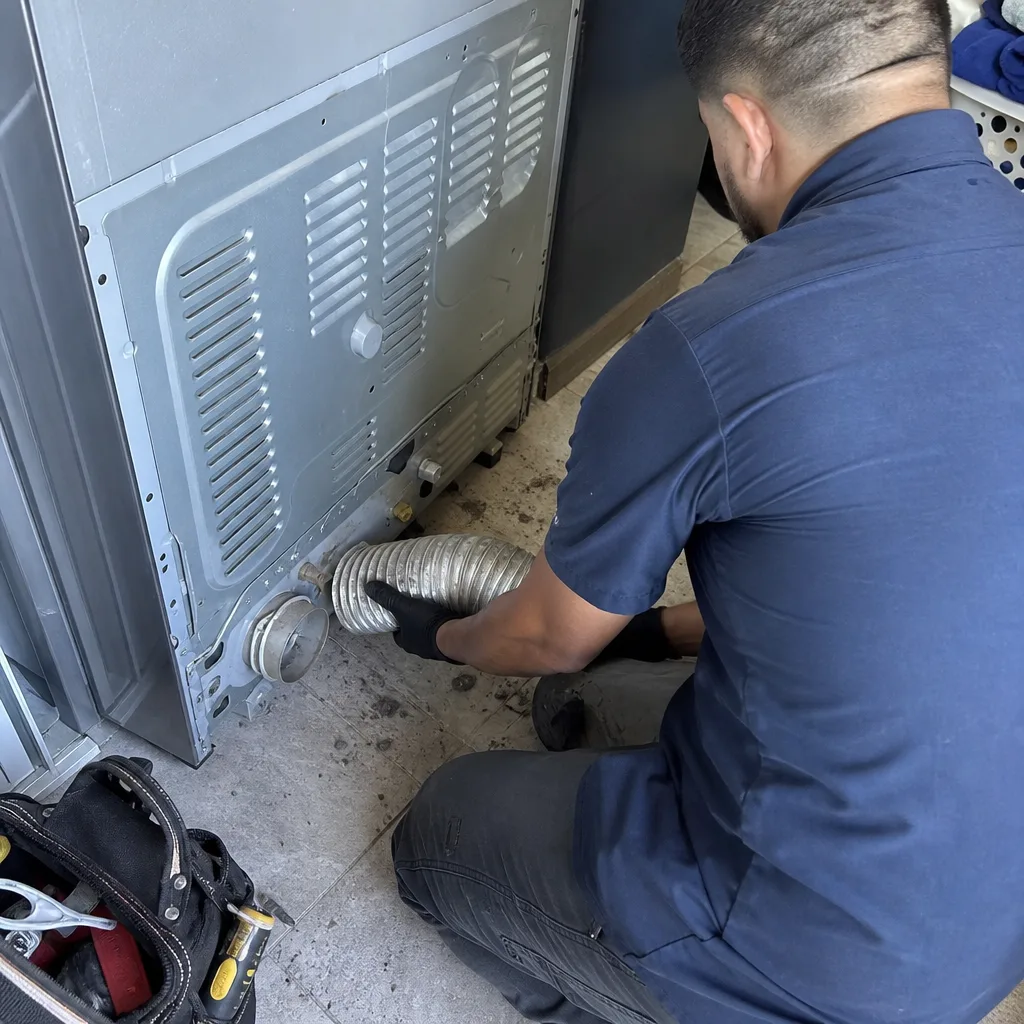
In Katy, where humidity amplifies these issues, we recommend professional inspection if you observe any of these signs, or if your home was built between 2015 and 2025 and has never had ductwork evaluated. Air Duct Cleaning in Katy from CleanRun Air Duct Cleaning Katy includes borescope inspection, written quote, and documented photo record. We also offer Dryer Vent Cleaning in Katy and HVAC Cleaning in Katy as integrated services. Free estimates are available - call (346) 666-7165.
Frequently Asked Questions
Complete duct cleaning for a typical 2,000-3,500 square foot Katy home ranges from $400 to $800 using negative-pressure extraction with register-level agitation. Prices below $300 generally indicate incomplete scope or inadequate equipment; prices above $1,200 require specific justification such as mold remediation or duct repair. Call (346) 666-7165 for a written estimate based on your home’s specific configuration - estimates are free.
The $79-$149 quotes common in Katy coupon advertising typically cover visual inspection and surface vacuuming of accessible registers, not full system cleaning. The contractor recovers margin through upsells after arrival. Honest whole-system pricing requires adequate equipment, trained technicians, and time on site - costs that cannot be absorbed at coupon rates without corner-cutting or bait-and-switch tactics.
Demand a Documented Photo Record of every duct run, before and after, with timestamps and location labels. Review these images before the technician leaves. If the contractor cannot produce them, the work is unverified. At CleanRun, this record is standard on every visit, delivered digitally within 24 hours.
For most Katy homes, every 3-5 years is adequate under normal conditions. Homes with pets, recent construction, or occupants with respiratory sensitivities may benefit from more frequent service. The NADCA recommendation is “as needed” based on visible contamination or system performance decline, not calendar scheduling. A borescope inspection provides objective data for this decision.
NADCA membership with at least one ASCS-certified technician is the primary credential. EPA 608 certification is required if refrigerant work is involved. General liability insurance of $1 million per occurrence is essential. Verify each independently; do not accept logos or verbal claims as proof.
Surface cleaning of visible registers is possible with household tools. Internal ductwork, plenums, and the air handler require specialized negative-pressure equipment and borescope inspection to verify results. More critically, ductwork in Katy attics often runs through 130°F+ spaces with limited structural flooring; falls through ceiling drywall are a genuine hazard. For complete cleaning with documented verification, professional service is the appropriate choice.
The Bottom Line
Hiring an air duct cleaning contractor in Katy is a vetting problem with a four-stage solution. Verify three credentials independently. Ask five phone questions that expose technical competence or its absence. Read the written quote for specificity, not just the bottom line. Watch for four red flags that appear only after entry. And demand a post-job deliverable that makes accountability possible months later.
The contractors who survive this screening are rare. They are also the ones worth hiring. They put prices in writing before work starts, photograph every duct run, and back their work with guarantees that exist on paper, not in conversation. Anything less is a gamble with your indoor air quality and your wallet.
Written by Tomas Reyes, Owner at CleanRun Air Duct Cleaning Katy, serving Katy since 2013.