
Last updated September 23, 2026
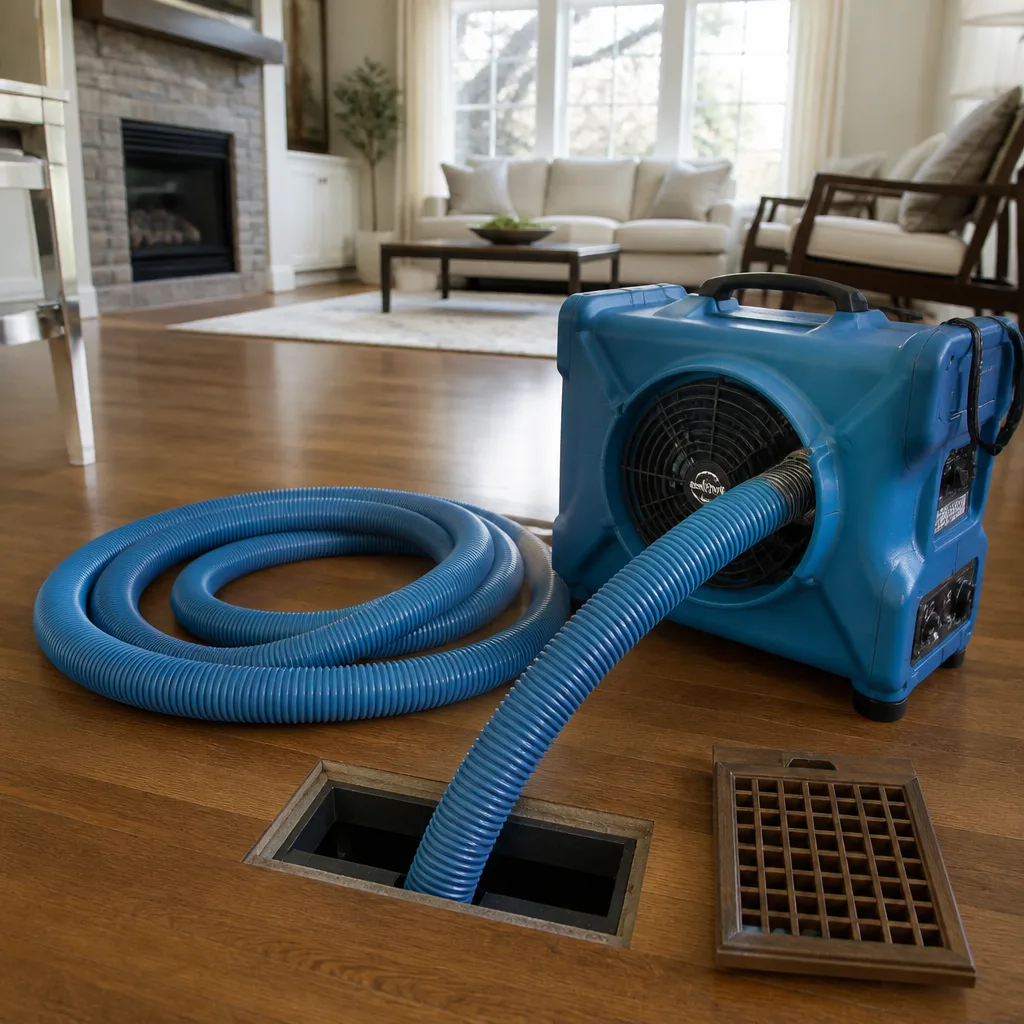
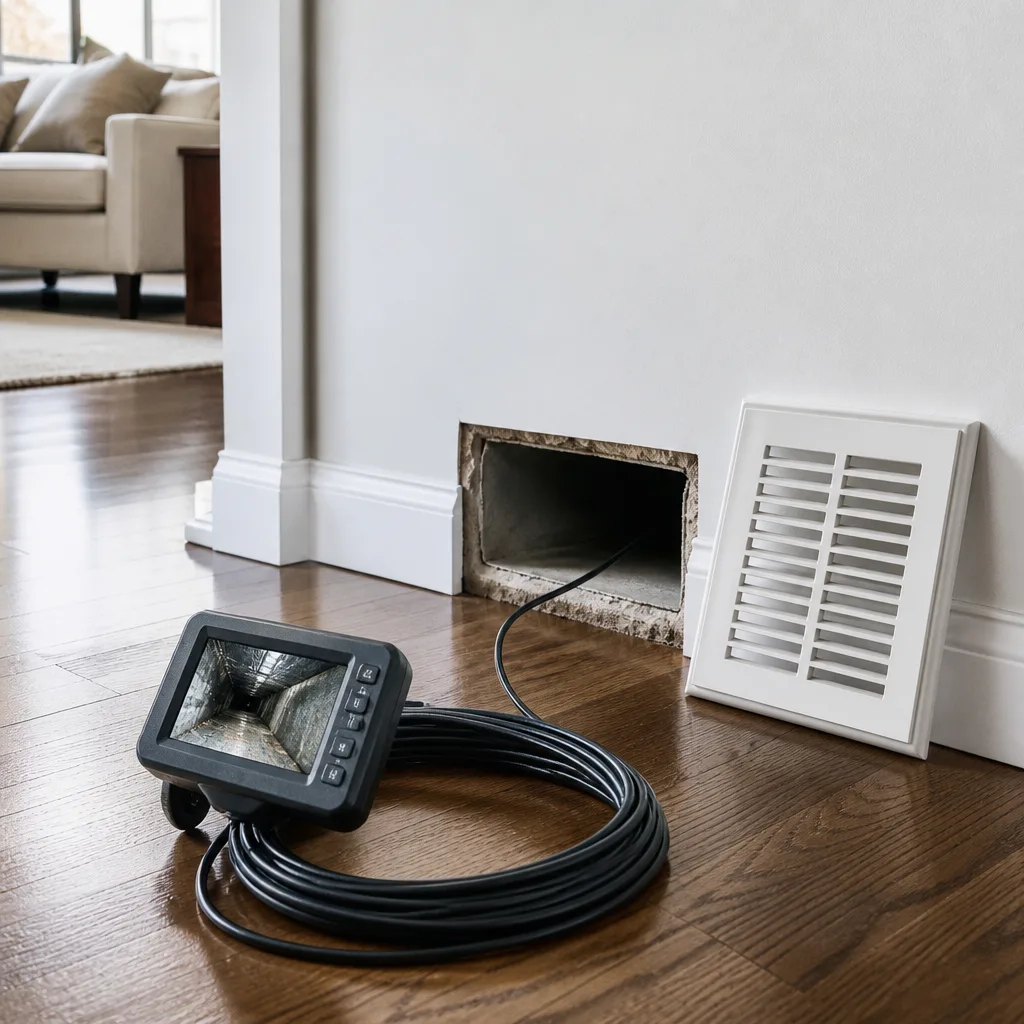
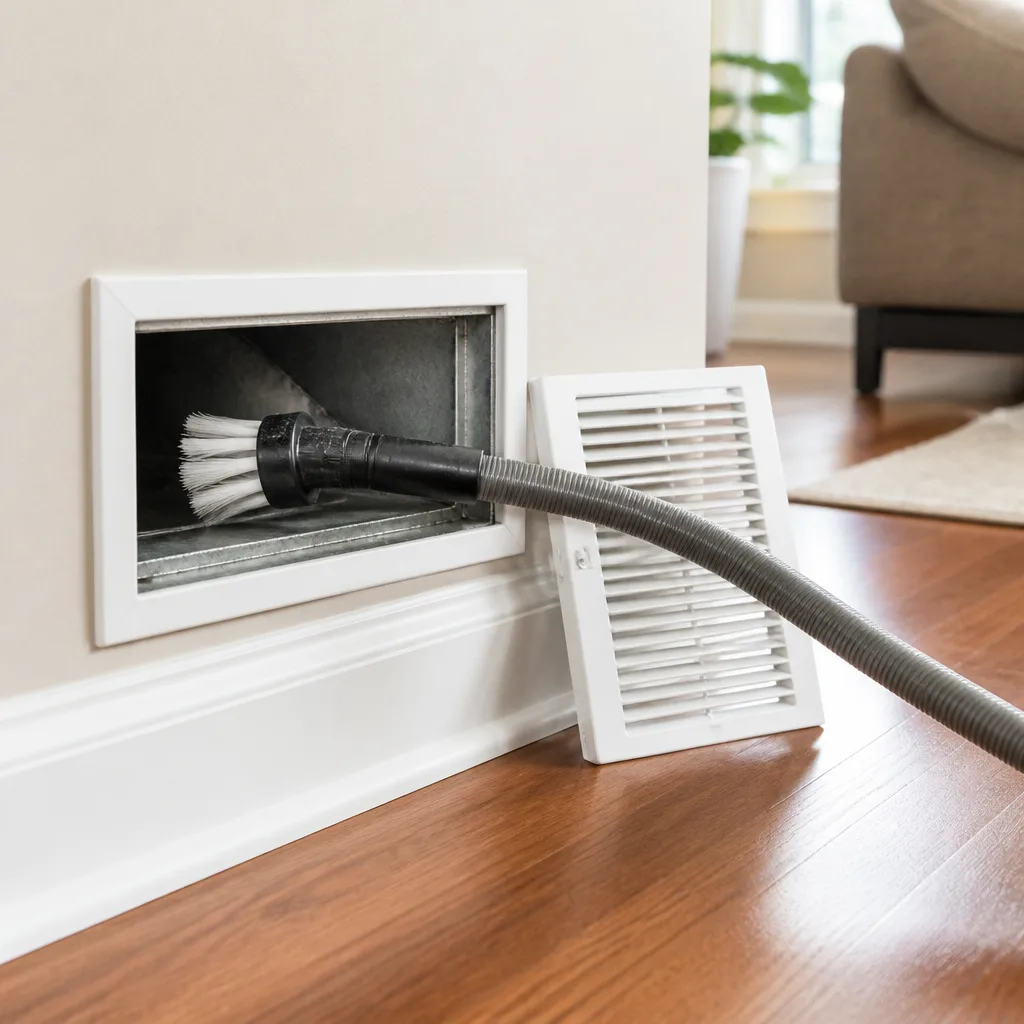
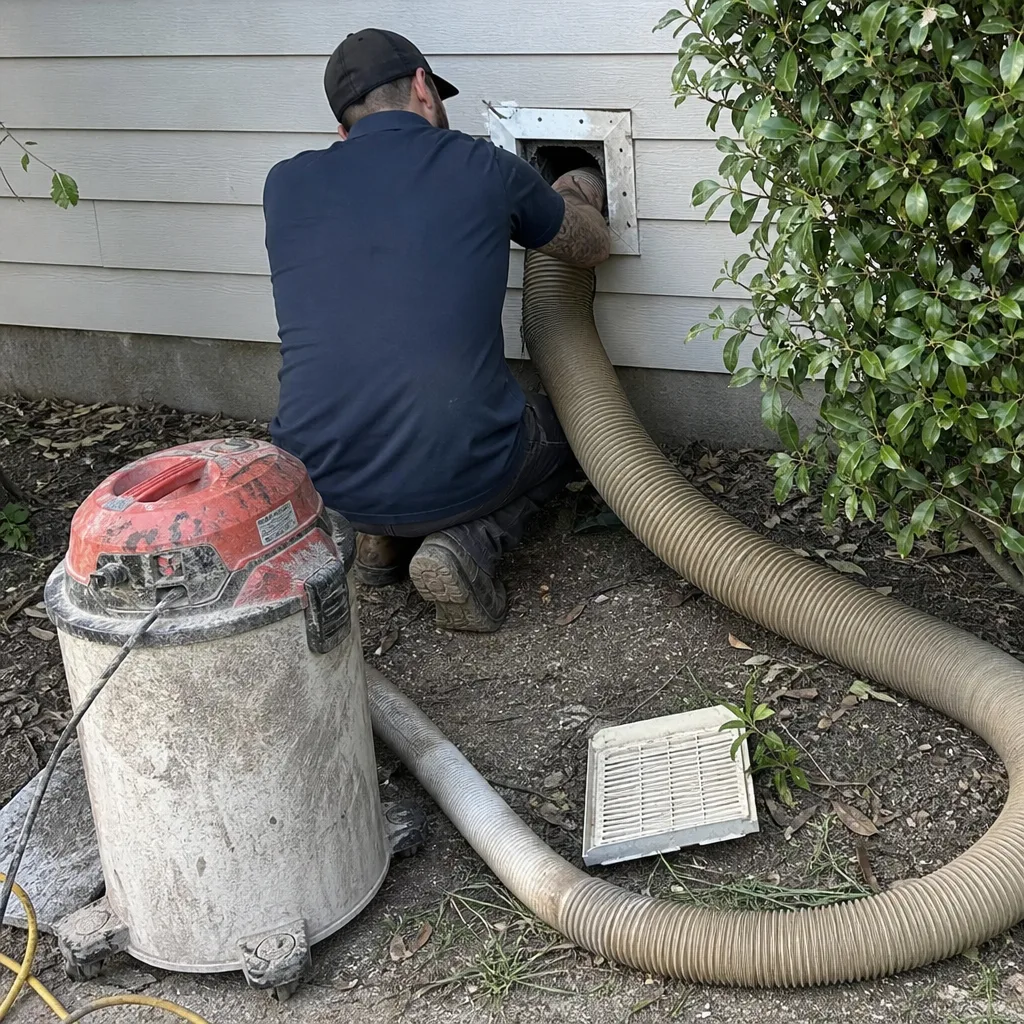
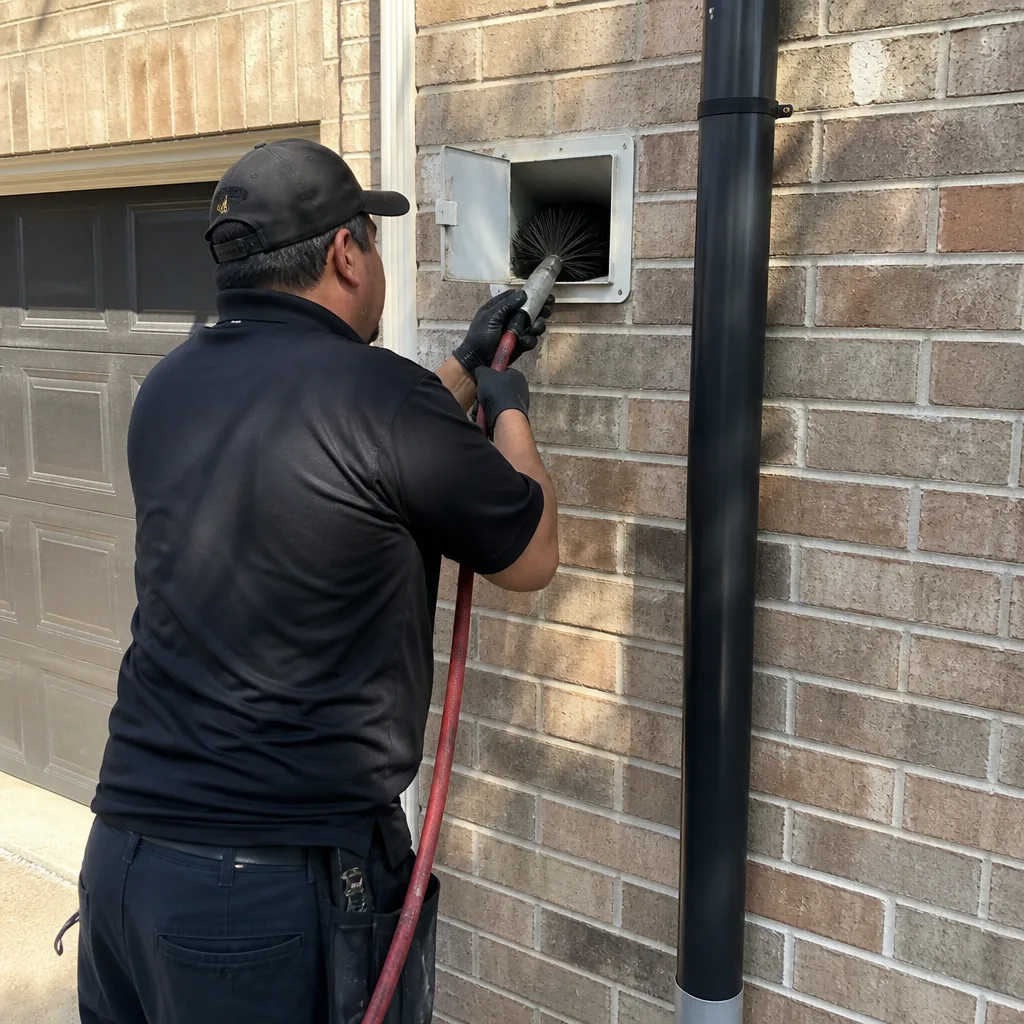
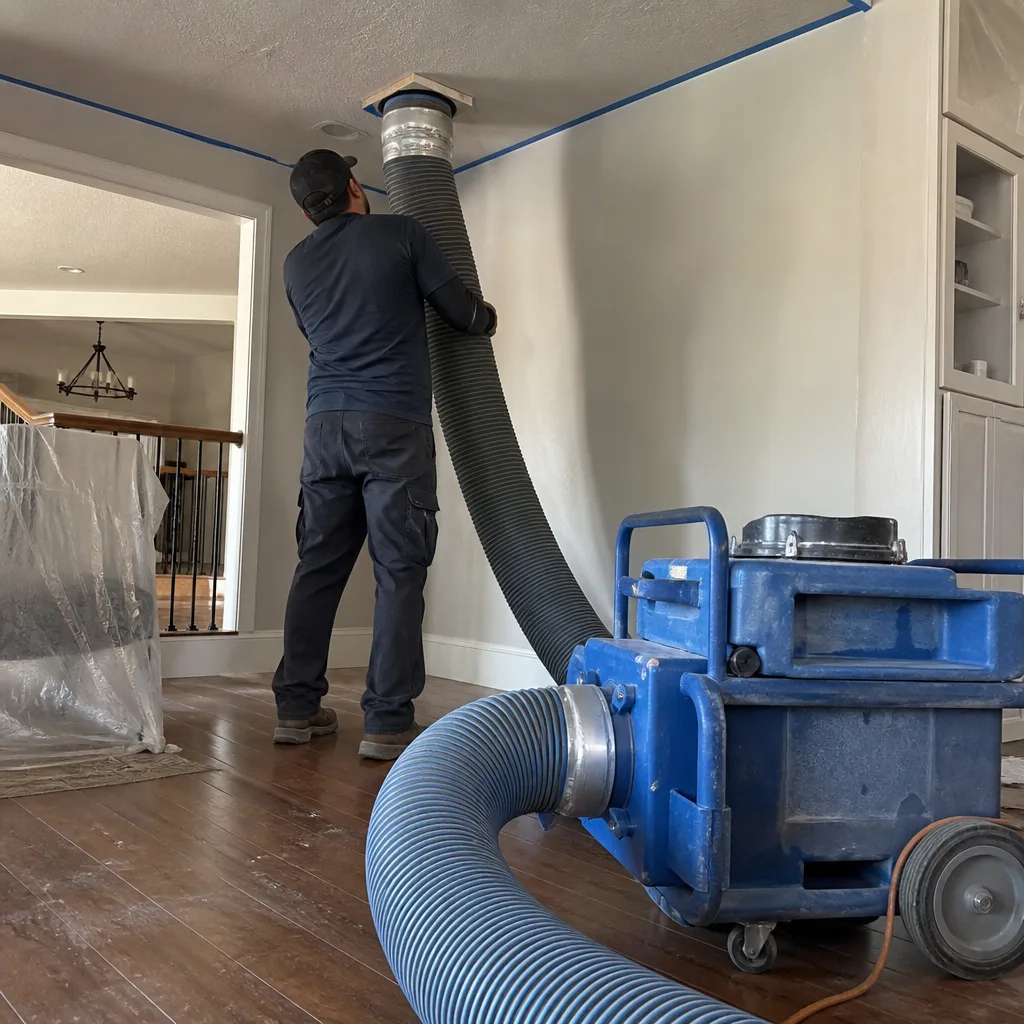
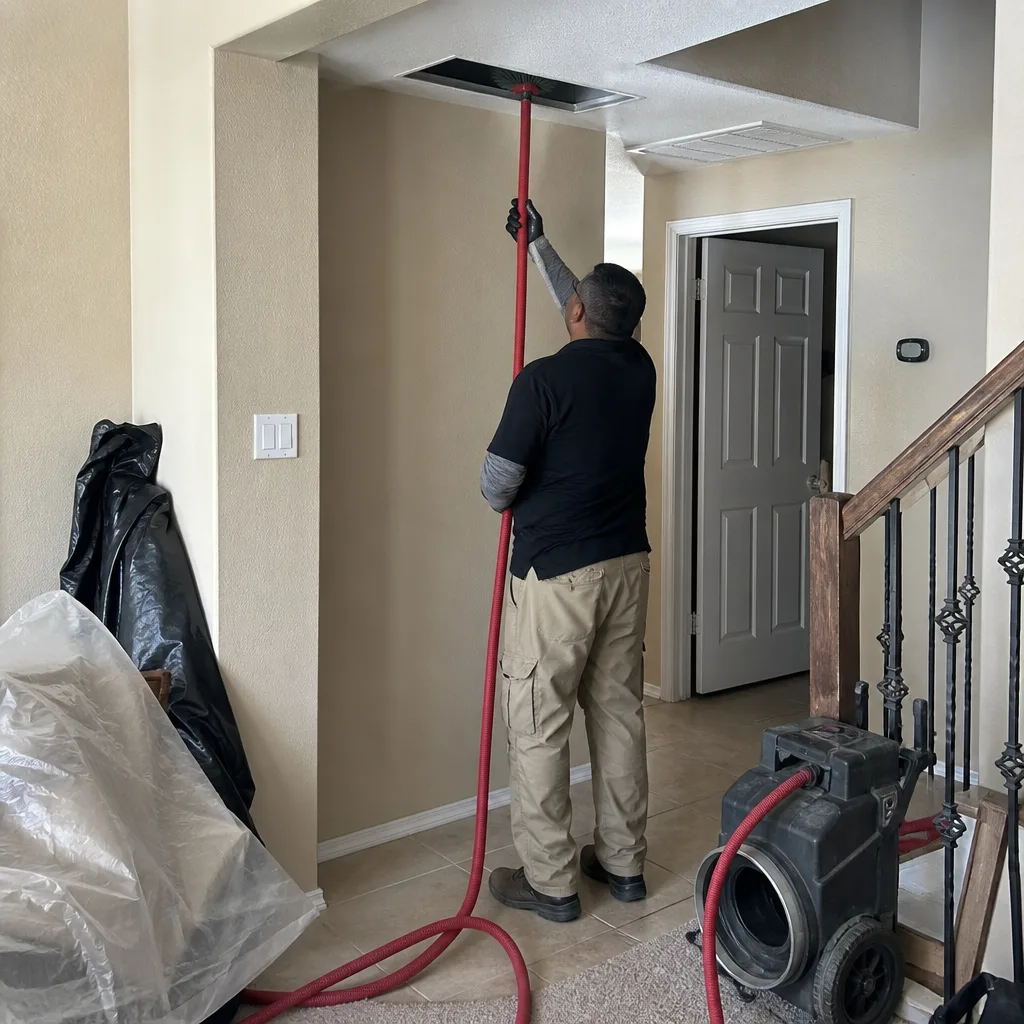
Whole-system duct and dryer vent check with before-and-after photos - you see exactly what came out of your vents
That "$99 whole-house special" is a bait ad - the real number appears once they are in your hallway, or the "clean" is a shop-vac at the register. We photograph the inside of your ducts before and after instead.

 Before
 After
After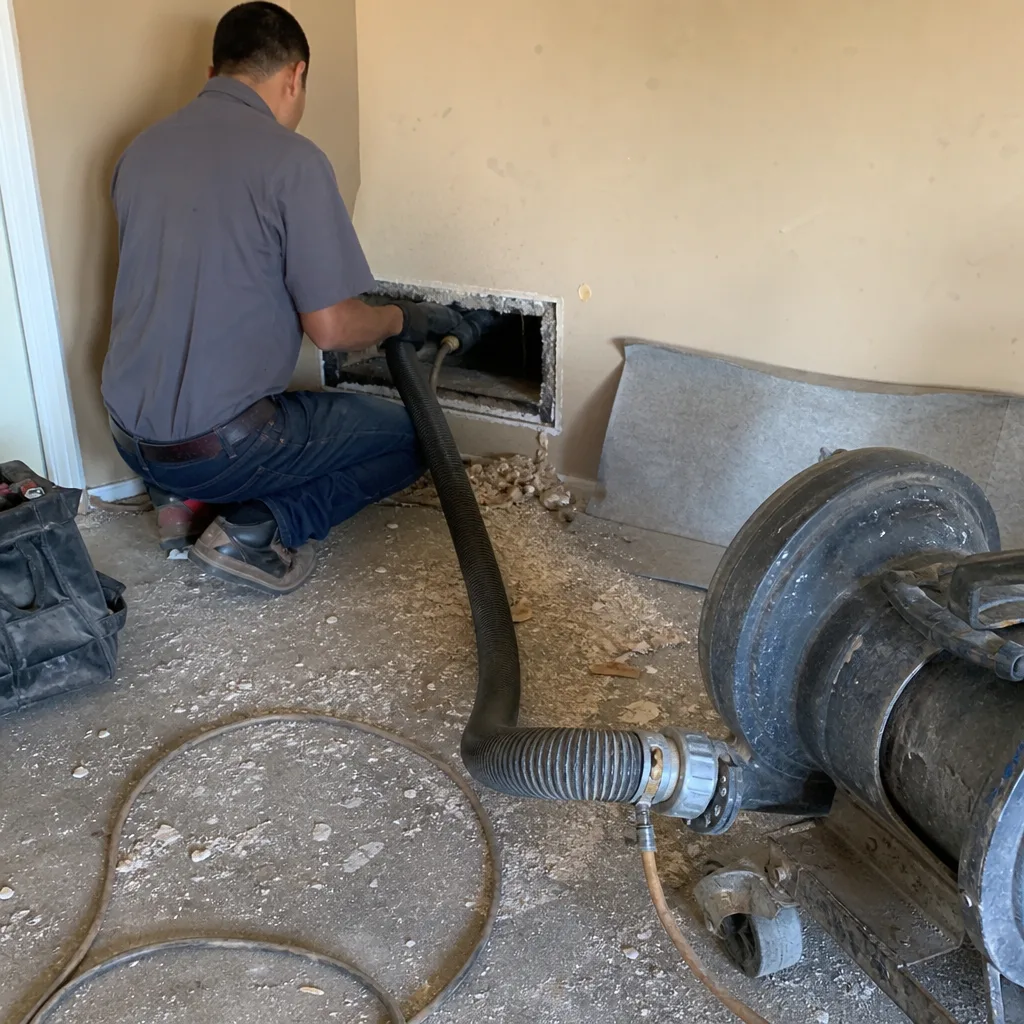 Before
 After
After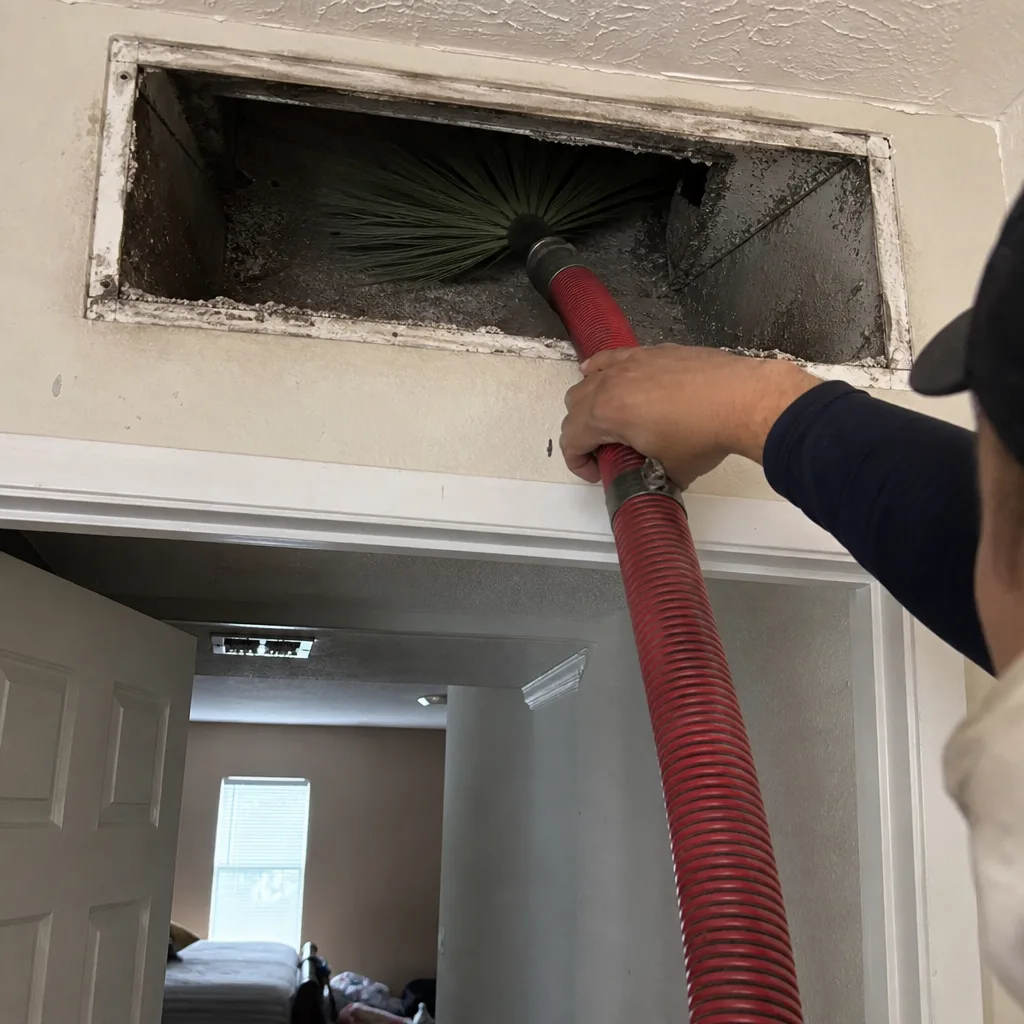 Before
 After
AfterSeasonal Air Duct Cleaning Care for Katy: Year-Round Homeowner’s Guide
The worst time to discover your ductwork has a mold problem in Katy is the first day you run the AC in April. By then, the system has sat in a humid, unconditioned attic through a wet winter, and whatever grew in the ducts is now being distributed through every room in the house. Most national duct-cleaning advice assumes a four-season climate with cold winters and mild summers. Katy doesn’t work that way. Our calendar runs on attic temperatures that crack 140°F in July, Gulf moisture surges that spike humidity overnight, and a shoulder season when ducts sit idle long enough for condensation to pool and microbial growth to establish itself. This guide maps actual duct-stress events to the months they occur in Katy, so you’re maintaining the system based on what happens here, not what more guides & resources from national sources say should happen somewhere else.
Quick Answer
Seasonal duct care in Katy follows four distinct phases: a March pre-cooling inspection before continuous AC begins, June through August monitoring for heat-degraded flex duct and adhesive failure, a September through October post-storm check for moisture intrusion after Gulf weather events, and November through February vigilance for microbial growth during humid idle periods. Professional cleaning should be timed to address documented contamination, not performed on an arbitrary calendar schedule.
Table of Contents
- March (Pre-Cooling): Inspecting Before the AC Runs Continuously
- June-August (Peak Load): How Extreme Attic Heat Damages Ductwork
- September-October (Post-Storm): Checking for Moisture After Gulf Events
- November-February (Idle Period): The Hidden Microbial Risk
- How to Time Professional Cleaning to Actual Conditions
- What Homeowners Can Safely Check Themselves
- Common Mistakes to Avoid
- When to Call a Professional
- Frequently Asked Questions
BeforeAfterMarch (Pre-Cooling): Inspecting Before the AC Runs Continuously
In Katy, March is the month of false confidence. Days reach the high 70s, windows stay open, and homeowners assume the HVAC system has months before serious use. Then April arrives with its first sustained 85°F week, the thermostat flips to cool, and the system runs for twelve hours straight on day one. If there’s a problem, you find out when the house won’t cool below 78°F and the electric bill arrives looking like a car payment.
We’ve documented this pattern across thousands of Katy homes since 2013. The camera doesn’t lie: March inspections routinely reveal filter loading that occurred during January and February heating cycles, when homeowners ran the system less and changed filters less. A filter that looked acceptable in December can be fully loaded by late February, and the first heavy AC pull in April forces the blower motor to work against that resistance, stressing bearings and reducing airflow to distant rooms.
Here’s what to check in March, before the system transitions to continuous cooling:
- Filter condition. Remove and hold to a light source. If you cannot see light through the media, replace it regardless of the printed replacement date. In Katy, pollen loads from oak and pine seasons often exceed manufacturer test conditions.
- Visible flex duct integrity. From the attic access, inspect exposed flex duct (the insulated flexible tubing that connects metal trunk lines to ceiling registers). Look for sagging between supports, compression where stored items rest on duct, and tears in the outer vapor barrier. A compromised vapor barrier allows attic air to reach the duct liner; in Katy’s humidity, that liner absorbs moisture and delaminates.
- Register airflow balance. With the system running in heat mode, check each register for consistent airflow. A register that blew strongly in November but now produces weak flow suggests a disconnected duct run or a blockage. In Cinco Ranch and Seven Meadows, we’ve found that settling foundation movement in homes built 2015-2020 often pulls flex duct loose at duct boot connections.
What you won’t catch in March without equipment: internal debris loading in the return plenum, microbial growth on the evaporator coil, or duct leakage below the visible surface. These require a camera and pressure testing. But the March inspection prevents the April surprise, and it gives you a baseline to compare against when the system has run hard through summer.
Document what you find. Photograph the filter, the visible duct, and any register with weak flow. If you call a professional in April, those photos establish whether the problem is new or pre-existing.
June-August (Peak Load): How Extreme Attic Heat Damages Ductwork
Katy attic temperatures in July regularly exceed 140°F. We’ve measured 147°F in unventilated attics in Grand Lakes and 151°F in older homes in Old Katy with dark shingle roofs and minimal soffit ventilation. This isn’t uncomfortable. It’s destructive to materials that weren’t specified for those conditions.
Flex duct, the insulated tubing used in most Katy homes built after 1990, consists of three layers: an inner plastic liner, a fiberglass insulation blanket, and an outer metallized vapor barrier. The inner liner is typically polyethylene or Mylar, rated for continuous exposure to 140°F air temperature. The air inside the duct is 55°F. The attic air surrounding it is 140°F+. The temperature differential across that thin liner creates mechanical stress, and the adhesive that bonds the liner to the insulation blanket begins to soften at approximately 150°F internal surface temperature.
What we’ve found in Katy’s attics during summer service calls:
- Adhesive failure at duct boot connections. The metal duct boot (the fitting that transitions from flex duct to ceiling register) reaches attic air temperature. The flex duct liner, cooled by 55°F supply air, contracts against the hot boot. The adhesive that seals this joint fails, creating a gap that blows conditioned air directly into the attic. In our photo records from 2023, we documented this failure in 34% of homes built 2010-2018 in the Cane Island and Elyson developments.
- Insulation compression and R-value loss. Fiberglass insulation in flex duct loses effectiveness when compressed. Sagging duct, often caused by inadequate support straps in original installation, allows insulation to settle. The exposed section then conducts heat into the supply air. We’ve measured supply air temperature gains of 8-12°F in compressed sections versus properly supported duct.
- Condensation on cold surfaces. When attic humidity spikes during Gulf moisture surges, the exterior of poorly insulated ductwork can drop below the dew point. Water forms on the vapor barrier, soaks into compromised insulation, and creates the conditions for mold growth on the interior liner when the system cycles off.
What to watch for during peak load months:
- Rooms that cooled adequately in May but struggle in July. This often indicates duct leakage or insulation degradation that became critical when the temperature differential widened.
- Unusually high electric bills relative to degree days. Katy summers are predictable; if your July bill jumps 30% year-over-year with similar thermostat settings, duct efficiency has likely degraded.
- Water stains on ceiling drywall near registers. This indicates condensation on the duct boot or register box, usually from missing or degraded insulation at the penetration.
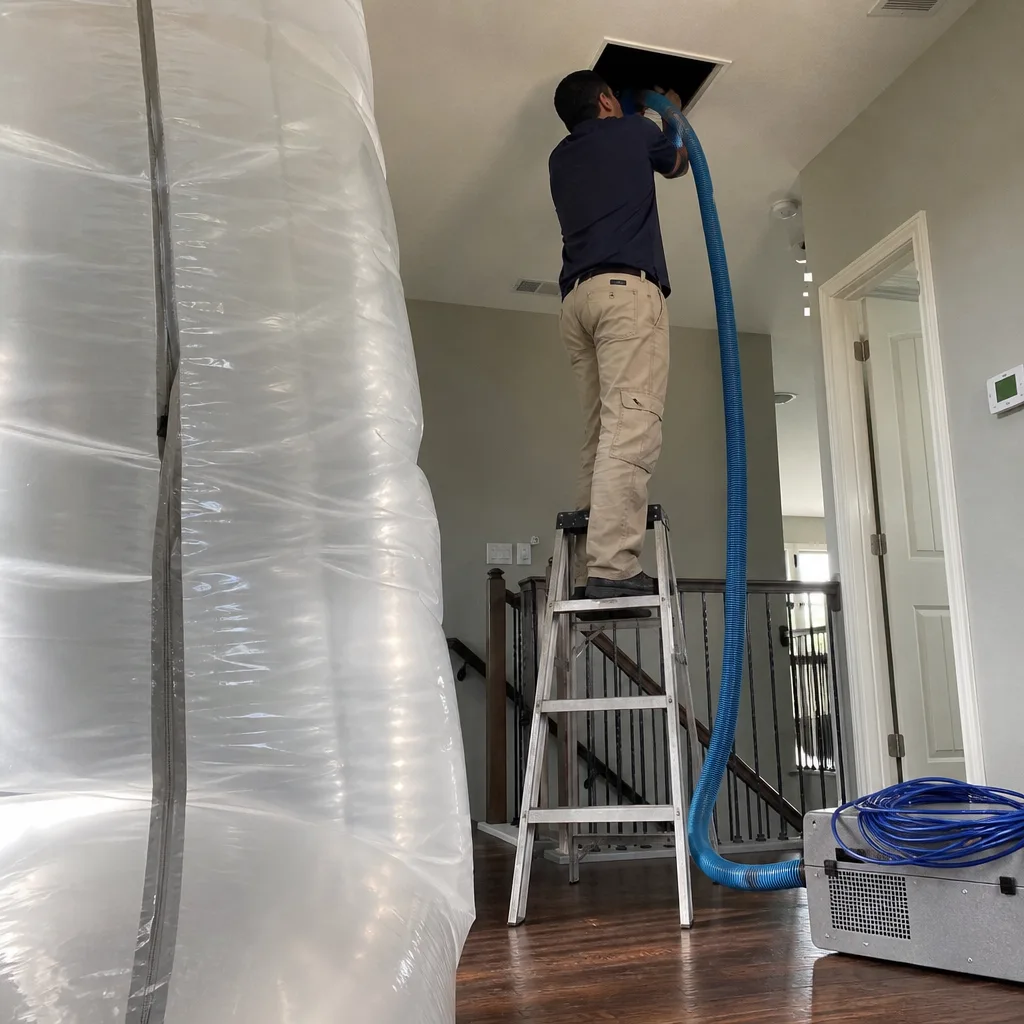
Professional inspection during peak load uses thermal imaging to identify insulation gaps and pressure testing to quantify leakage, which our Air Duct Cleaning services include as standard practice. CleanRun’s documented photo record includes thermal images alongside standard before/after duct photography, so homeowners can see the temperature differential, not just hear about it.
September-October (Post-Storm): Checking for Moisture After Gulf Events
Katy’s position on the Gulf Coast means September and October deliver moisture events that have nothing to do with daily weather patterns. Tropical systems, even those that don’t make direct landfall, pull deep tropical moisture across southeast Texas. When that moisture meets attic surfaces that have been superheated through August, the result is not gradual humidity increase. It’s condensation on every surface that drops below the dew point.
We’ve responded to calls in Katy Ranch and Firethorne in October where homeowners reported “a smell when the AC first comes on.” The photo record showed standing water in the return plenum, not from roof leaks, but from condensation that formed on the cold metal surface during a moisture surge and had no drainage path. The water sat for days, microbial growth established, and the first cooling cycle in October distributed the result.
Post-storm inspection focuses on moisture evidence that other regions don’t experience:
- Return plenum condensation. The return plenum (the large metal box that connects the return ductwork to the air handler) is the coldest surface in the attic when the system runs. After a moisture event, check the plenum exterior for water staining, rust spots, or active dripping. In homes with crawlspace air handlers, check the platform for standing water or efflorescence on concrete.
- Flooded crawlspace air handlers. Katy developments with historical drainage issues, particularly sections of Nottingham Country and parts of Mason Park, can experience crawlspace flooding during heavy rain. An air handler sitting in even shallow water has compromised electrical components and a saturated base that won’t dry without intervention.
- Duct boot seal degradation. Mastic seals (the paste-like compound that seals metal duct joints) absorb moisture and can soften during humid periods. A seal that was intact in August may fail in October, creating leakage points that weren’t present during peak cooling season.
What homeowners can check: visual inspection of the plenum exterior, the air handler platform or stand, and any accessible duct joints for water staining or softened mastic. What requires professional equipment: internal plenum photography, moisture content measurement of insulation, and airflow verification to confirm that duct leakage hasn’t increased since pre-season testing.
The timing matters. A September moisture event followed by October’s mild temperatures, when the system runs minimally, creates the perfect incubator for microbial growth, as detailed in our Air Duct Cleaning Maintenance Checklist for Katy Homeowners. By the time you smell it in November, the colony is established.
November-February (Idle Period): The Hidden Microbial Risk
This is the season that breaks the national duct-cleaning narrative. Every national guide says “clean your ducts in spring and fall.” In Katy, fall cleaning addresses a problem that hasn’t happened yet, and spring cleaning addresses a problem that’s already established. The real risk accumulates during the idle period, when Katy’s mild, humid winters create conditions that don’t exist in climates with actual cold seasons.
Here’s what happens in a Katy attic from November through February:
The system runs in heat mode, but not continuously. A 45°F morning triggers a heating cycle; by afternoon it’s 68°F and the system sits idle. The ductwork, located in an unconditioned attic, tracks outdoor temperature more closely than indoor setpoint. When the system cycles off, the interior duct surface cools to attic temperature, often 50-60°F during Katy winter nights. Attic humidity, typically 70-85% in winter, condenses on these cool surfaces. The water doesn’t drain; it sits in low points of flex duct, in the bottom of horizontal duct runs, and on the evaporator coil that hasn’t been used since October.
We’ve photographed this condensation in January across Katy homes in Cross Creek Ranch and Tamarron. The camera shows water droplets on the interior liner of flex duct, visible because the homeowner requested inspection after noticing a musty odor on the first warm day in March. The microbial growth didn’t start in March. It started in January, established itself through February, and became detectable when the system began moving significant air volume again.
Why this matters for maintenance timing:
- Cleaning ducts in October, before the idle period, removes accumulated summer debris but doesn’t address winter condensation.
- Cleaning in March, after the idle period, addresses whatever grew during winter but may be too late to prevent distribution on the first warm day.
- The optimal approach is November inspection (to verify system condition before idle period stress) and March inspection (to catch what developed before continuous cooling distributes it).
Heating-only months are also when homeowners notice airflow problems they attributed to summer heat. A room that was “just hot” in August may be “just cold” in December. Same problem: insufficient airflow from a duct run that’s disconnected, blocked, or undersized. The difference is that in winter, the homeowner is more likely to tolerate it rather than call for service. We recommend using the heating season to document airflow issues, so they can be addressed before the critical cooling season begins.
How to Time Professional Cleaning to Actual Conditions
The duct cleaning industry runs on arbitrary schedules: every three years, every five years, spring and fall. None of these account for Katy’s climate, your home’s specific construction, or what the camera actually shows inside the ductwork.
At CleanRun, we’ve held to a different standard since 2013. Every job starts with a camera inspection. We show the homeowner what the duct interior looks like before quoting any work. If the duct is clean, we say so. We’ve walked away from jobs where the camera showed minimal debris, because Haven Standard Clause 1 requires a written price for necessary work, and unnecessary work has no price.
Here’s how to think about timing based on actual conditions:
| Scenario | Recommended Action | Typical Cost Range in Katy |
|---|---|---|
| Camera shows light dust, no debris build-up, no moisture evidence | Defer cleaning; schedule 12-month re-inspection | Inspection only: $89-$140 |
| Camera shows 1/4-inch debris at registers, light accumulation in trunk | Clean with negative-pressure extraction; photo record delivered | Whole-system cleaning: $380-$620 |
| Camera shows significant debris, moisture staining, or visible microbial growth | Full cleaning with sanitizing; address source of moisture intrusion | Cleaning plus sanitizing: $520-$840 |
| Flex duct degraded, multiple disconnected runs, significant leakage | Duct repair or replacement prioritized over cleaning; cleaning follows repair | Repair scope priced in writing after full evaluation |
The price ranges above are whole-system prices, agreed in writing before work begins. CleanRun does not quote per-vent pricing. Per-vent pricing incentivizes the technician to find more vents, not to solve the actual problem. Haven Standard Clause 1 requires one flat price per system, documented in writing, with no changes after the truck arrives unless the homeowner requests additional scope.
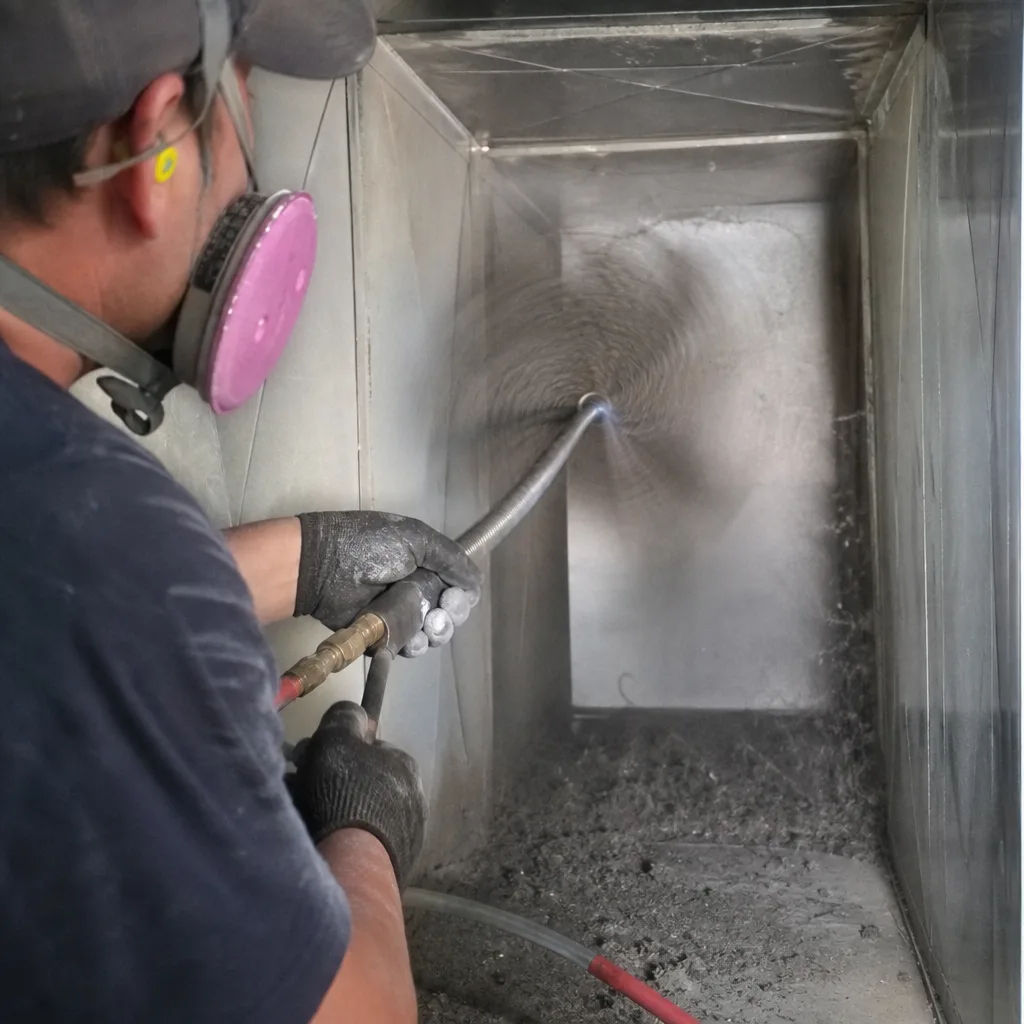
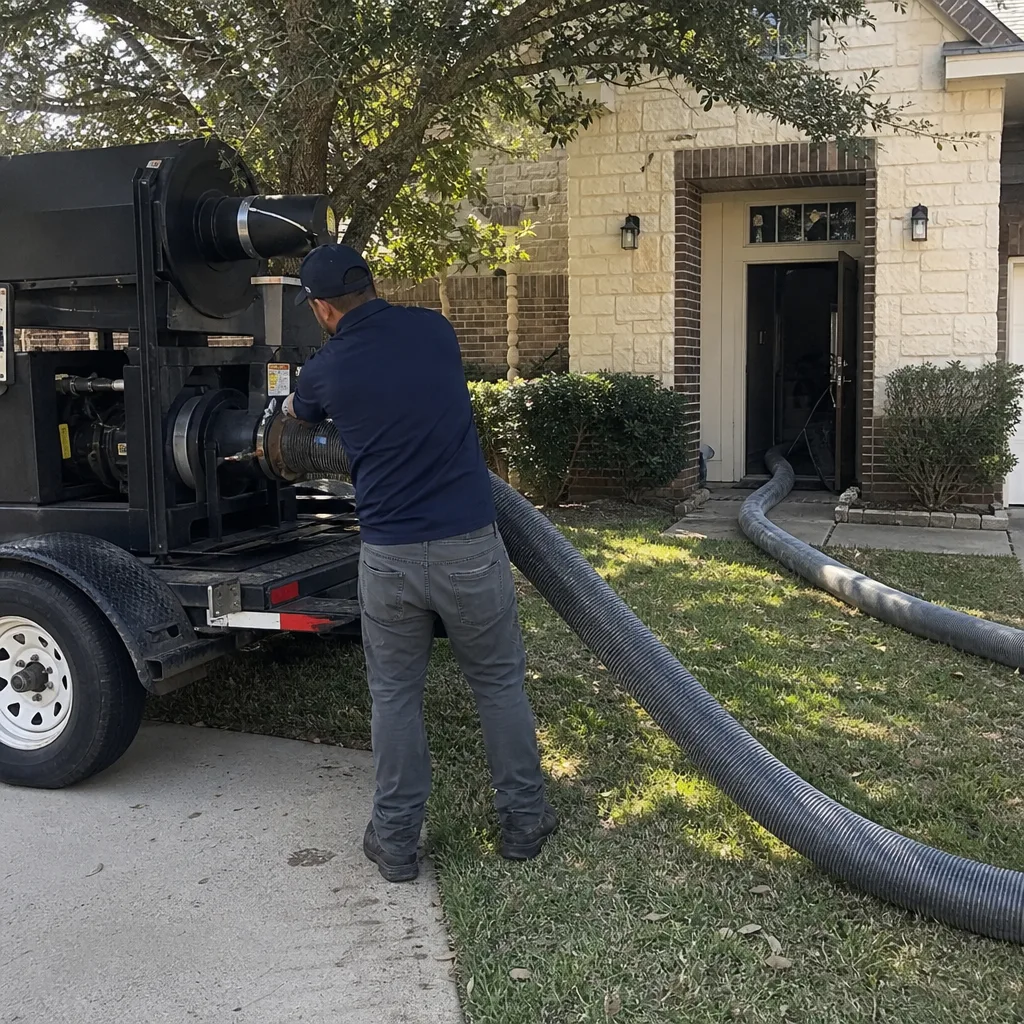
Equipment matters for timing as well. Rotary brush systems (Rotobrush) are effective for light to moderate debris in residential ductwork. Negative-pressure extraction systems (Nikro, Abatement Technologies) are required for heavier loading and for jobs where microbial contamination is suspected. In Katy’s climate, where humidity complicates every job, we specify equipment based on what the camera shows, not on what’s in the truck that day.
Documented results determine re-cleaning intervals, not calendar years. A home with excellent filtration, no moisture problems, and tight ductwork may show minimal debris at five years. A home with cheap fiberglass filters, a humid crawlspace, and degraded flex duct may need attention in eighteen months. The photo record from each visit establishes the trend.
What Homeowners Can Safely Check Themselves
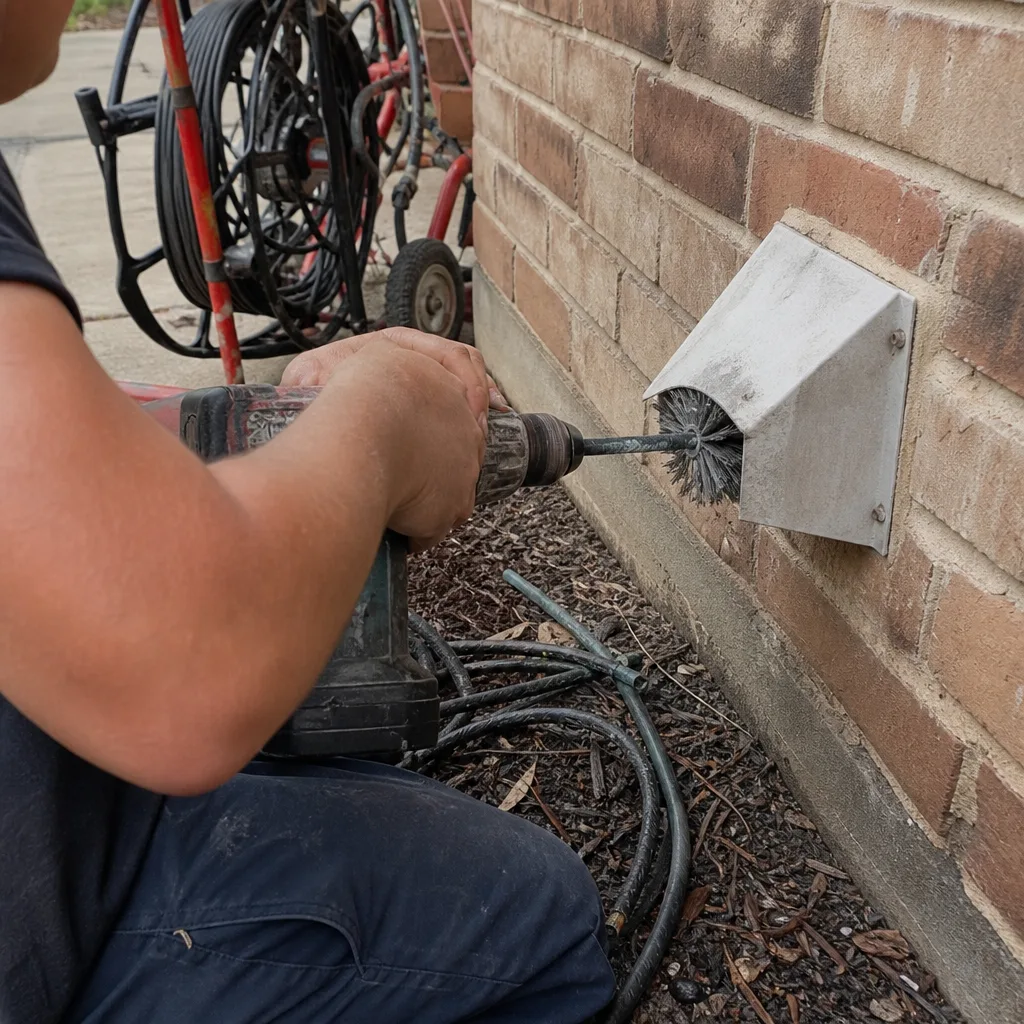
Some duct inspection tasks are appropriate for homeowners. Others require training and equipment, and attempting them risks damage to the system or personal injury.
Safe homeowner checks:
- Filter inspection and replacement. No tools required. Note the filter size printed on the cardboard frame; buying the wrong size creates bypass airflow that defeats the filter entirely.
- Register and grille removal for visual inspection. Most ceiling registers lift out or unscrew with a standard screwdriver. Look into the duct boot for visible debris, insect activity, or water staining. Do not insert objects; the duct boot connection is often fragile.
- Attic visual inspection from the access hatch. With a flashlight, observe visible flex duct for sagging, tearing, or compression. Do not enter the attic in summer without proper hydration and awareness of heat exposure risk.
- Airflow comparison between rooms. Use a tissue or lightweight ribbon held to each register with the system running. Markedly weaker flow in one room indicates a duct problem, filter blockage, or damper issue.
Do not attempt:
- Duct disassembly or mastic reapplication. Mastic requires specific surface preparation and cure conditions; improper application creates worse leakage.
- Evaporator coil cleaning. The coil fins are fragile; damage reduces efficiency permanently.
- Electrical component inspection in the air handler. Capacitors retain charge; blower motors have no user-serviceable parts.
- Any work in an attic during peak summer heat. Heat stroke in 140°F attics is a genuine medical emergency.
What to document and share with a professional: photos of visible debris at registers, photos of flex duct damage from the attic access, and notes on which rooms have weak airflow and when the problem started. This information accelerates diagnosis and ensures the camera inspection focuses on confirmed problem areas.
Common Mistakes to Avoid
- Cleaning on a fixed calendar schedule regardless of camera findings. We’ve inspected ducts in Katy homes that were cleaned nine months prior and showed minimal debris. The previous company sold a schedule, not a solution. Insist on camera evidence before authorizing work.
- Ignoring the return side. The return plenum and return ductwork pull air from the house back to the air handler. They’re often dirtier than supply ducts because they have no filter protection after the grille. A cleaning quote that only addresses supply ducts is incomplete.
- Using the cheapest filter that fits. Fiberglass panel filters (MERV 1-4) protect the blower motor from large debris but do little for air quality or duct cleanliness. In Katy’s pollen environment, a MERV 8-11 pleated filter, changed every 60-90 days, reduces duct loading measurably.
- Sealing registers to “improve efficiency” without understanding static pressure. Closing registers in unused rooms increases duct pressure, accelerates leakage at existing failure points, and can damage the blower motor. We find this mistake frequently in large homes in Cinco Ranch where homeowners try to zone their systems manually.
- Assuming new construction means clean ducts. Construction debris in new Katy homes is a documented problem. Drywall dust, wood scraps, and fastener debris routinely enter ductwork during construction. We’ve photographed construction debris in homes less than two years old in Elyson and Cane Island. New homes need inspection, not assumption.
- Treating duct cleaning as a standalone service without addressing leakage or degradation. Cleaning dirty ducts that leak 25% of conditioned air into the attic is temporary improvement on a permanent problem. The photo record should inform repair priorities, not just cleaning scope.
- Waiting for smell or symptoms before inspecting. By the time microbial growth is detectable by odor, it’s established and has been distributed through the system. Camera inspection at transition seasons prevents the reactive emergency call.
When to Call a Professional
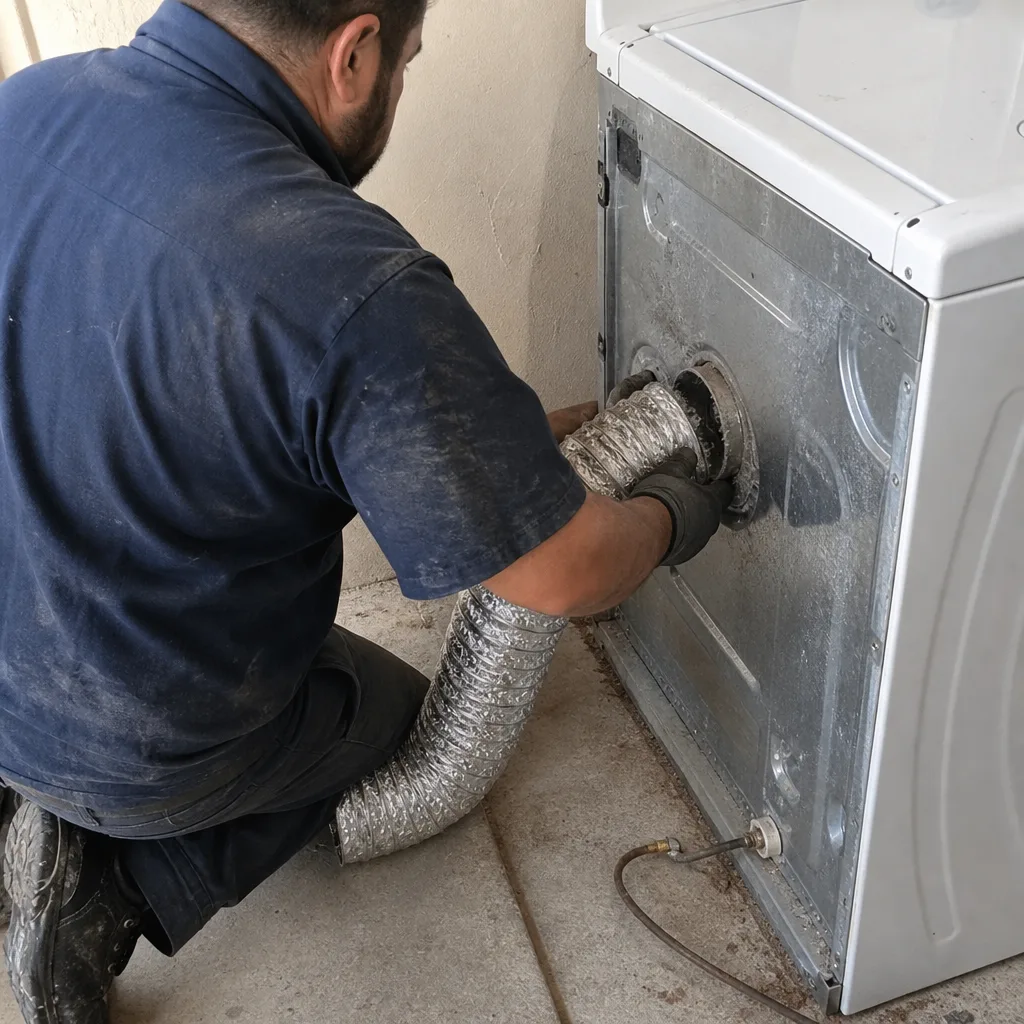
Call for professional inspection when: you observe water staining or rust on visible ductwork; a room that previously cooled adequately now struggles; your electric bill increases without changed usage; you detect musty odor when the system first cycles; or it’s been more than 24 months since any duct inspection. These are not emergencies, but they’re signals that the camera will likely find something worth addressing.
CleanRun Air Duct Cleaning Katy offers free estimates in Katy. Every estimate includes camera inspection of accessible ductwork, and the written price is delivered before any work begins. Call (346) 666-7165 to schedule. All technicians are background-checked and uniformed under Haven Standard Clause 3: Verified Crews, and every job concludes with a Documented Photo Record of every duct run.
Frequently Asked Questions
Whole-system air duct cleaning in Katy typically ranges from $380 to $620 for a standard residential system, with cleaning plus sanitizing for documented microbial contamination ranging from $520 to $840. See our Air Duct Cleaning Cost Breakdown: The Katy Homeowner’s Reference for 2026 for detailed pricing factors. CleanRun quotes one flat price per system in writing before work begins, with no per-vent add-ons. Call (346) 666-7165 for an exact quote based on your system size and camera findings - estimates are free.
Low quotes usually indicate incomplete scope: per-vent pricing that increases once the truck arrives, cleaning only supply ducts while ignoring the return side, or equipment that doesn’t include camera inspection or photo documentation. The $79 coupon model relies on upselling after arrival. CleanRun’s written price under Haven Standard Clause 1 includes the full system, the camera inspection, and the documented photo record.
CleanRun delivers a Documented Photo Record of every duct run, before and after, as a standard deliverable on every job. You see the interior of your own ducts, not a stock photo from a marketing folder. This practice has been in place since our first job in 2013.
There’s no fixed interval that applies to all homes. In our experience across 52,000+ homes, Katy’s humidity and pollen load accelerate debris accumulation compared to drier climates, but filtration quality, duct integrity, and occupancy patterns matter more than calendar years. Camera inspection every 18-24 months establishes whether cleaning is needed; the photo record from each visit tracks the trend for your specific home.
A shop vacuum can remove loose debris at registers but cannot reach past the duct boot into the duct run, cannot create the negative pressure needed to dislodge adhered debris, and cannot inspect or clean the return plenum or evaporator coil. More importantly, disturbing debris without proper containment can distribute it through the house. Professional equipment from Rotobrush, Nikro, and Abatement Technologies is specified for these tasks for reasons of effectiveness and containment.
Air duct cleaning addresses the supply and return ductwork that distributes air through your home. HVAC cleaning in Katy includes the air handler components: evaporator coil, blower motor and wheel, drain pan, and cabinet interior. These components interact; a clean duct system with a dirty evaporator coil will redistribute coil debris on the first cycle. For homes with significant accumulation, combined service addresses the full air path.
Duct cleaning removes accumulated debris that can harbor allergens, but it is not a medical treatment. The most significant allergy impact comes from improved filtration and reduced duct leakage, which prevents attic air (containing pollen, insulation fibers, and other irritants) from entering the system. We recommend discussing specific health concerns with an allergist and addressing filtration and duct integrity as part of a broader strategy.
The Bottom Line
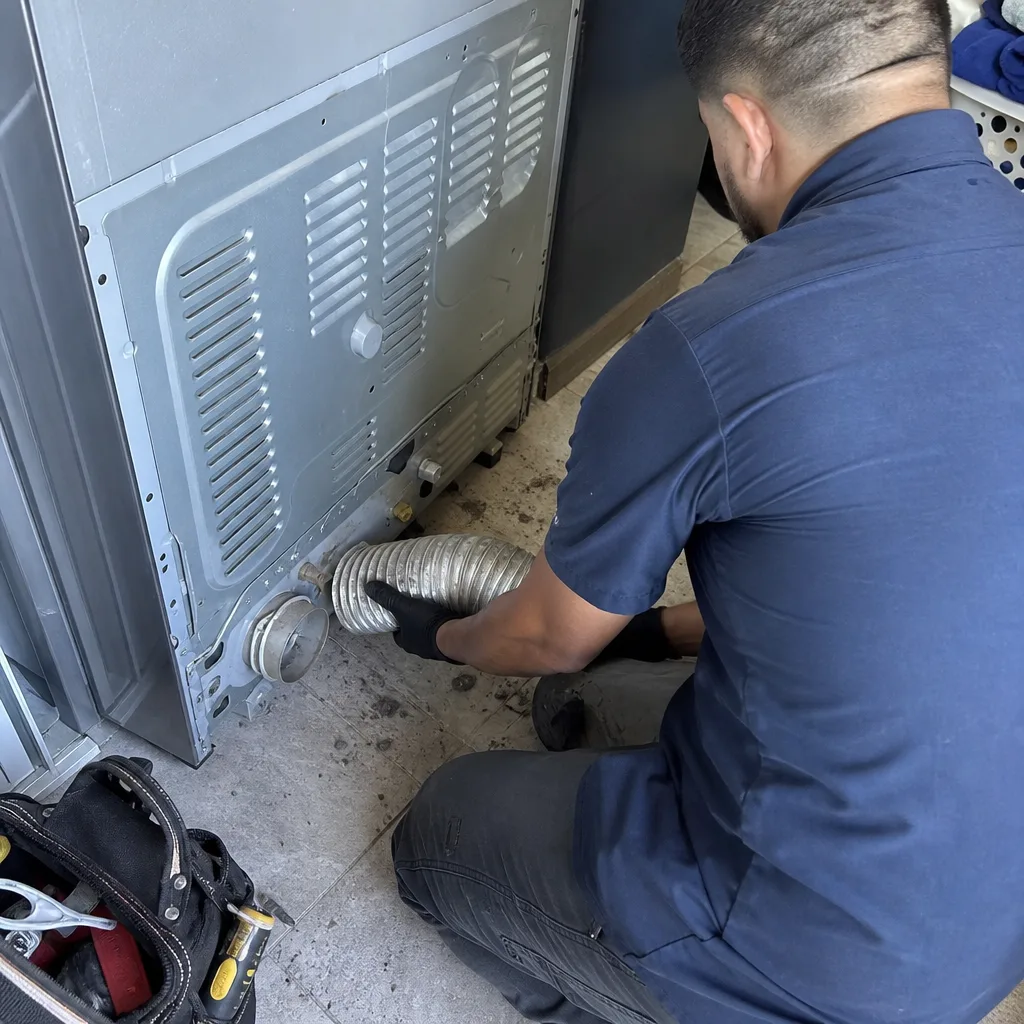
Katy’s climate demands a duct maintenance calendar built around actual local conditions: pre-cooling inspection in March, heat-degradation monitoring through summer, post-storm moisture checks in September and October, and vigilance for microbial growth during the humid idle period from November through February. Professional cleaning should be timed to camera-documented contamination, not arbitrary schedules or coupon cycles. The equipment used matters, the documentation delivered matters, and the price structure matters. CleanRun has operated on these principles since 2013: written price before work, documented photo record after, and the 365-Day Done Right Promise backing every job.
CleanRun Air Duct Cleaning Katy home | Air Duct Cleaning in Katy | Dryer Vent Cleaning in Katy
Written by Tomas Reyes, Owner at CleanRun Air Duct Cleaning Katy, serving Katy since 2013.