
Last updated September 23, 2026
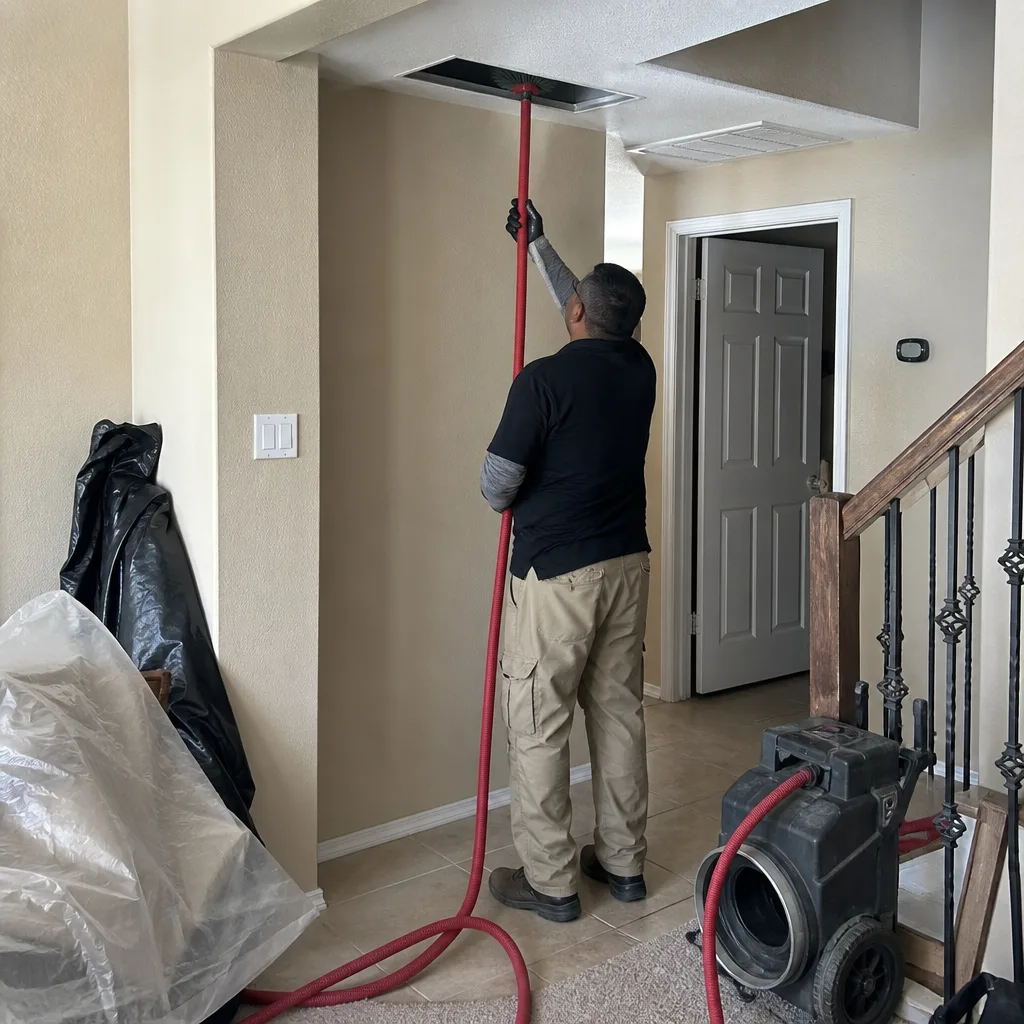
Whole-system duct and dryer vent check with before-and-after photos - you see exactly what came out of your vents
That "$99 whole-house special" is a bait ad - the real number appears once they are in your hallway, or the "clean" is a shop-vac at the register. We photograph the inside of your ducts before and after instead.
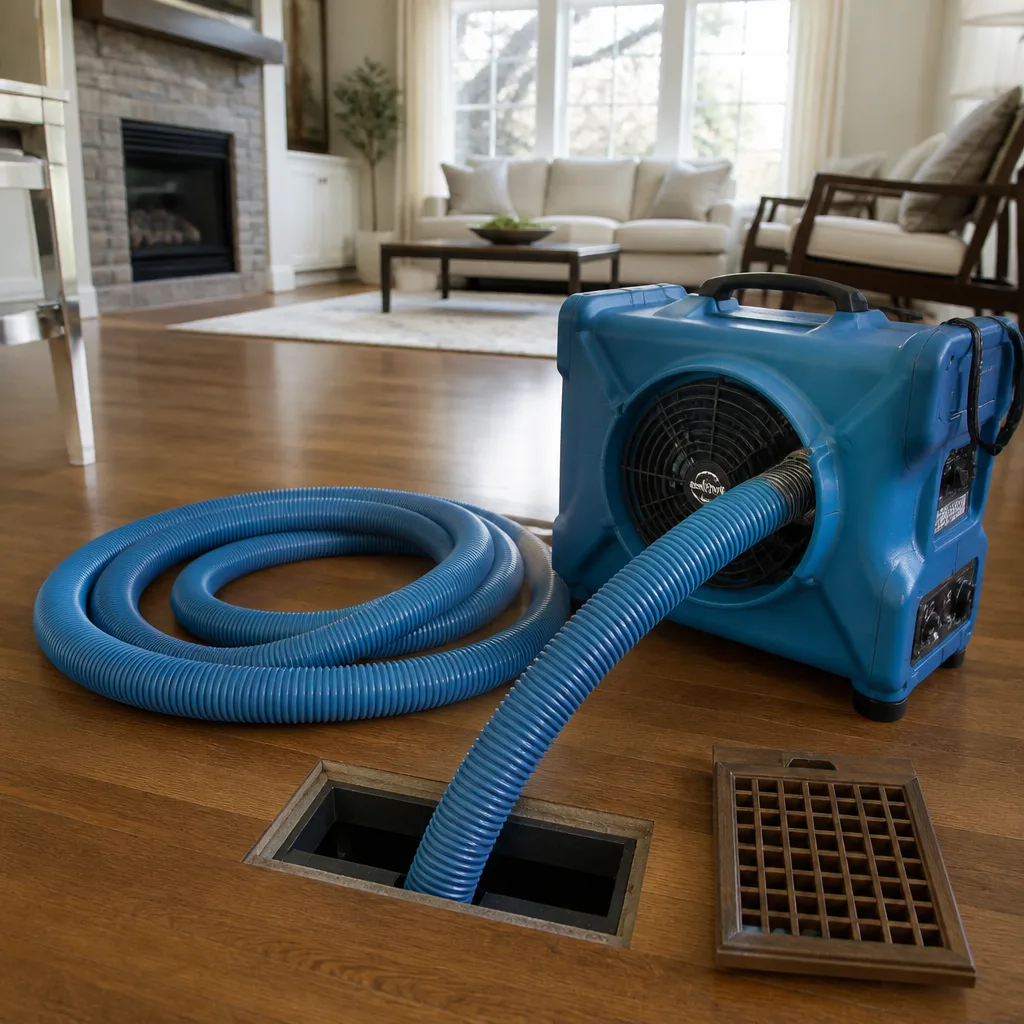

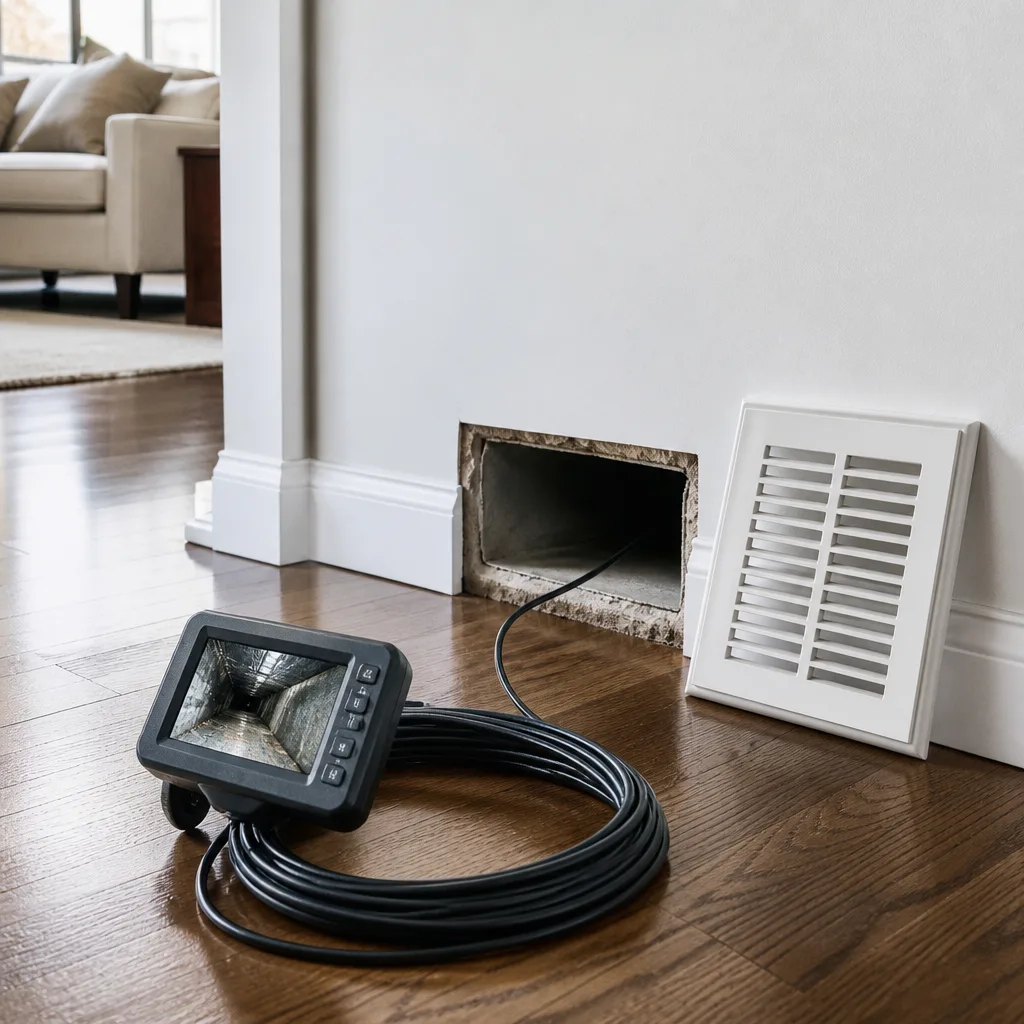
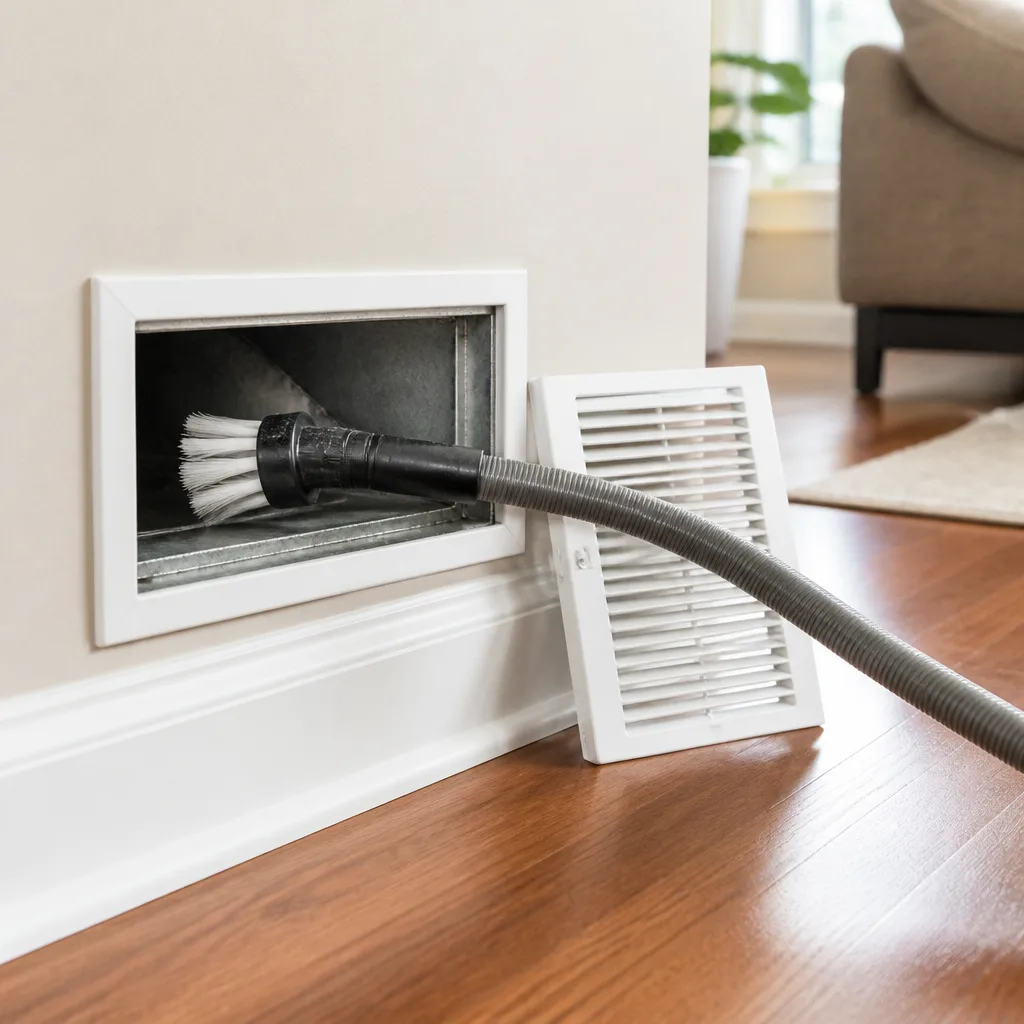
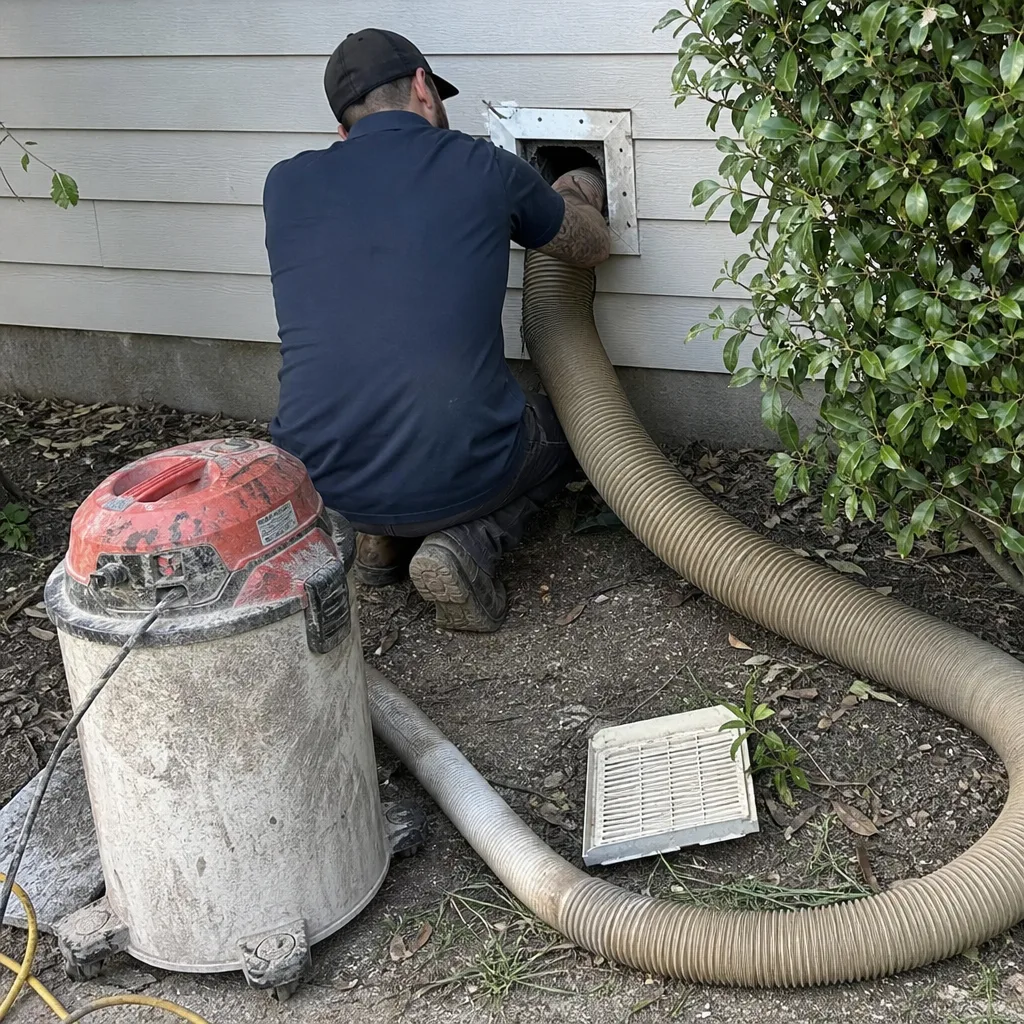 Before
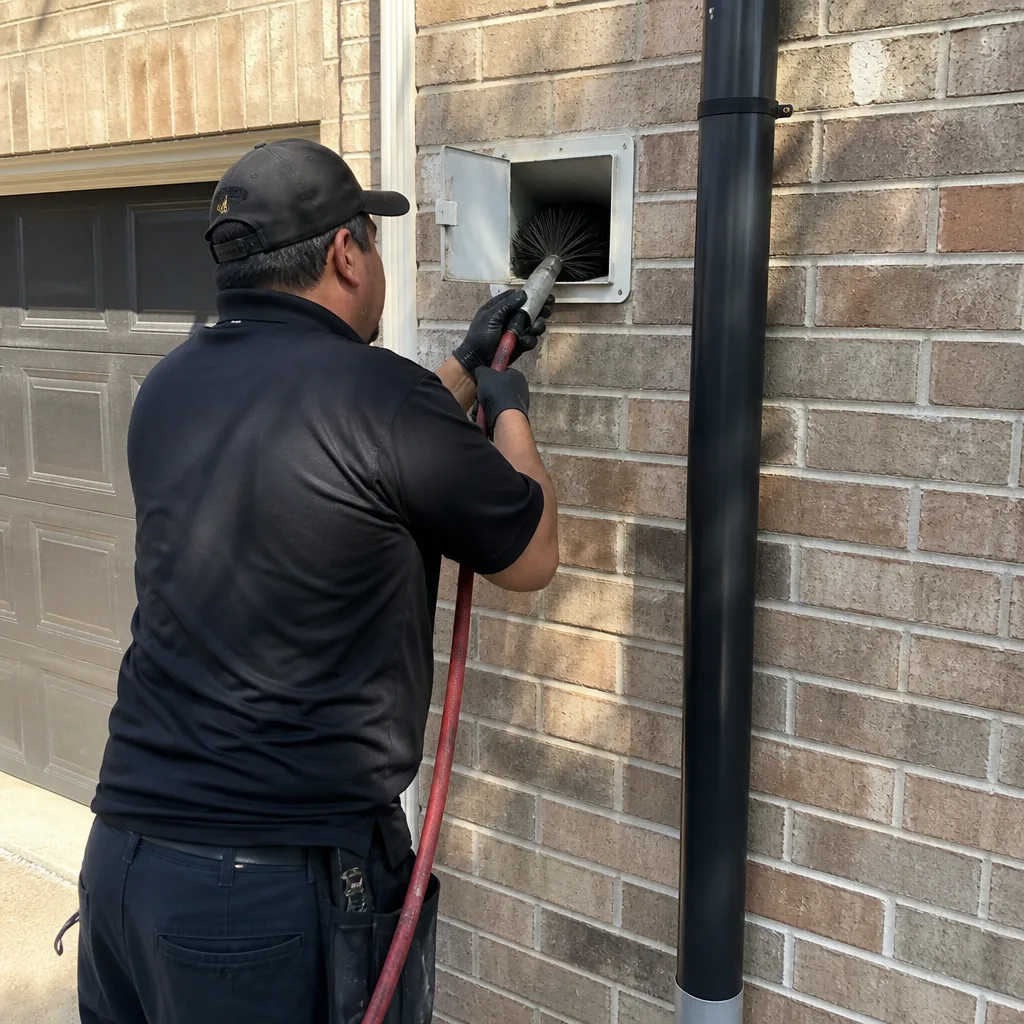 After
After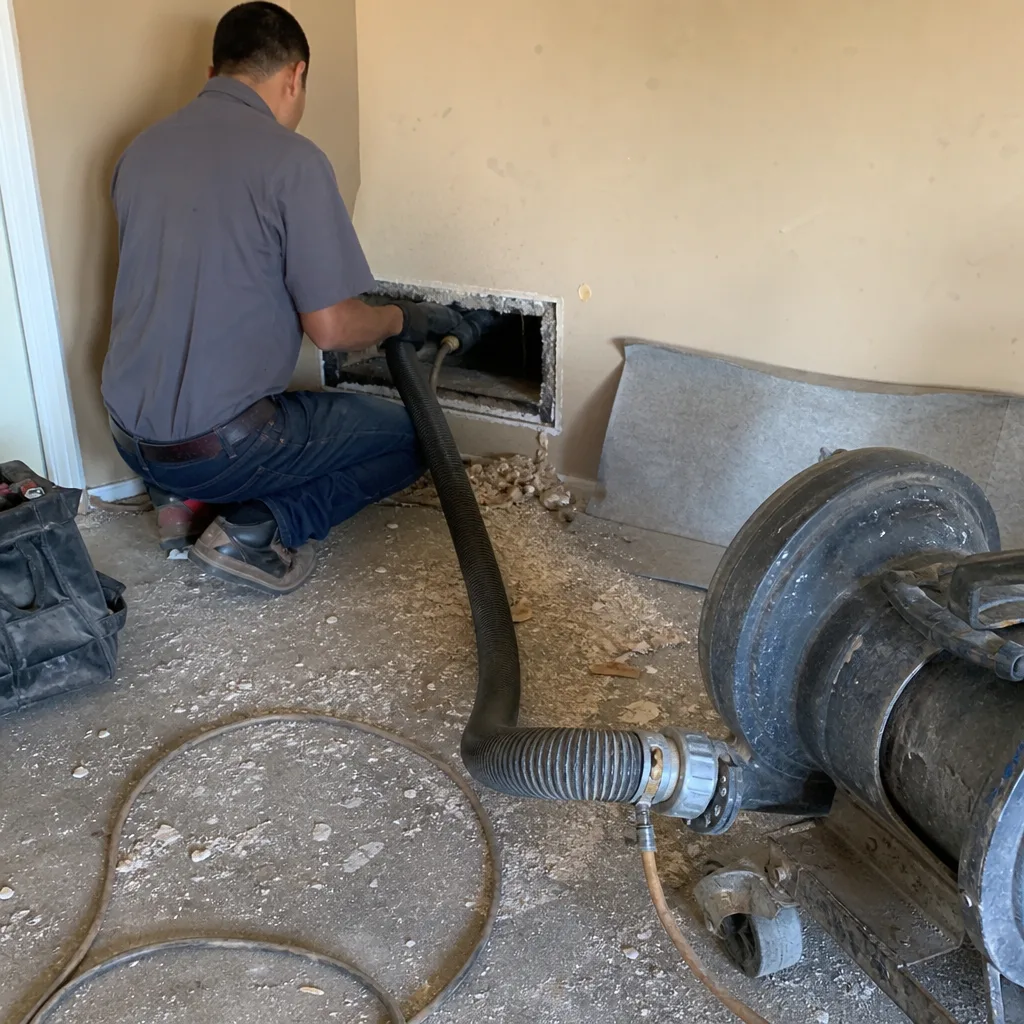 Before
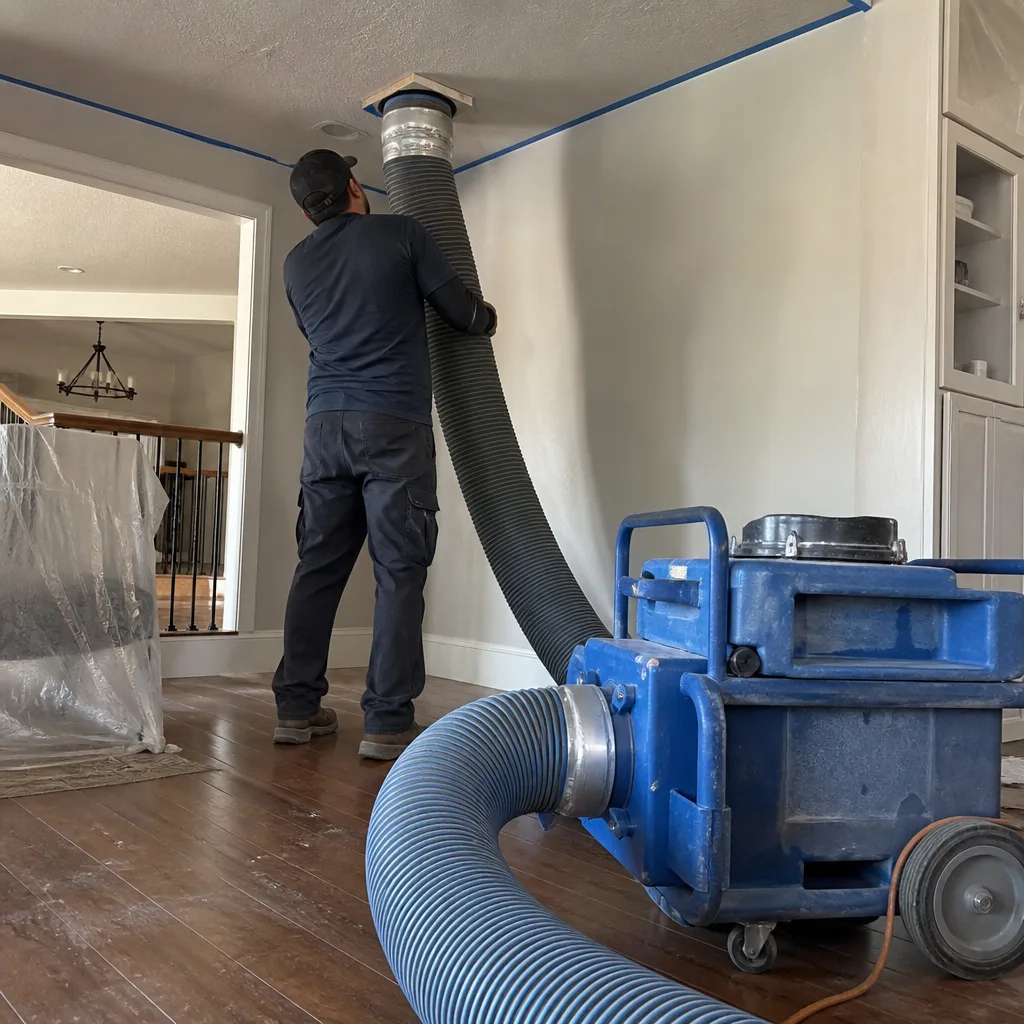 After
After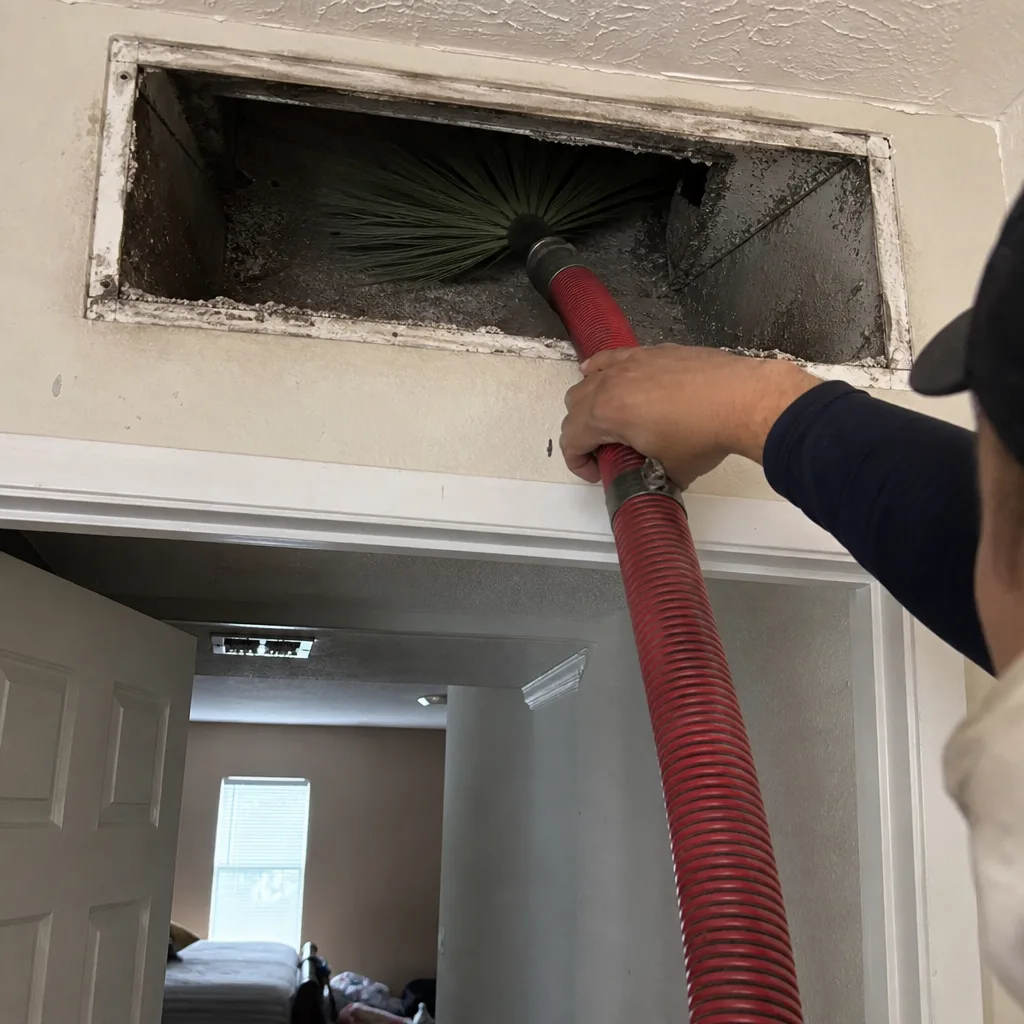 Before
 After
AfterAir Duct Cleaning Permits, Codes & Inspections in TX: What You Need to Know
Texas does not license air duct cleaners. That single fact creates a dangerous gray zone: a technician with a shop vacuum and a business card can legally enter your home and cut holes in your ductwork, but the moment that same technician reconnects a loose duct section or installs an access panel improperly, the work may cross into regulated HVAC territory. In Katy, where home values have climbed steadily since 2015 and resale inspections are increasingly thorough, we’ve seen deals delayed because a previous duct cleaning company performed what they called a “minor repair” without a TDLR-licensed HVAC contractor on the job. This guide draws the precise line between legal duct cleaning and work that requires permits, licenses, and inspections in Texas. For a deeper dive, see our Complete Guide to Air Duct Cleaning in Katy.
Quick Answer
Air duct cleaning itself requires no state permit or license in Texas. However, any modification to ductwork, including cutting new access panels, resealing disconnected sections, or altering connections to the air handler, typically requires work by a TDLR-licensed HVAC contractor and may trigger local mechanical permit requirements in Katy and Fort Bend County. Homeowners should verify license status through TDLR’s public lookup, demand written documentation of any work performed, and retain permit records for future resale disclosures.
Table of Contents
- What TDLR Allows Duct Cleaners to Do Without an HVAC License
- The Exact Moment Cleaning Becomes HVAC Work
- Katy and Fort Bend County Permit Triggers
- How to Verify a Company’s TDLR License Status
- IMC Code Requirements for Duct Access Panels
- Documentation to Retain for Resale
- Common Mistakes to Avoid
- When to Call a Professional
- Frequently Asked Questions
- The Bottom Line
BeforeAfterWhat TDLR Allows Duct Cleaners to Do Without an HVAC License
The Texas Department of Licensing and Regulation (TDLR) governs HVAC contractors under Chapter 1302 of the Texas Occupations Code. The statute creates a clear, and often misunderstood, boundary between maintenance and regulated contracting work.
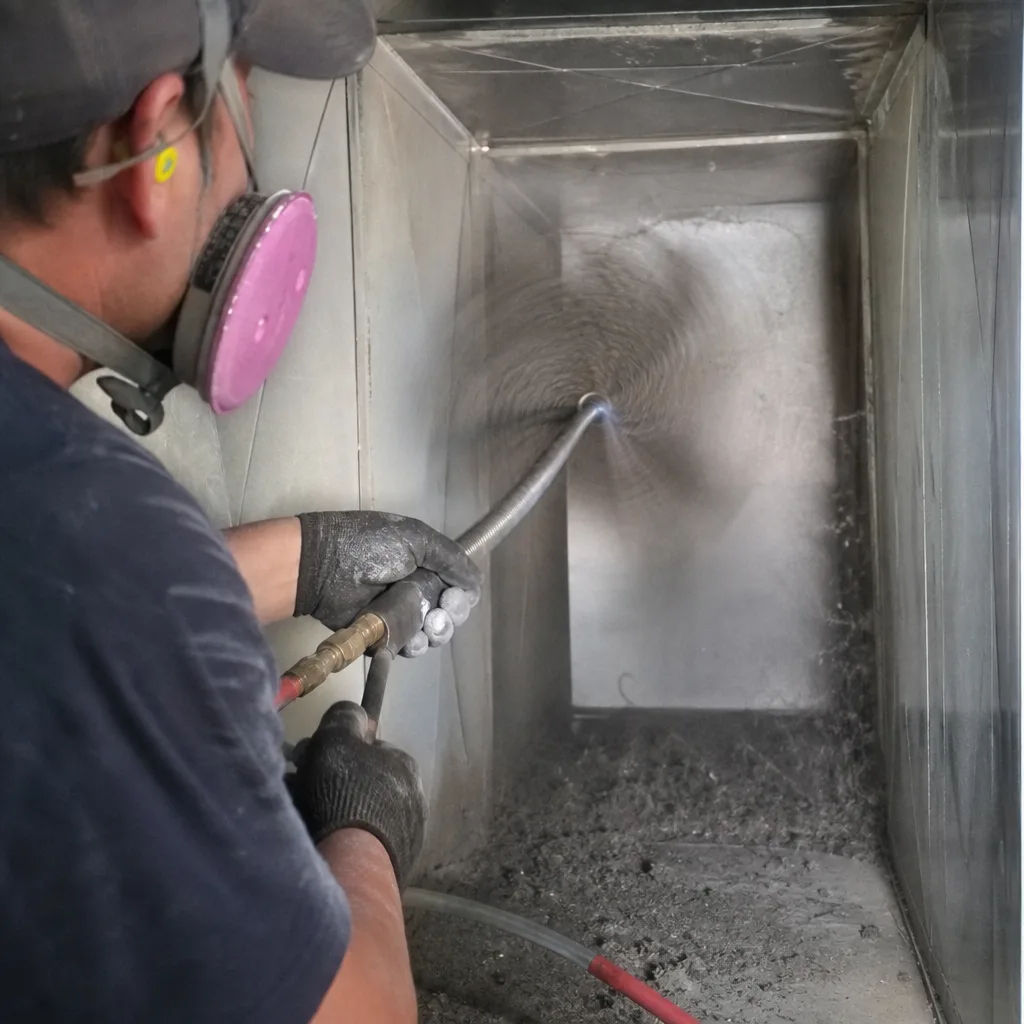
Under TDLR rules, unlicensed individuals may perform duct cleaning defined as the removal of dust, debris, and contaminants from existing duct runs using mechanical agitation and negative-pressure extraction. This includes:
- Inserting rotary brushes or compressed-air whips into existing register openings and access points
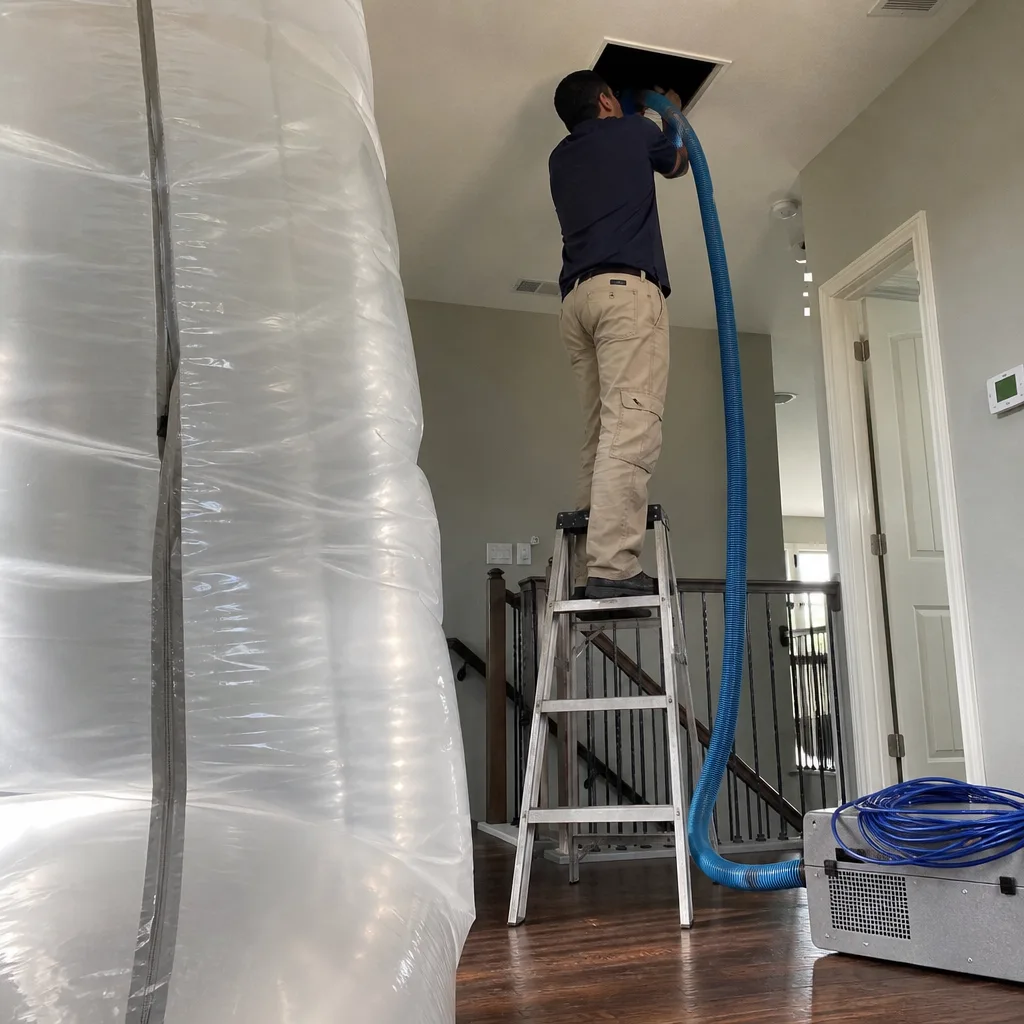
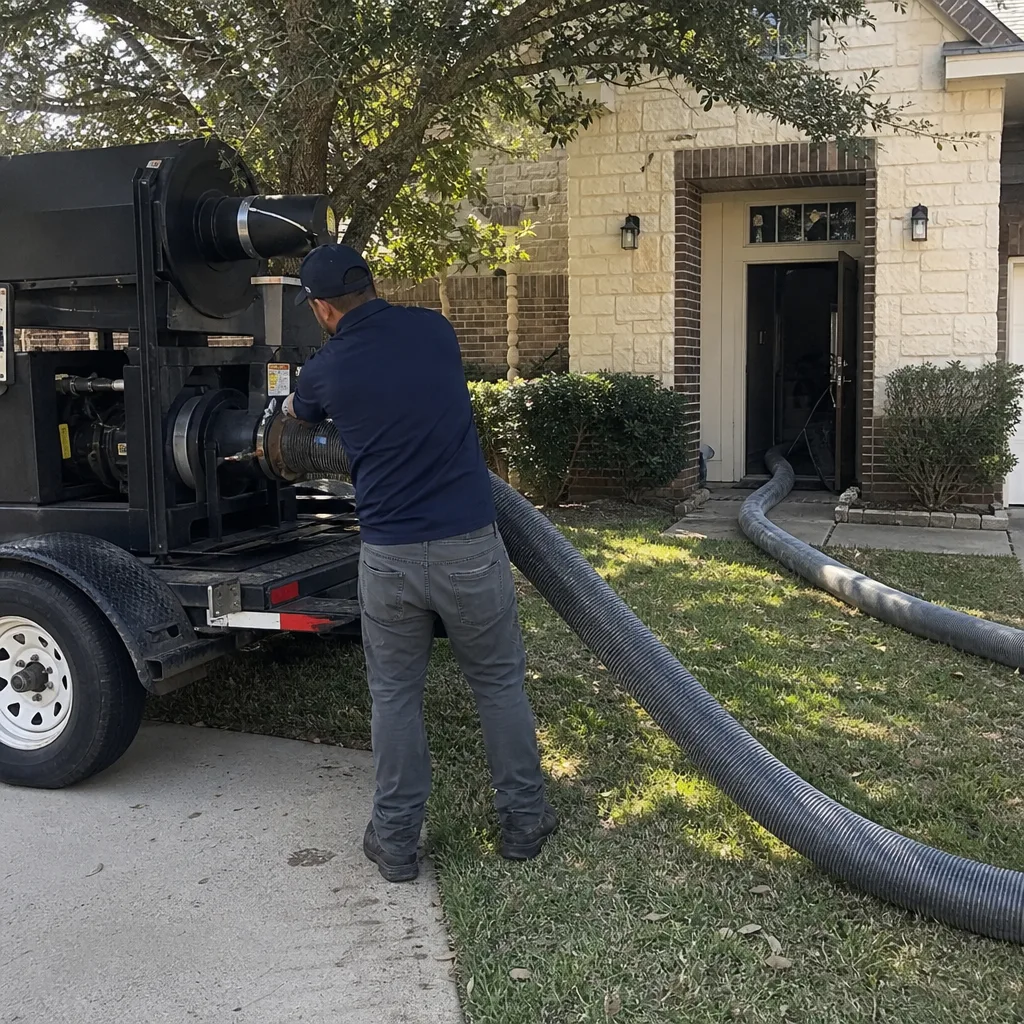
- Applying vacuum suction at the plenum (the main distribution box attached to your air handler) through existing service openings
- Using video inspection cameras to document interior conditions
- Applying EPA-registered sanitizers to interior duct surfaces following established protocols
What TDLR does not permit unlicensed duct cleaners to perform includes any work that alters the mechanical integrity or configuration of the HVAC system. This includes cutting new access panels into sheet metal, repairing disconnected duct sections with new fasteners or mastic, modifying return air pathways, or installing equipment such as UV lights or electronic air cleaners that require electrical connections to the air handler.
At CleanRun Air Duct Cleaning Katy home, our crews operate within this boundary precisely. When our camera inspection reveals a disconnected duct section in a Katy home, we document the finding, provide a written description, and refer the repair to our TDLR-licensed HVAC division or the customer’s chosen licensed contractor. We do not perform the repair ourselves under our cleaning license because doing so would place the homeowner at compliance risk.
The distinction matters because Texas law allows TDLR to issue civil penalties of up to $5,000 per day for unlicensed HVAC contracting. While enforcement historically targeted major installations, the 2023 amendments to TDLR’s administrative rules increased scrutiny of residential service work following consumer complaints.
The Exact Moment Cleaning Becomes HVAC Work
The transition from cleaning to regulated HVAC work is not gradual. It occurs at specific, identifiable actions. Homeowners should watch for these trigger points when evaluating any duct cleaning proposal.
Trigger 1: Cutting new access panels. If a technician proposes cutting a new opening into sheet metal ductwork to reach interior sections, this constitutes mechanical alteration. The International Mechanical Code (IMC) requires access panels to be of specific minimum size, gasketed or sealed to prevent air leakage, and installed in locations that do not compromise structural integrity. An unlicensed cleaner who cuts a rough hole and covers it with tape has performed non-compliant work.
Trigger 2: Resealing disconnected duct sections. In Katy, particularly in subdivisions built during the 2015-2020 construction boom, we’ve documented numerous cases where duct connections at the plenum or between duct runs have separated due to thermal cycling and inadequate original fastening. These are among the Air Duct Cleaning Warning Signs: A Katy Homeowner’s Reference Guide we recommend monitoring. Reconnecting these sections requires proper mechanical fastening and sealant application. TDLR considers this HVAC repair work.
Trigger 3: Altering return air pathways. Any modification to return air grilles, jumper ducts, or transfer grilles that changes the designed airflow pattern requires engineering consideration and licensed execution.
Trigger 4: Electrical connections. Installing UV-C sanitizing lights, ionization devices, or powered air cleaners that tie into the air handler’s electrical system requires both HVAC and electrical licensing in most Texas jurisdictions.
Our Air Duct Cleaning in Katy service includes a written scope that explicitly states what we will and will not do. Haven Standard Clause 1, our written pricing protocol, itemizes each action so homeowners can verify compliance before work begins.
Katy and Fort Bend County Permit Triggers
Local jurisdiction adds another layer to the state framework. Katy operates under the Fort Bend County Unified Development Code with amendments adopted by the City of Katy Building Standards Commission. Harris County portions of the greater Katy area follow separate procedures.
For duct cleaning alone, no permit is required in Katy or Fort Bend County. The work is classified as maintenance. However, permit triggers activate when the scope crosses into mechanical alteration:
| Work Type | Permit Required | Issuing Authority | Inspection Required |
|---|---|---|---|
| Duct cleaning only (no modifications) | No | N/A | No |
| Replacement of existing access panels (same size/location) | Typically no | N/A | No |
| New access panel cutting in existing ductwork | Yes – Mechanical | City of Katy Building Dept | Yes – rough and final |
| Duct section repair/replacement | Yes – Mechanical | City of Katy Building Dept | Yes |
| Duct sealing in unconditioned attic (mastic/foil tape) | Varies by scope | City of Katy Building Dept | Sometimes |
| Dryer vent replacement through wall assembly | Yes – Building | City of Katy Building Dept | Yes |
Fort Bend County’s climate-specific factors influence local enforcement. The region’s high humidity and prolonged cooling season mean duct leakage in attics creates condensation risks that inspectors scrutinize closely. A poorly sealed access panel in a Katy attic can produce moisture accumulation that leads to mold growth within a single cooling season. Building inspectors who encounter unpermitted duct modifications during resale inspections frequently require full disclosure of the work’s origin and may mandate licensed contractor verification.
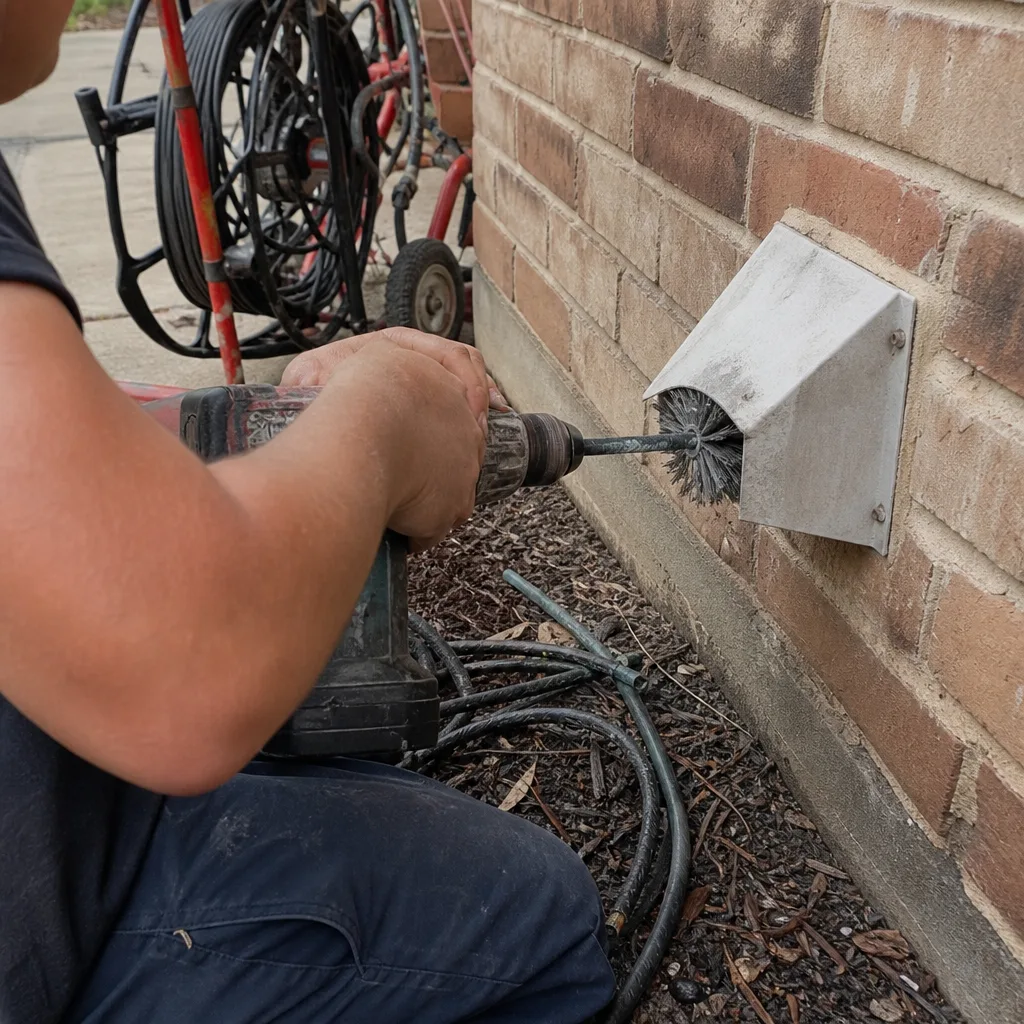
Our Dryer Vent Cleaning in Katy service sometimes reveals deteriorated vent assemblies that require replacement. When replacement involves wall penetration or routing changes, we advise homeowners of the permit requirement and coordinate with licensed contractors rather than performing the work ourselves.
How to Verify a Company’s TDLR License Status
Texas provides a free, public license lookup tool at TDLR.texas.gov. Every homeowner should use it before hiring any company that will touch their ductwork. The process takes under two minutes and eliminates reliance on marketing claims.
- Navigate to TDLR.texas.gov and select “License Search” from the main menu.
- Enter the company’s name or the individual technician’s name in the search field. Search both; some companies operate under the owner’s personal license.
- Review the results for “Air Conditioning and Refrigeration Contractor” licenses. Note the license number, expiration date, and status.
- Click the license number to view the detailed record, including any disciplinary actions or complaints.
Understanding the distinction between “registered” and “licensed” status is critical. In Texas contractor law:
- Licensed contractors have passed TDLR’s examination, met experience requirements, and maintain continuing education. They may perform all regulated HVAC work.
- Registered technicians work under a licensed contractor’s supervision. They may perform regulated work only while employed by and supervised by that specific licensed contractor.
- Unregistered/unlicensed individuals may perform cleaning and maintenance only, as defined above.
A company that advertises “licensed and insured” should produce a TDLR license number without hesitation. At CleanRun, we publish our license number on every proposal and on our website. We encourage verification. Haven Standard Clause 3, Verified Crews, requires that every technician’s background check and credential status be documented and available to the customer before arrival.
Be wary of companies that respond to license inquiries with “we’re certified” or “our technicians are trained.” Certification from private organizations, while potentially valuable, does not substitute for TDLR licensure. Only TDLR licensure authorizes regulated HVAC work in Texas.
IMC Code Requirements for Duct Access Panels
The International Mechanical Code, adopted with Texas amendments, governs the technical standards for duct access panels. These provisions exist to ensure that service openings do not compromise system performance or create safety hazards. Home inspectors in Katy increasingly reference IMC standards during resale inspections, particularly in homes where duct cleaning has been performed.
IMC Section 603.9 specifies minimum requirements for access openings in ductwork:
- Access panels must be large enough to permit thorough cleaning and inspection of the interior duct surface. For rectangular ducts, the minimum opening dimension is typically 12 inches or the duct height, whichever is smaller, with adequate width for tool insertion.
- Panels must be constructed of material equivalent to the ductwork itself. A cardboard or fiberboard patch on a galvanized steel duct fails code.
- Panels must be gasketed or sealed to prevent air leakage. Unsealed access openings can leak conditioned air at rates exceeding 10% of system airflow in typical residential installations.
- Panels in return air ducts must maintain the duct’s structural integrity and smooth interior surface to prevent debris accumulation and airflow turbulence.
In practice, we’ve found that unlicensed cleaners frequently install access panels that violate one or more of these standards. Common failures include:
Sheet metal screws protruding into the airstream, which collect debris and create noise. Gaps around panel perimeters sealed with duct tape, which degrades in attic temperatures exceeding 140°F during Katy summers. Panels installed on the bottom surface of horizontal duct runs, where condensation pools and accelerates corrosion. Oversized openings that weaken duct structure and cause vibration or separation.
Our crews use HVAC Cleaning in Katy protocols that include photographic documentation of all existing access panels before work begins. When new access is required for thorough cleaning, we coordinate with our licensed HVAC division to install IMC-compliant panels with proper gasketing and fastening. The photo record shows the panel condition before and after, with close-ups of seal quality.
Home inspectors in the Katy area have flagged non-compliant access panels with increasing frequency since 2021, particularly in homes sold through relocation companies and institutional buyers with standardized inspection protocols. A flagged panel typically requires licensed contractor verification or replacement before closing, adding cost and delay.
Documentation to Retain for Resale
The documentation gap is where most homeowners become vulnerable. Duct work, unlike roofing or plumbing, rarely produces visible evidence of its occurrence. Without written records, a homeowner cannot prove that work was performed by qualified personnel or that it complied with applicable codes.
After any duct-related service, homeowners should retain:
- The written proposal or scope of work. This document should itemize every action performed, identify the personnel who performed it, and state the company’s license status. Haven Standard Clause 1 requires that CleanRun provide this before any work begins.
- Permit applications and approvals. If mechanical permits were required, retain the application, permit number, and all inspection sign-offs. In Katy, permit records are maintained by the City of Katy Building Department and are retrievable by address, but homeowners should keep their own copies.
- License verification printouts. Screenshot or print the TDLR lookup results for any licensed contractor who performed regulated work. License status can change; documentation at the time of service protects against future disputes.
- Photo documentation. Before-and-after photographs of interior duct conditions, access panel installations, and any repaired sections. CleanRun’s Documented Photo Record, included on every visit, serves this purpose.
- Warranty and guarantee documents. Written terms of any workmanship guarantee. Our 365-Day Done Right Promise is provided in writing on every job, with specific remedy procedures.
Store these documents with your home’s permanent records, not in a service folder that gets discarded during a move. Resale disclosure requirements in Texas obligate sellers to report known defects and non-compliant work. Documentation that proves compliance is the homeowner’s defense against post-sale claims.
In Katy specifically, where the 2015-2025 construction cohort is entering its first and second resale cycles, we’ve observed that buyers’ inspectors are increasingly thorough with HVAC systems. A documented maintenance history, including professional cleaning with photo verification, supports the system’s condition representation. Absent documentation, buyers may demand HVAC specialist inspection or credit for system replacement.
Common Mistakes to Avoid
- Hiring based on price alone without verifying license status. The lowest bid often reflects unlicensed operation. Verify TDLR status before comparing prices.
- Assuming “certified” means “licensed.” Private certifications from equipment manufacturers or trade associations have no regulatory standing in Texas. Only TDLR licensure matters for regulated work.
- Allowing access panel cutting without permit verification. If a technician proposes cutting new openings, ask whether mechanical permits are required and who will obtain them. An evasive answer signals non-compliance risk.
- Neglecting to retain documentation. Katy homeowners in particular, given the area’s active resale market, should maintain permanent files of all home service documentation. The absence of records can be as damaging as the absence of compliance.
- Accepting verbal assurances of permit compliance. Permits are public record. Request the permit number and verify it with the issuing authority. CleanRun provides permit numbers in writing when applicable work is performed.
- Confusing duct cleaning with duct sealing or repair. These are distinct service categories with different regulatory requirements. A company that performs “cleaning and sealing” as a package may be performing regulated work without proper licensure.
- Ignoring inspector flags during resale. If a home inspector notes unpermitted duct modifications, address them before listing. Disclosure of known issues without resolution typically reduces sale price more than the cost of proper remediation.
When to Call a Professional
Call a TDLR-licensed HVAC contractor when your ductwork requires modification, repair, or when you’re uncertain whether proposed cleaning work crosses into regulated territory. Call a professional duct cleaning company when you need maintenance cleaning of accessible duct runs with documented results.
Specific scenarios that warrant professional consultation include: visible mold growth inside ductwork, persistent airflow imbalance between rooms, evidence of pest intrusion, musty odors following cleaning, or any proposal that involves cutting new access openings. In Katy, where summer humidity exceeds 75% for extended periods, moisture-related duct issues escalate quickly and benefit from prompt professional assessment.
CleanRun Air Duct Cleaning Katy offers free estimates in Katy. Our proposals specify exactly what we will do, what we will not do, and whether any aspect of the scope requires licensed HVAC coordination. Call (346) 666-7165 to schedule an assessment. Every estimate includes a written price before work begins, under Haven Standard Clause 1, with no obligation to proceed.
Frequently Asked Questions
No. Air duct cleaning, defined as the mechanical removal of dust and debris from existing duct runs, requires no state or local permit in Texas. However, if the work includes cutting new access panels, repairing disconnected sections, or modifying duct configuration, mechanical permits may be required in your jurisdiction. Call (346) 666-7165 for an exact quote on cleaning-only service - estimates are free.
Verify through TDLR’s public license lookup at TDLR.texas.gov. Search for “Air Conditioning and Refrigeration Contractor” licenses by company or individual name, confirm active status, and check for disciplinary history. A legitimate company will provide its license number without hesitation. CleanRun publishes its license number on every proposal and encourages verification through Haven Standard Clause 3: Verified Crews.
Low quotes often reflect unlicensed operation, inadequate equipment, or scope limitations that become costly add-ons. A $79 coupon typically covers minimal register vacuuming, not full-system cleaning with negative-pressure extraction and photo documentation. CleanRun provides one flat price per system agreed before work starts, with no per-vent pricing or post-arrival upselling - Haven Standard Clause 1.
Demand a documented photo record showing the interior of every duct run before and after service. Without photographic evidence, you have only the technician’s word. CleanRun includes a Documented Photo Record on every visit, delivered as part of the standard job record, so customers can verify the difference between real work and vacuum noise.
No. Reconnecting or repairing duct sections constitutes regulated HVAC work under TDLR rules and requires a licensed contractor. An unlicensed individual who performs this work exposes the homeowner to compliance risk, particularly at resale when home inspectors verify work documentation. CleanRun documents such findings and refers repairs to licensed personnel.
For typical Katy homes with standard fiberglass filters, every 3 to 5 years is reasonable for maintenance cleaning. Homes with pets, recent construction, or occupants with respiratory sensitivities may benefit from more frequent service. The specific interval depends on filter quality, occupancy patterns, and local environmental factors including pollen counts and construction dust. Call (346) 666-7165 for an assessment of your system’s condition - estimates are free.
The Bottom Line
Texas’s lack of duct cleaning licensure creates opportunity for qualified providers and risk for uninformed homeowners. The dividing line is clear in statute but frequently crossed in practice: cleaning requires no permit, but modification does. In Katy’s competitive resale market, documentation of compliant work protects home value and prevents transaction delays. Verify licenses through TDLR, demand written scopes and photo records, and retain all documentation permanently. Explore more guides & resources on our blog for additional homeowner protection strategies. The small effort of verification prevents the larger cost of remediation.
Written by Tomas Reyes, Owner at CleanRun Air Duct Cleaning Katy, serving Katy since 2013.