
Last updated September 23, 2026
Whole-system duct and dryer vent check with before-and-after photos - you see exactly what came out of your vents
That "$99 whole-house special" is a bait ad - the real number appears once they are in your hallway, or the "clean" is a shop-vac at the register. We photograph the inside of your ducts before and after instead.
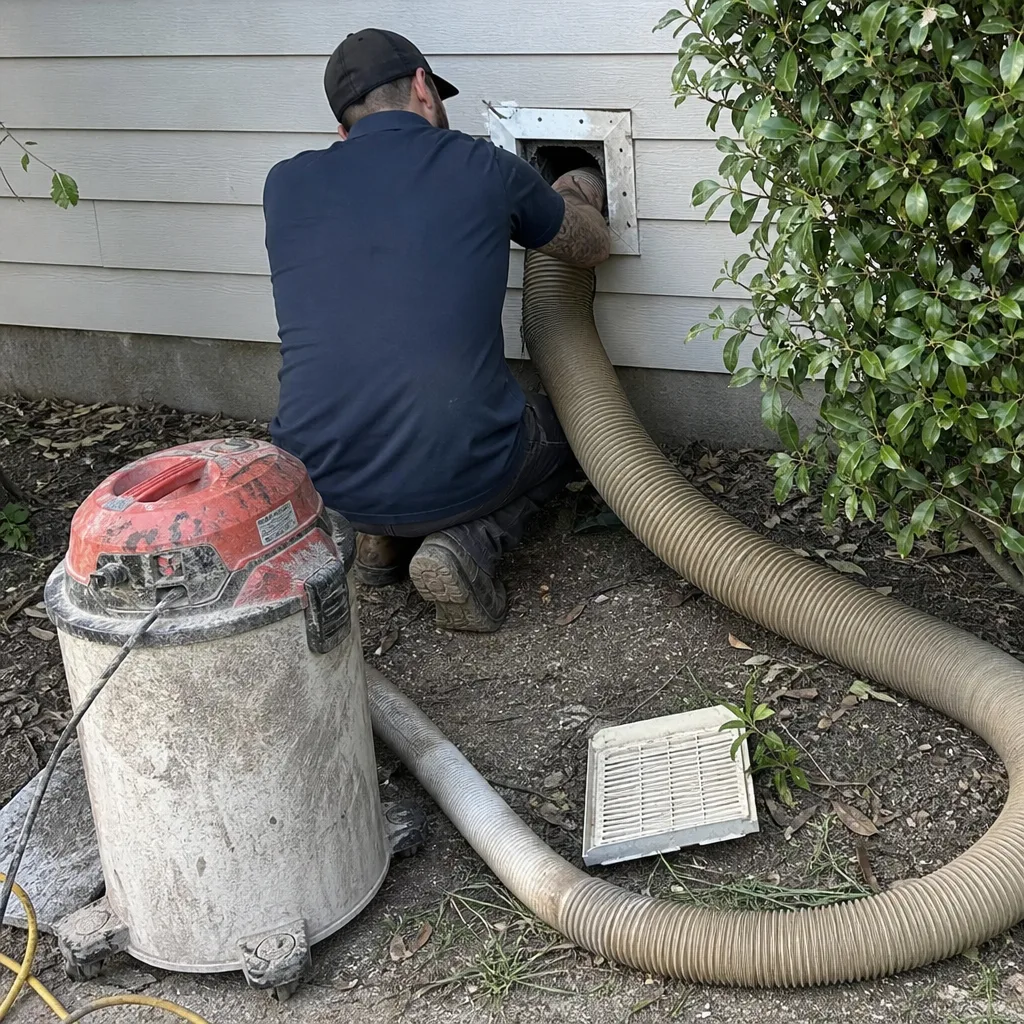 Before
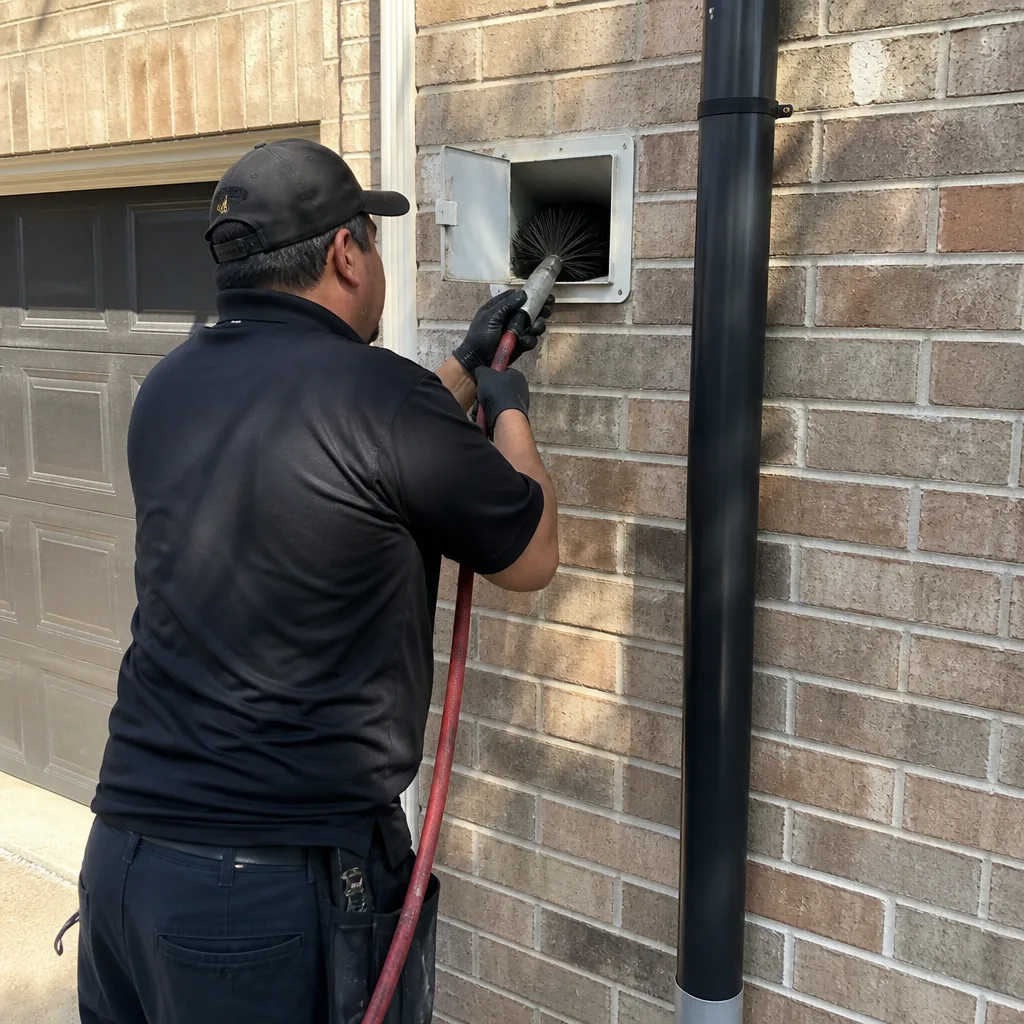 After
After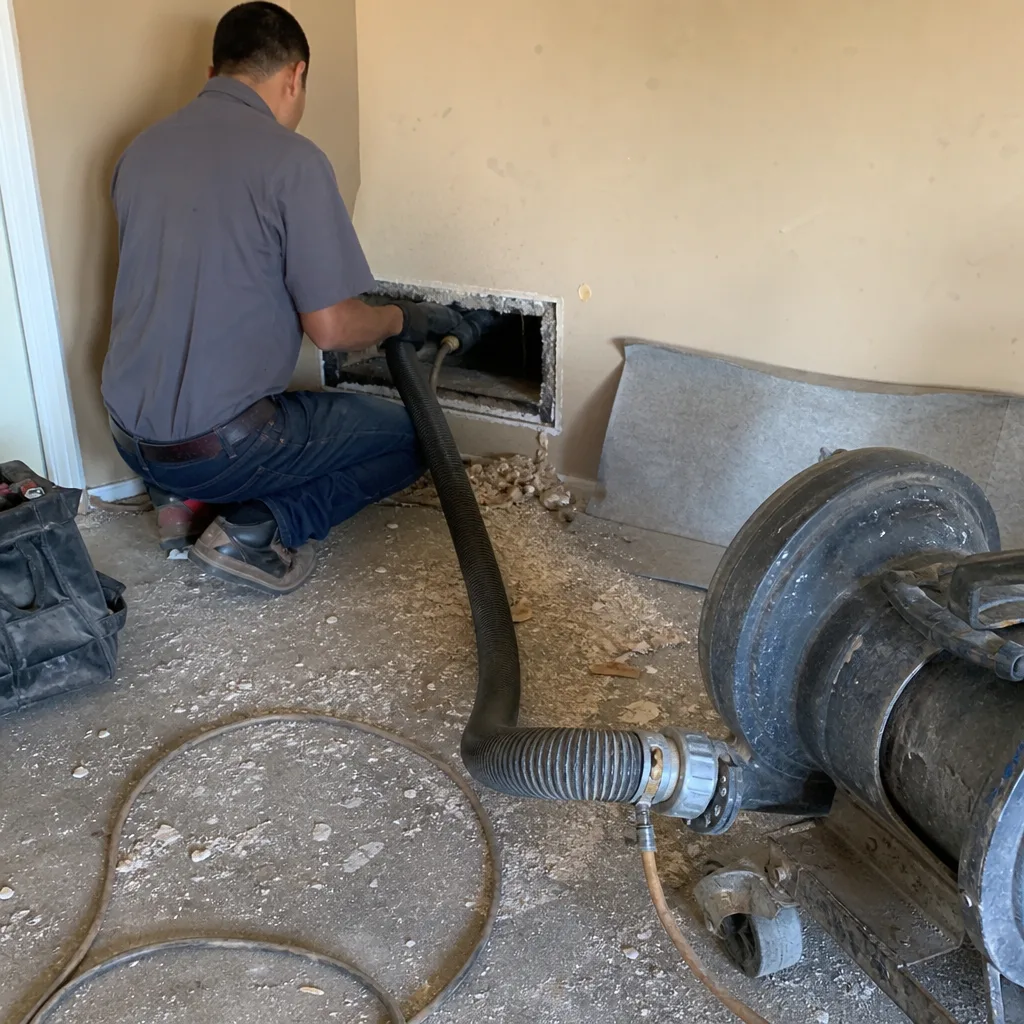 Before
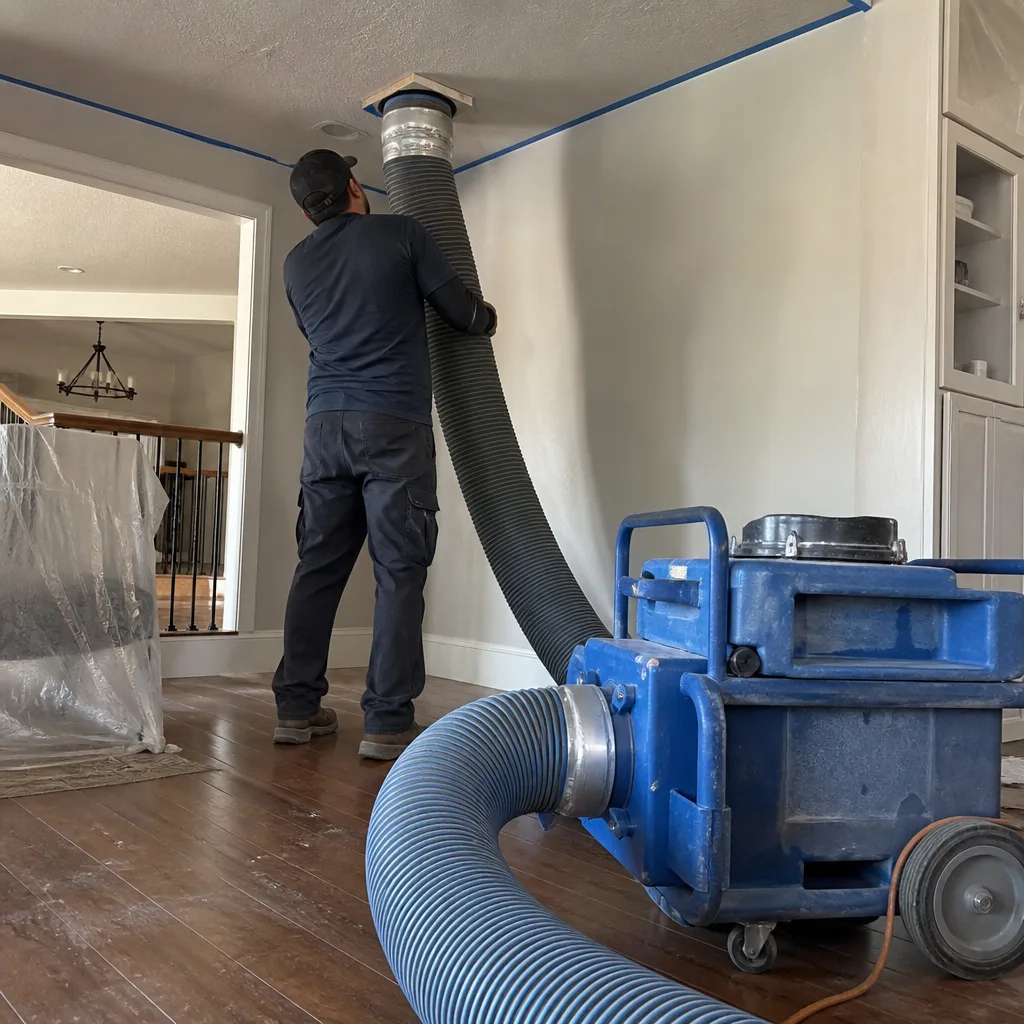 After
After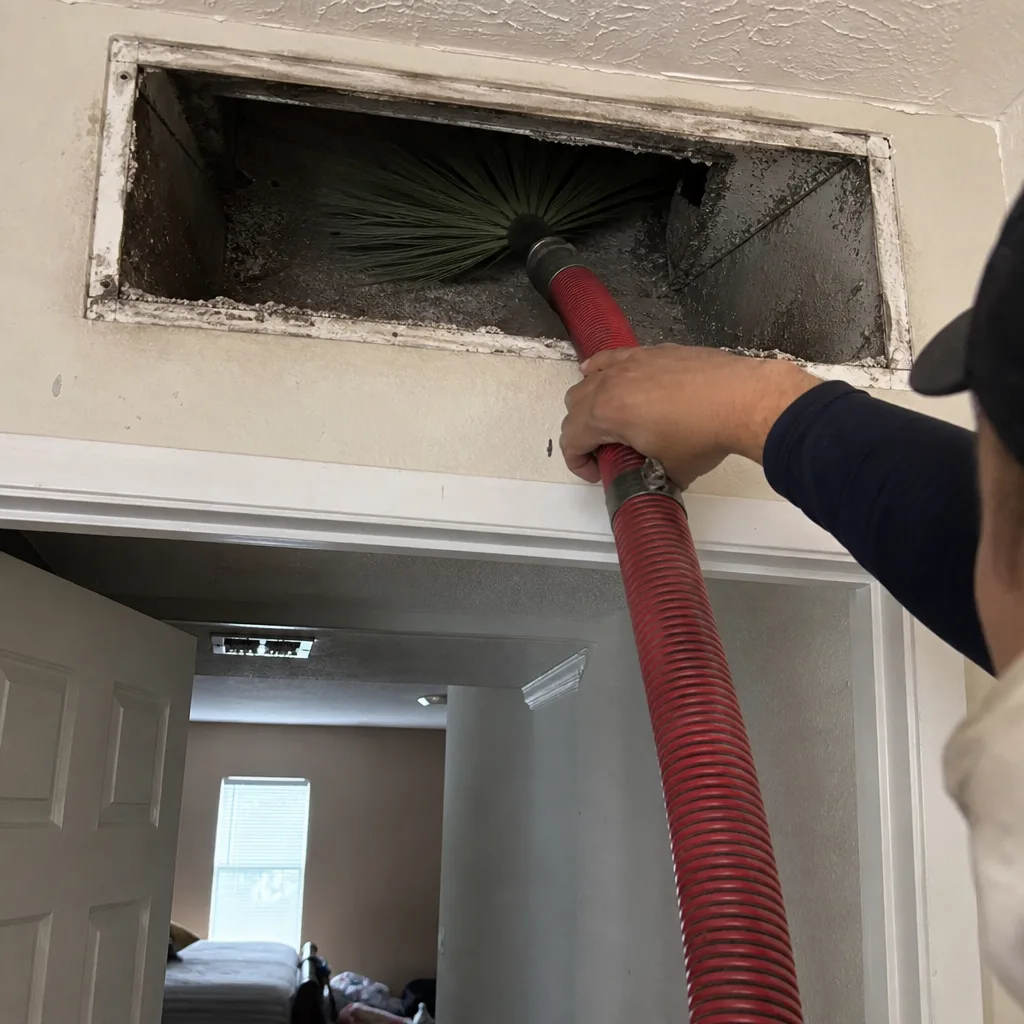 Before
 After
AfterThe Complete Guide to Air Duct Cleaning in Katy
A shop-vac on the end of a flex duct removes roughly 40% of accessible debris and zero percent of what’s coating the interior duct lining - yet that’s the service sold under most $79 coupons circulating in Katy right now. We’ve opened ductwork in Cinco Ranch homes where the homeowner had paid for three “cleanings” in five years, and the camera still showed a half-inch layer of compacted dust at the return plenum (the central collection box where air enters your HVAC system before being heated or cooled). This guide exists because most Katy homeowners don’t need a cleaning - they need a diagnosis first. The same three symptoms (dust, odor, high bills) can mean five different problems, only one of which cleaning actually fixes. What follows is the decision tree we’ve used since 2013, built from 52,000+ documented inspections, with real findings from Katy homes.
Quick Answer
Professional Air Duct Cleaning services in Katy typically costs $400-$900 for a complete residential system, takes 3-5 hours, and should include photographic documentation of every duct run before and after work. A legitimate cleaning follows NADCA’s ACR standard for source removal - agitating debris from duct walls while under negative pressure (suction that contains dislodged particles so they don’t escape into your home) - not a blower-only pass or shop-vac treatment. In Katy’s humid subtropical climate, clay-heavy soil and seasonal mold spore loads mean ducts here accumulate differently than in drier parts of Texas, making thorough inspection before quoting especially important.
Table of Contents
- How Katy’s Climate and Soil Affect What’s Inside Your Ducts
- The Symptom-to-Solution Decision Tree: Five Problems, One Symptom
- The Five-Step Diagnostic Sequence Most Competitors Skip
- What “Source Removal” Actually Means: The NADCA ACR Standard
- What a Legitimate Written Scope of Work Contains
- When Cleaning Is the Wrong Answer
- Air Duct Cleaning Costs in Katy: Real Numbers
- Choosing a Provider: Evidence Over Promises
BeforeAfterHow Katy’s Climate and Soil Affect What’s Inside Your Ducts
Katy sits on the western edge of the Houston metropolitan area, where the Gulf Coast’s humidity meets the clay-heavy soils of the Texas coastal plain. This combination creates specific conditions inside ductwork that differ materially from homes in Amarillo, El Paso, or even Dallas.
The annual relative humidity in Katy averages 75%, with summer peaks above 90%. When your air conditioner runs, the evaporator coil (the indoor component that removes heat and moisture from air) pulls gallons of water from the air daily. If the condensate drain line clogs or the coil’s pan overflows, moisture enters the return plenum. We’ve photographed return plenums in Katy homes where the sheet metal showed rust streaking and microbial growth at the corners - not because the ducts were “dirty” in the conventional sense, but because humidity had created a wet surface for spore colonization.
The clay soil presents a separate issue. Katy’s native soil is dense, fine-grained, and becomes airborne easily during dry spells or construction activity. In neighborhoods like Air Duct Cleaning in Katy near active development - think the expansion areas around Cane Island or the new builds west of the Grand Parkway - we’ve found clay particulate packed into duct seams. This material doesn’t respond to standard agitation because it adheres to metal with a static charge. It requires targeted brushing with stiff-bristle rotary tools, not the soft brushes used for standard dust removal.
Seasonal patterns matter too. Katy’s spring pollen counts regularly rank among the highest in the nation. Oak, pine, and grass pollens enter through fresh-air intakes and door gaps, then accumulate in ductwork during months when the system runs continuously. We’ve documented return ducts in Katy homes where the pollen layer at the first elbow (the 90-degree turn where air changes direction) measured three inches deep - dense enough to measurably restrict airflow.
What this means practically: a technician quoting your job without inspecting these climate-specific conditions is guessing. The correct tool and approach for clay-caked seams differs from standard dust agitation. The presence of moisture-related microbial growth changes whether cleaning alone is sufficient, or whether sanitizing or remediation is indicated.
The Symptom-to-Solution Decision Tree: Five Problems, One Symptom
Homeowners call us with three complaints, consistently: “There’s dust everywhere,” “Something smells,” or “My bills are too high.” Each symptom branches to multiple causes. Cleaning fixes only one branch.
Symptom: Excessive Dust
- Cause A - Leaky supply ducts: Duct seams in the attic pull hot, dusty attic air into the system. The dust you see is attic insulation and soil particulate, not duct debris. Cleaning does nothing; sealing does.
- Cause B - Missing or poor filter: A 1-inch fiberglass panel filter (the blue mesh kind sold in six-packs) captures less than 10% of particles that pass through it. The dust is bypassing filtration entirely. Cleaning helps temporarily; upgrading filtration helps permanently.
- Cause C - Duct debris accumulation: This is the one cleaning fixes. Typically 5-15 years of normal accumulation in a well-filtered system, or 2-5 years with poor filtration.
Symptom: Persistent Odor
- Cause A - Microbial growth on coil or in pan: The “dirty sock” smell. The coil and drain pan need cleaning, not the ducts. HVAC Cleaning in Katy addresses this specifically.
- Cause B - Dead rodent or insect activity: Requires removal and sanitizing, but also identification of entry points. Cleaning alone leaves the problem unsolved.
- Cause C - Backdrafting or combustion spillage: A safety issue requiring immediate attention from an HVAC or utility professional, not a duct cleaner.
- Cause D - Organic debris in ductwork: Pet dander, cooking grease accumulation, or construction debris. This is the odor cleaning can address.
Symptom: High Energy Bills
- Cause A - Duct leakage: The Department of Energy estimates typical homes lose 20-30% of conditioned air through duct leaks. Sealing, not cleaning, is the remedy.
- Cause B - Undersized or restricted returns: The system works harder to pull air. May require duct modification.
- Cause C - Dirty evaporator coil or blower: Restricts airflow, reducing efficiency. HVAC Cleaning in Katy covers this.
- Cause D - Moderate duct debris: Rarely the primary cause of high bills unless severely restricted. Usually a contributing factor, not the root.
In our experience across Katy, roughly 60% of “cleaning” calls we’ve responded to in the past decade required something other than cleaning, or cleaning plus another service. The diagnostic sequence below prevents paying for the wrong solution.
The Five-Step Diagnostic Sequence Most Competitors Skip
CleanRun has performed this sequence on every job since 2013. Most competitors we’ve encountered in the Katy market perform one step (visual at registers) and quote from there. Here’s what thorough diagnosis looks like:
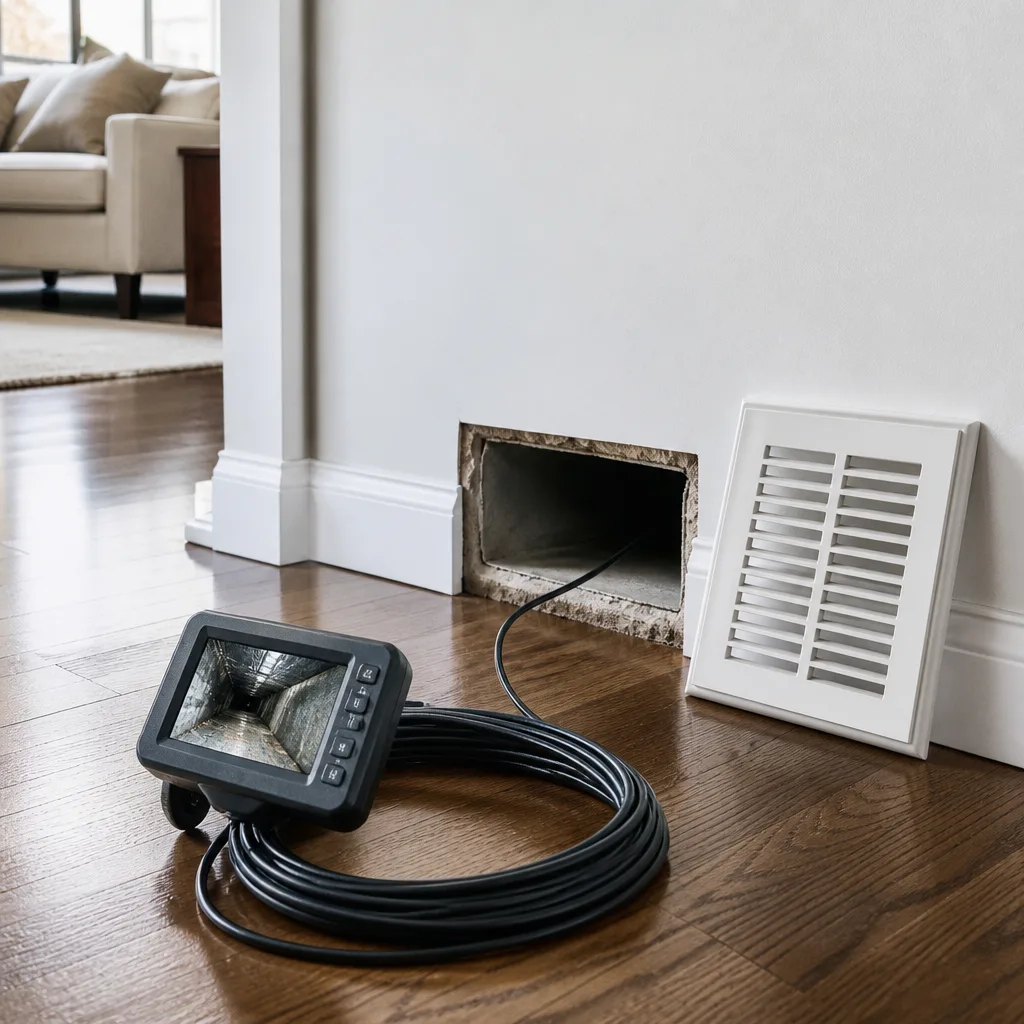
- Visual inspection of accessible ductwork: We remove register covers and use a borescope (a flexible camera on a cable) to examine the first 10 feet of each duct run. In Katy homes with slab foundations, this often reveals standing water in return boots (the sheet metal fitting connecting the duct to the floor register) from past slab leaks - a condition cleaning worsens if not identified first. We document findings with photos, included in every job record.
- Static pressure reading: We measure the pressure difference across the air handler with a manometer (a digital pressure gauge calibrated in inches of water column). Normal residential systems read 0.5-0.9 inches. Readings above 1.0 indicate restriction - from dirty filters, blocked coils, or duct obstruction. This 90-second test separates airflow problems from cleanliness problems. We’ve had Katy homeowners request cleaning when the real issue was a collapsed flex duct in the attic, visible only because the pressure reading directed us there.
- Filter audit: We record filter size, type, installation date, and fit quality. A 16x25x1 filter crammed into a 14×25 slot bypasses unfiltered air at the edges. A 4-inch media filter (thicker pleated filters that capture smaller particles) installed without the required housing modification creates a pressure drop that strains the blower motor. The filter tells the story of how debris entered the system in the first place.
- Photo documentation of every duct run: Before any work or quote finalization, we photograph the interior of each supply and return duct. These images become the “before” record in your Documented Photo Record. In a typical Katy home with 12-16 duct runs, this produces 24-32 images. Homeowners see exactly what we see - no verbal descriptions substituted for evidence.
- Microbial swab when indicated: If visual inspection shows discoloration, we collect a surface sample for laboratory identification. This determines whether cleaning is appropriate or whether mold remediation protocols apply. Katy’s humidity means we perform this step more frequently than our colleagues in drier climates. Cleaning active mold growth without containment and proper remediation spreads spores through the system - the opposite of the intended result.
Steps 2 and 5 are the ones most commonly skipped. Static pressure requires equipment most coupon operators don’t carry. Microbial swabs require time and lab relationships that cut into volume. The result: homeowners in Katy pay for cleaning when they need sealing, or worse, pay for cleaning that spreads a microbial problem.
What “Source Removal” Actually Means: The NADCA ACR Standard
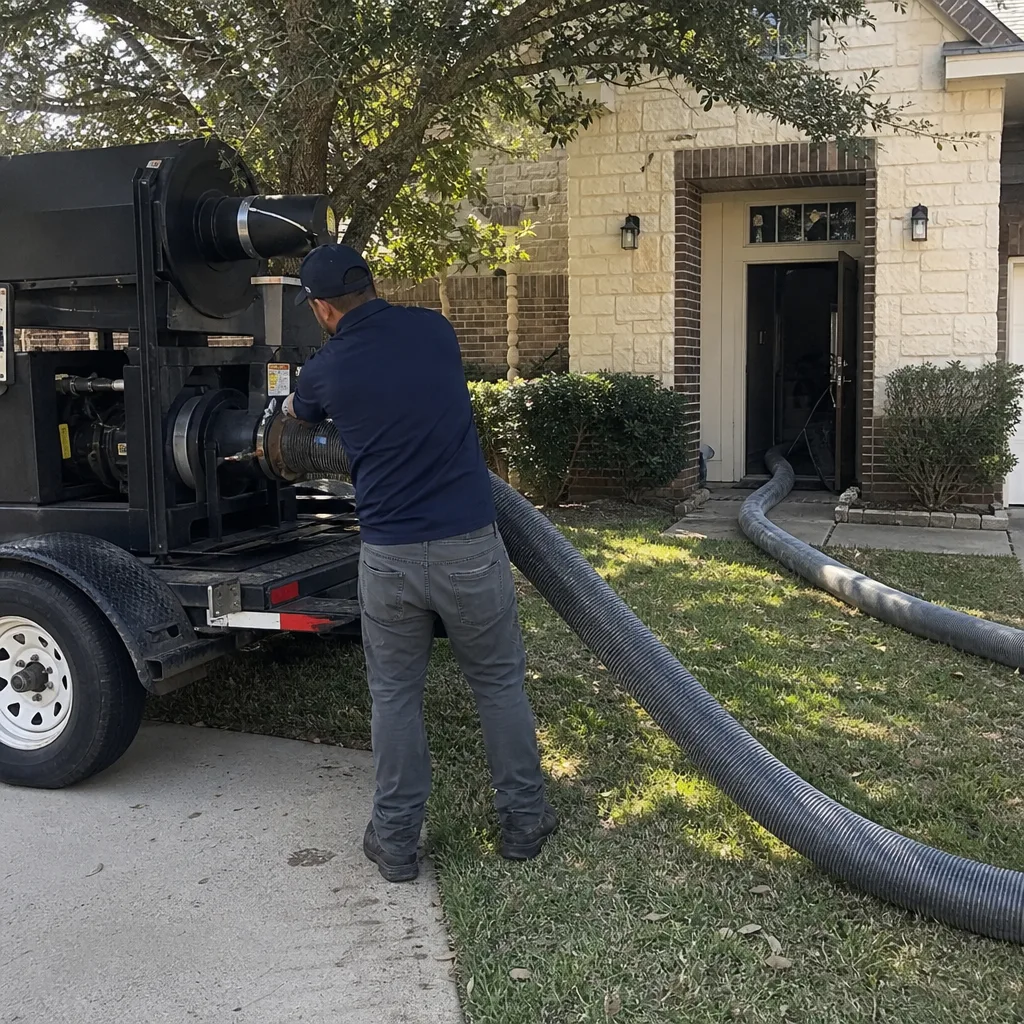
The National Air Duct Cleaners Association publishes the ACR standard - the Assessment, Cleaning, and Restoration of HVAC Systems. “Source removal” is the core requirement, and it has a specific technical meaning that most $79 coupon services in Katy do not meet.
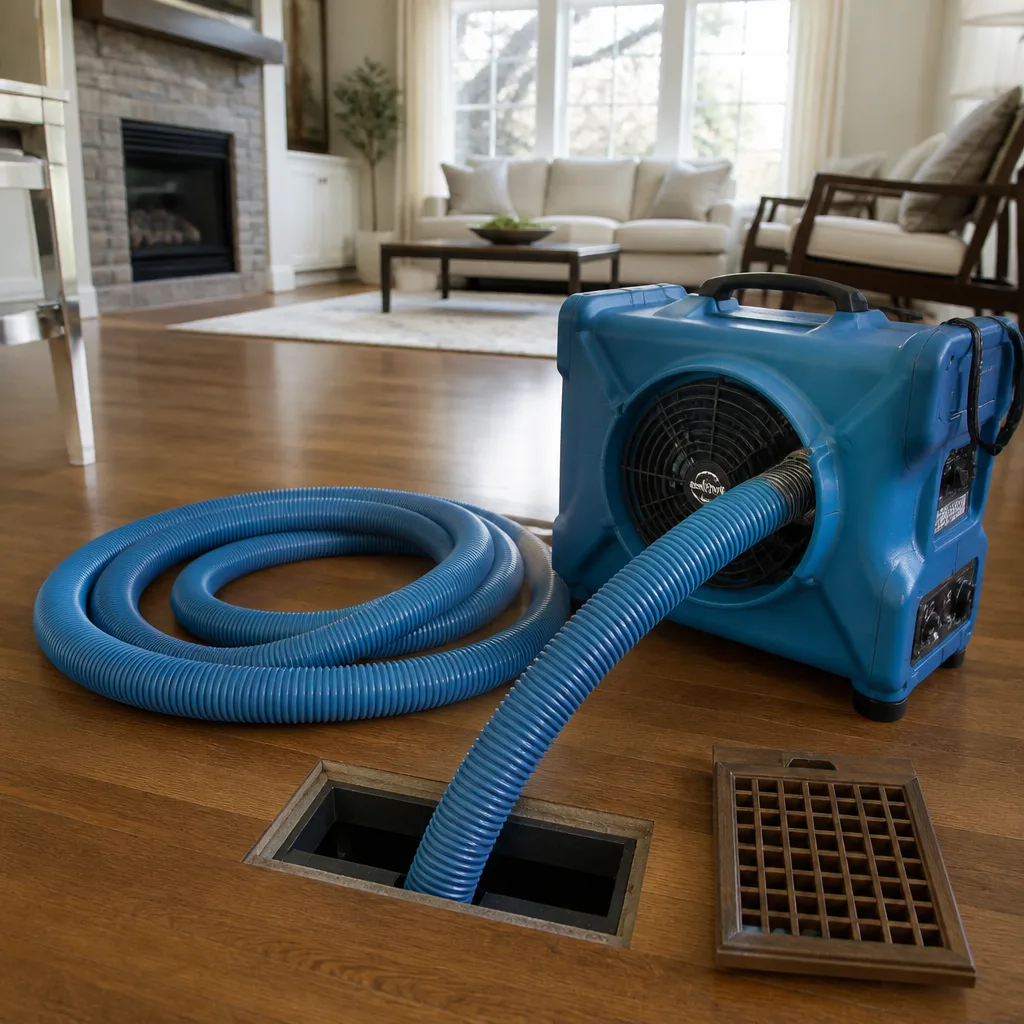
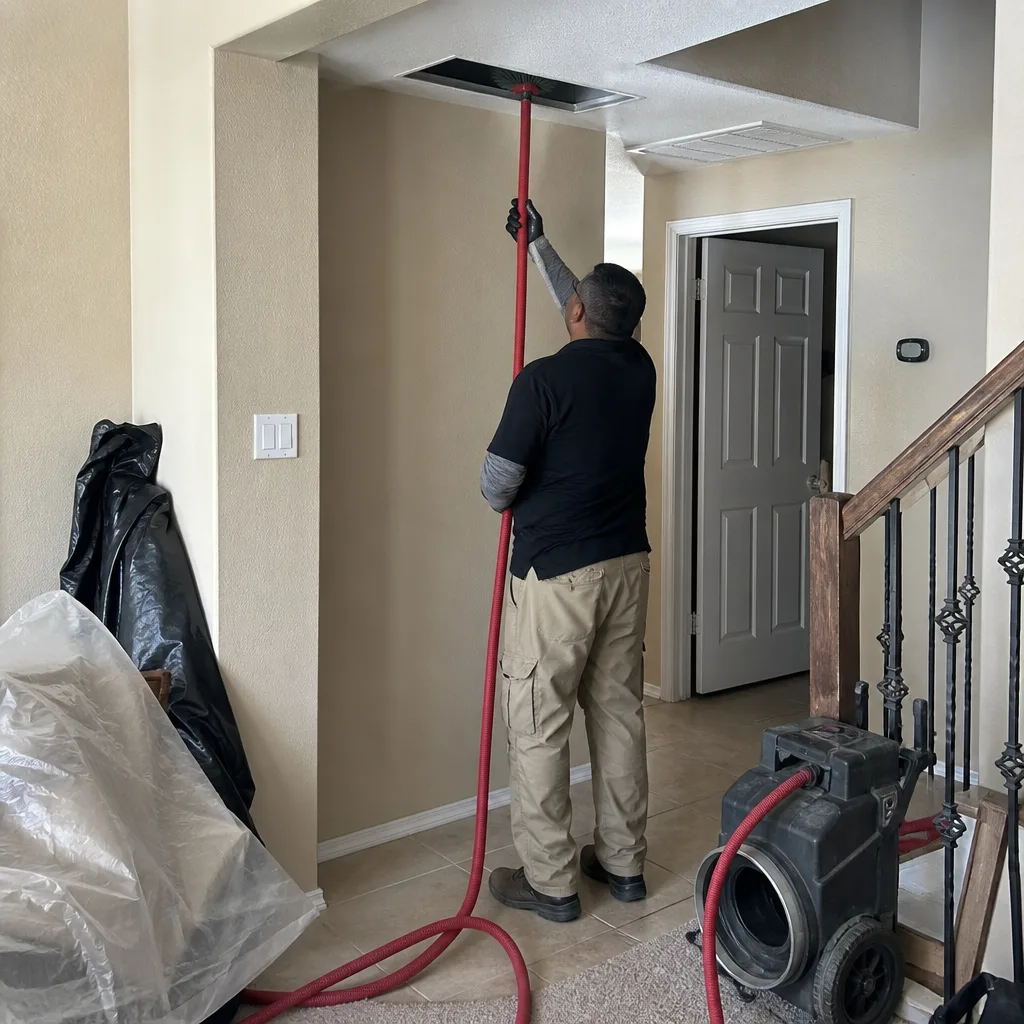
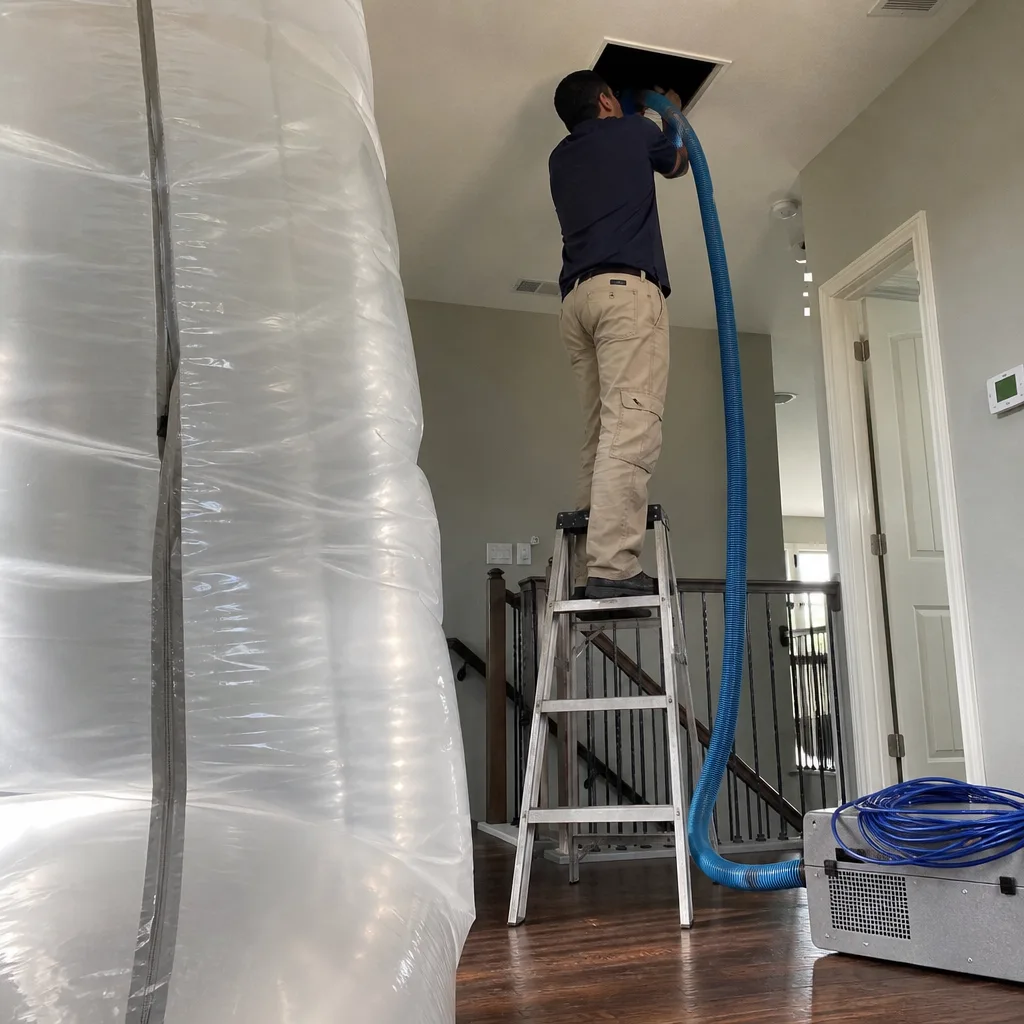
Source removal requires two simultaneous actions: mechanical agitation (physically dislodging debris from duct walls) and containment under negative pressure (suction that captures dislodged particles before they enter your living space). A blower-only pass - running the system fan while spraying a deodorizer - agitates without containment. A shop-vac at one register provides localized suction without systematic agitation. Neither qualifies.
Legitimate source removal in a residential system typically employs one or more of these methods:
- Rotary brushing with HEPA vacuum collection: A rotating brush on a flexible cable travels the duct length, dislodging debris while a vacuum port at the duct access point maintains negative pressure. CleanRun uses Rotobrush and Nikro equipment for this application - brands with published specifications customers can verify independently.
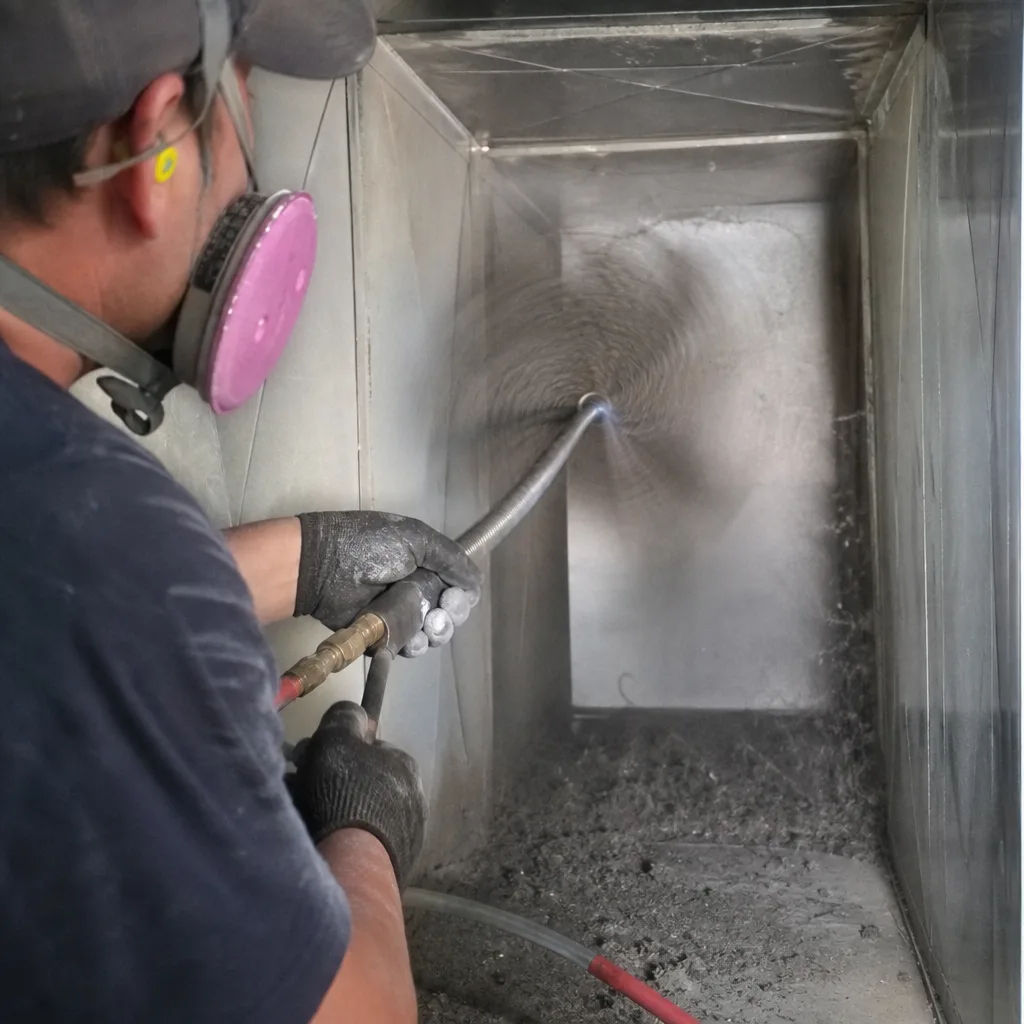
- Compressed-air whipping with containment: Rubber-tipped whips on compressed-air lines strike duct walls in sequence, breaking debris free while the duct section is isolated and under vacuum. Abatement Technologies manufactures systems we deploy for heavily restricted ductwork.
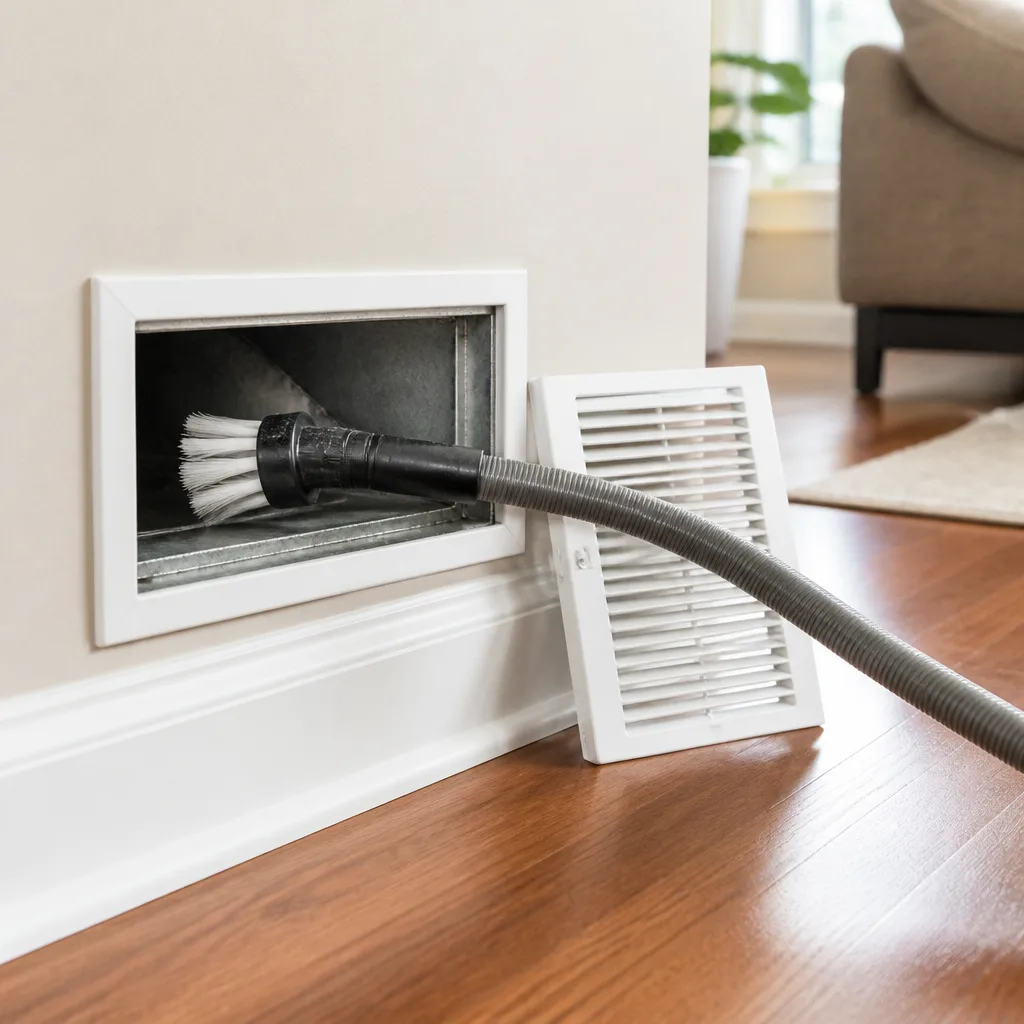
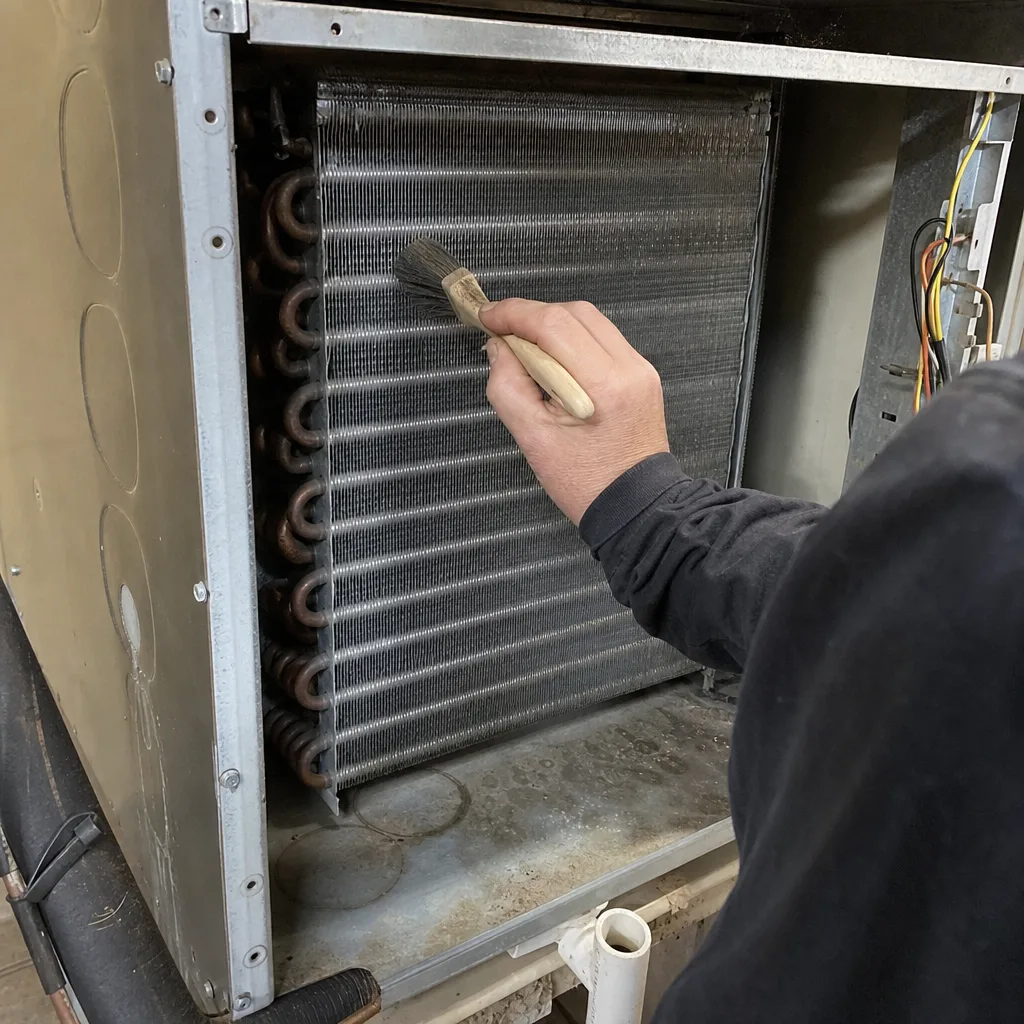
- Contact vacuuming for registers and boots: The visible portions of the system receive direct vacuuming with HEPA-filtered equipment, not household vacuum cleaners.
The ACR standard also specifies post-cleaning verification. We achieve this through our Documented Photo Record - the “after” images of every duct run, delivered as part of the standard job record. Without photographic evidence, “clean” is an unverified claim.
One specification worth noting: NADCA ACR requires that cleaning not damage duct lining. Older flex duct (the insulated flexible tubing common in Katy homes built 1985-2005) has a mylar or fiberglass liner that degrades with aggressive brushing. Our technicians select brush stiffness based on duct type and age - a judgment call that comes from documented experience, not a one-size-fits-all protocol.
What a Legitimate Written Scope of Work Contains
Haven Standard Clause 1 requires a written price delivered before any work starts. The scope of work attached to that price should contain specific line items, not vague language. Here’s what we deliver on every Katy job, and what you should demand from any provider (How to Hire a Air Duct Cleaning Contractor in Katy: A Step-by-Step Guide):
- System inventory: Number of supply ducts, return ducts, and main trunk lines. A typical Katy home has 8-12 supply runs and 2-4 returns, but we’ve surveyed homes in Seven Meadows with 18 supplies due to bonus-room additions.
- Access point locations: Where technicians will cut access panels to reach duct interiors, and how those panels will be sealed afterward. Code-compliant sealing means sheet metal patches with mastic sealant, not tape alone.
- Equipment specification: The specific tools to be used - rotary brush, whip system, contact vacuum - and the vacuum collection equipment. We name our equipment roster: Rotobrush, Nikro, Abatement Technologies, and others, so customers can research specifications independently.
- Contamination description: What the inspection found - dust depth, debris type, presence of moisture, microbial indicators - with reference to the photo documentation.
- Excluded items: What is not included in the quoted price. Typically: coil cleaning (a separate HVAC service), duct repair or sealing, filter replacement, and remediation of active mold growth requiring protocols beyond standard cleaning.
- Deliverables: What the customer receives upon completion. For CleanRun, this means the Documented Photo Record of every duct run, the written scope with technician signatures, and the 365-Day Done Right Promise documentation.
- Total price and payment terms: One flat price for the complete system, not per-vent pricing that balloons as the job progresses. No additional charges for “extra dirty” ducts discovered mid-job - the inspection precedes the quote precisely to prevent this scenario.
We’ve reviewed competitor quotes brought in for our Free Second Opinion service. The most common deficiency: a single line reading “Clean all ducts: $X” with no inventory, no equipment specification, no deliverables defined. This is not a scope of work. It’s an invoice waiting to happen.
When Cleaning Is the Wrong Answer
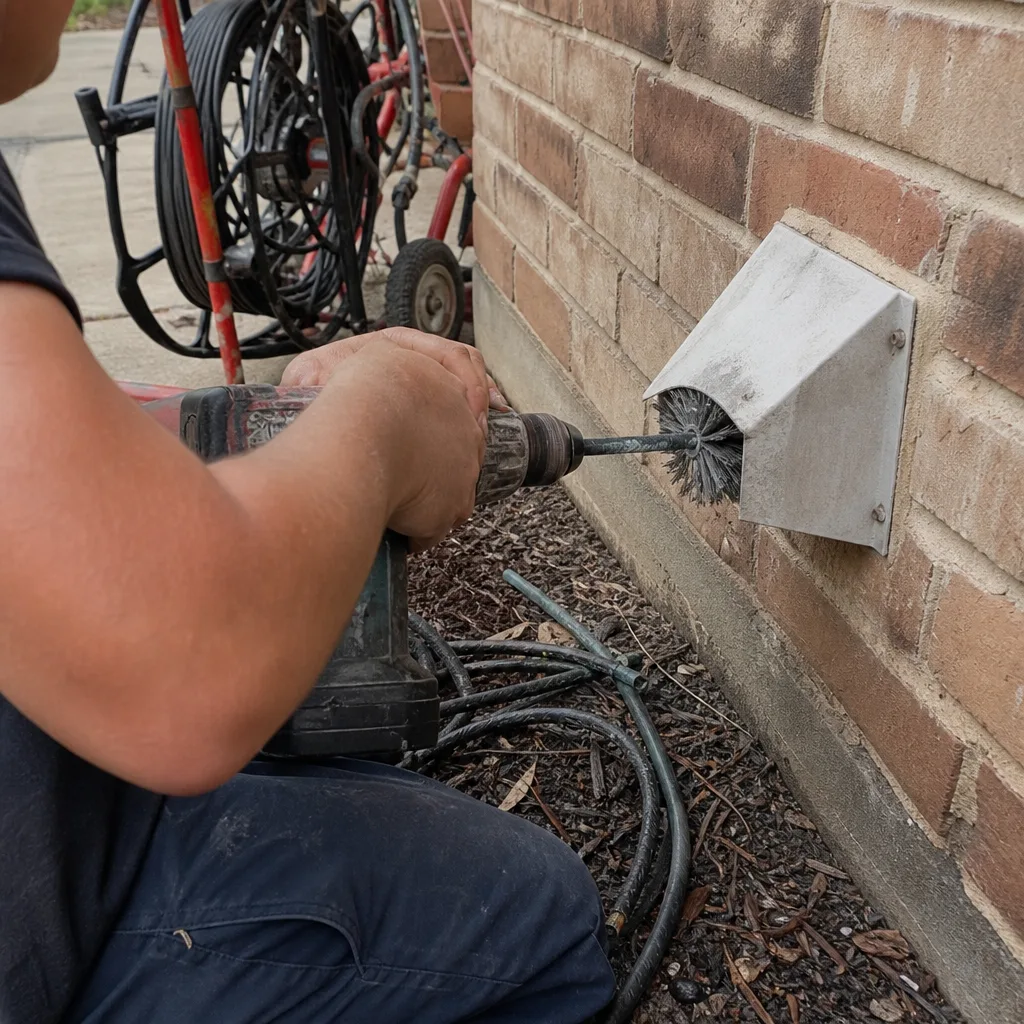
Our documented experience in Katy includes hundreds of jobs where we recommended against cleaning, or recommended cleaning only after another service. Here are the scenarios where cleaning alone wastes money or creates harm:
Duct leakage exceeds 15% of system airflow. Sealing through Aeroseal or manual mastic application reduces energy costs and dust infiltration more effectively than cleaning. Cleaning leaky ducts removes debris temporarily, but the leakage that pulled attic air (and new debris) into the system continues. We measure leakage with a duct blaster (a calibrated fan that pressurizes the duct system and measures air loss) and present the results in writing.
Undersized return ducts. Common in Katy homes built during the 2000s construction boom, where HVAC design was sometimes value-engineered below Manual D specifications (the ACCA standard for residential duct design). The return duct cannot deliver sufficient air volume regardless of cleanliness. Cleaning provides marginal improvement; duct modification provides the solution. We flag this when static pressure readings indicate restriction without debris accumulation.
Active mold growth requiring remediation. If our microbial swab identifies Stachybotrys, Chaetomium, or other indicator species, NADCA’s own standard defers to remediation protocols (typically IICRC S520). Cleaning spreads spores. Remediation contains, removes, and verifies clearance. We refer to qualified remediation contractors and return to clean only after clearance documentation is provided.
Standing water in ductwork. From slab leaks, condensate line backups, or hurricane flooding events (relevant in Katy’s 2016 Tax Day flood and Hurricane Harvey impact zones). Water plus debris equals microbial growth. Cleaning without resolving the moisture source and drying the system thoroughly accelerates the problem.
Recent construction without pre-cleaning protection. New Katy homes or recent renovations generate extraordinary debris loads. Drywall dust, in particular, is fine enough to penetrate standard filtration and coat the evaporator coil. In these cases, we typically recommend HVAC cleaning (coil, blower, cabinet) in addition to or prior to duct cleaning, because the coil will immediately re-contaminate clean ducts if not addressed.
Air Duct Cleaning Costs in Katy: Real Numbers
Haven Standard Clause 1 is the whole point: name the price range on the page, in dollars. Here’s what professional air duct cleaning costs in the Katy market, based on system size and condition:
| System Type | Typical Range | What’s Included |
|---|---|---|
| Small home (1,200-1,800 sq ft, 8-10 ducts) | $400-$550 | Full system inspection, rotary brush cleaning of all ducts, register/ boot cleaning, photo documentation |
| Mid-size home (1,800-2,800 sq ft, 10-14 ducts) | $550-$750 | Above plus multiple return trunk cleaning, static pressure testing, filter audit with recommendations |
| Large home (2,800-4,500 sq ft, 14-20 ducts) | $750-$900 | Above plus zoned system attention, access panel installation and sealing as needed |
| Heavy contamination / construction debris | Add $150-$300 | Extended agitation time, HEPA vacuuming of mechanical spaces, coil inspection |
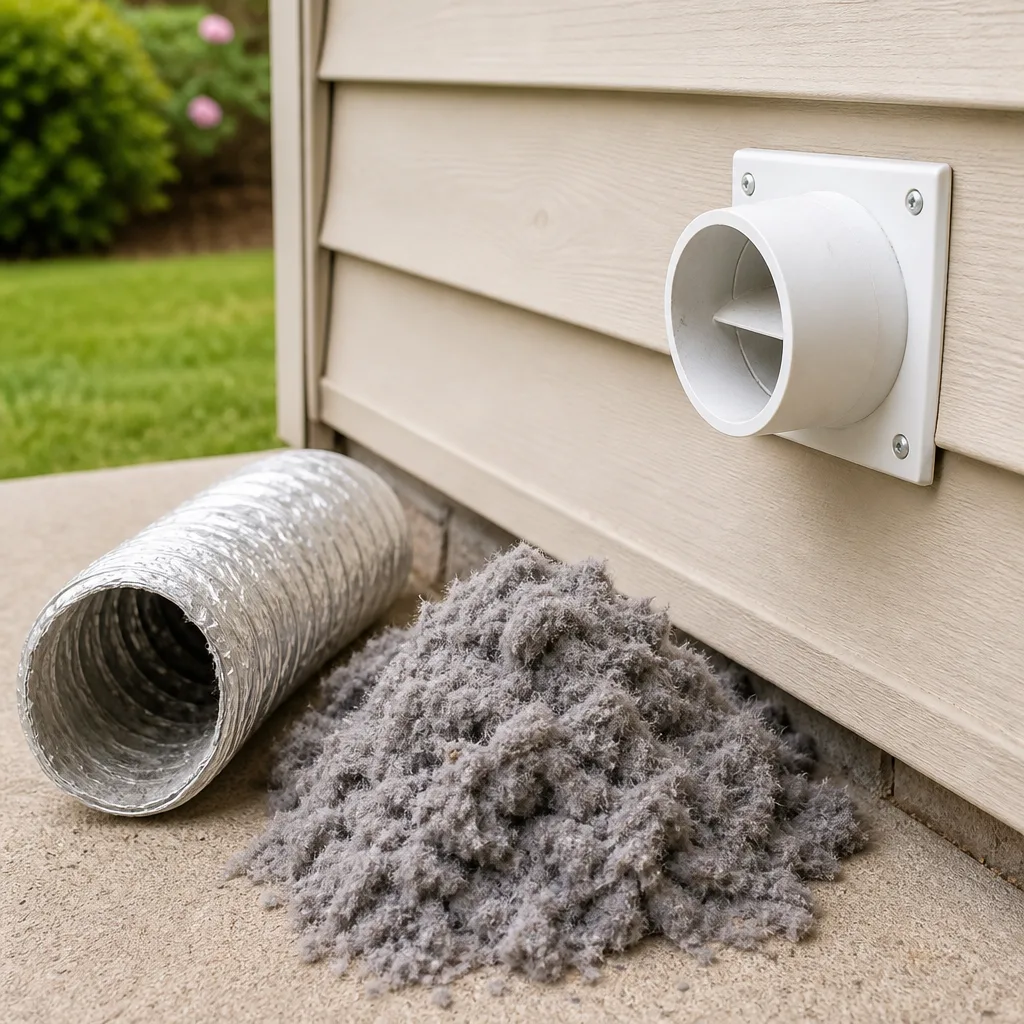
| Dryer vent cleaning (add-on or standalone) | $150-$250 | Full vent run cleaning from dryer to exterior termination, airflow verification |
These ranges reflect what we quote and honor in writing before work begins. The $79-$129 coupon prices circulating in Katy through mailers and social media advertise a service that does not meet NADCA standards. The typical upsell path: arrive, declare the system “extra dirty,” quote $400-$800 for the actual work. We’ve documented this pattern from competitor quotes brought to our Free Second Opinion service.
What the legitimate price covers: 3-5 hours of technician time, professional-grade equipment (Rotobrush, Nikro, or equivalent), HEPA filtration on collection equipment, access panel installation and sealing, and the Documented Photo Record. What it does not cover: coil cleaning, filter replacement, duct sealing, or remediation. These are separate services with their own scopes and prices, quoted separately when indicated.
Choosing a Provider: Evidence Over Promises
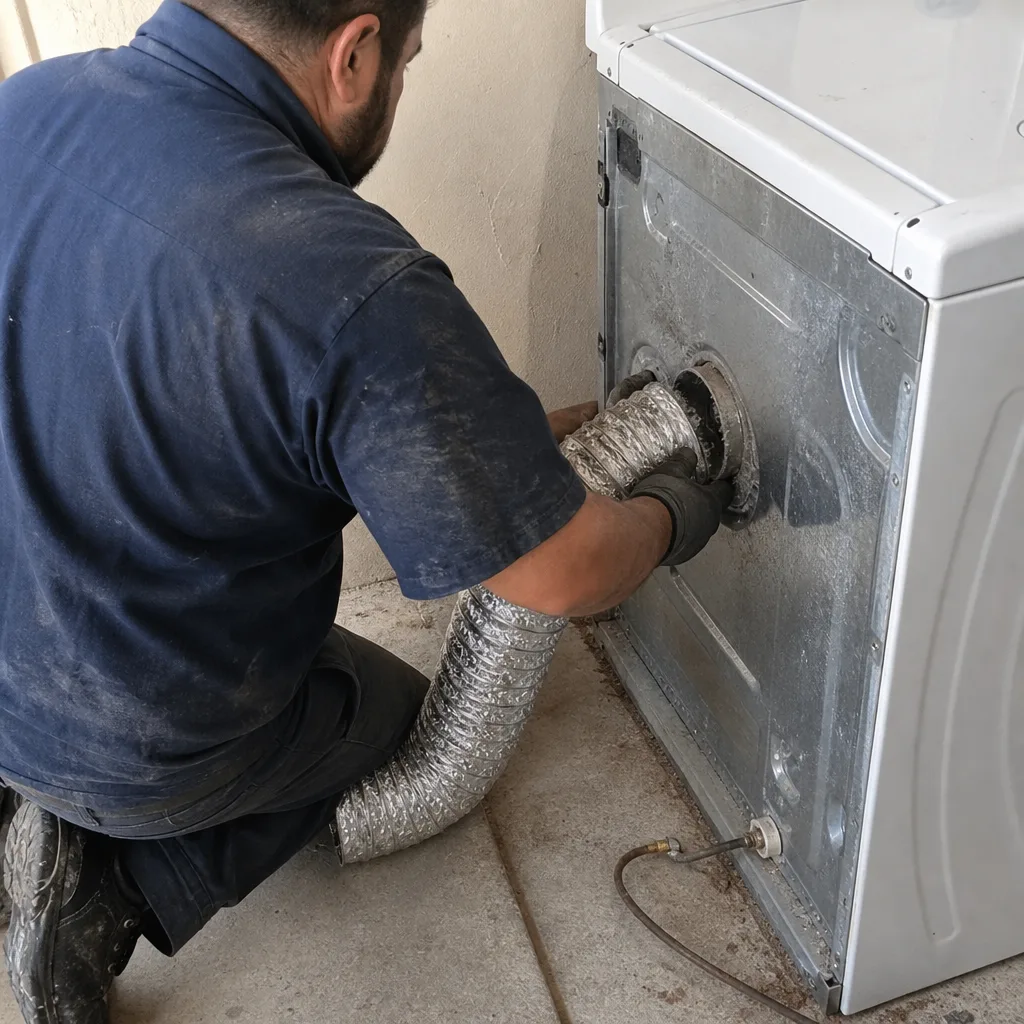
The homeowners we serve in Katy - particularly in neighborhoods like Cinco Ranch, Seven Meadows, and the newer developments along the Grand Parkway - research extensively before contacting any service provider. They make decisions based on what a company can document, not how friendly the phone voice sounds. Here’s the evidence to request:
Written price before work starts. Not an estimate range. Not “we’ll see when we get there.” A specific dollar amount for a specific scope, signed by both parties. Haven Standard Clause 1 exists because verbal quotes become verbal disputes.
Photo documentation commitment. Ask: “Will I receive photographs of the inside of every duct run, before and after?” If the answer involves “our technician will show you” or “we can take some if you want,” the documentation is not systematic. CleanRun’s Documented Photo Record is standard on every visit, not optional, because it was our practice from the first job in 2013.
Equipment transparency. The brands used - Rotobrush, Nikro, Abatement Technologies, Honeywell, Aprilaire, Guardsman - should be named without prompting. Professional-grade equipment has published specifications. If a provider describes tools generically (“industrial vacuum,” “special brushes”), ask for manufacturer and model. This matters because equipment capability determines what can actually be removed from ductwork.
Credential verification. License number published on the website, not buried in a footer. Background-check documentation for technicians (Haven Standard Clause 3: Verified Crews). Insurance and bonding status stated explicitly. CleanRun publishes our license number and verifies crew identity by name before arrival - the technician who calls en route is the technician who arrives, in uniform, with identification.
Guarantee in writing. The 365-Day Done Right Promise means if the work is not right, we make it right - backed in writing on every job, not subject to manager discretion or claim denial. Ask to see the actual guarantee document before booking.
Second opinion policy. A provider confident in their pricing and scope should welcome comparison. CleanRun’s Free Second Opinion on any written estimate puts our number next to a competitor’s, line item by line item, at no cost.
Common Mistakes to Avoid
- Booking from a coupon without verifying what’s included. The $79 special in your Katy mailbox typically covers visual inspection and register vacuuming, not duct interior cleaning. Read the fine print for “main trunk lines extra,” “returns additional,” or “heavy contamination surcharge.”
- Assuming dust equals dirty ducts. In Katy’s active construction zones, attic air infiltration from leaky ducts is often the real source. Cleaning sealed ducts would help; cleaning leaky ducts is temporary at best.
- Ignoring the filter after cleaning. A new 1-inch fiberglass panel filter will allow recontamination within months. Upgrade to a pleated MERV 8-11 filter (a rating system measuring particle capture efficiency) with proper fit, or consider a 4-inch media air cleaner from Aprilaire or Honeywell for sustained improvement.
- Accepting a one-line invoice as documentation. “Duct cleaning: $X” tells you nothing about what was actually done. Insist on the inventory, equipment, and photo record described above.
- Treating mold suspicion casually. Musty odors in Katy’s humidity warrant professional evaluation, not DIY spray treatments. Improper handling spreads spores and can make occupants sick.
- Scheduling cleaning before resolving known water intrusion. Slab leaks, roof leaks, or condensate problems must be fixed and ducts thoroughly dried before cleaning, or the moisture problem continues.
- Choosing price over documentation. The cheapest quote that provides no evidence of work performed is more expensive than the documented job that solves the actual problem.
When to Call a Professional
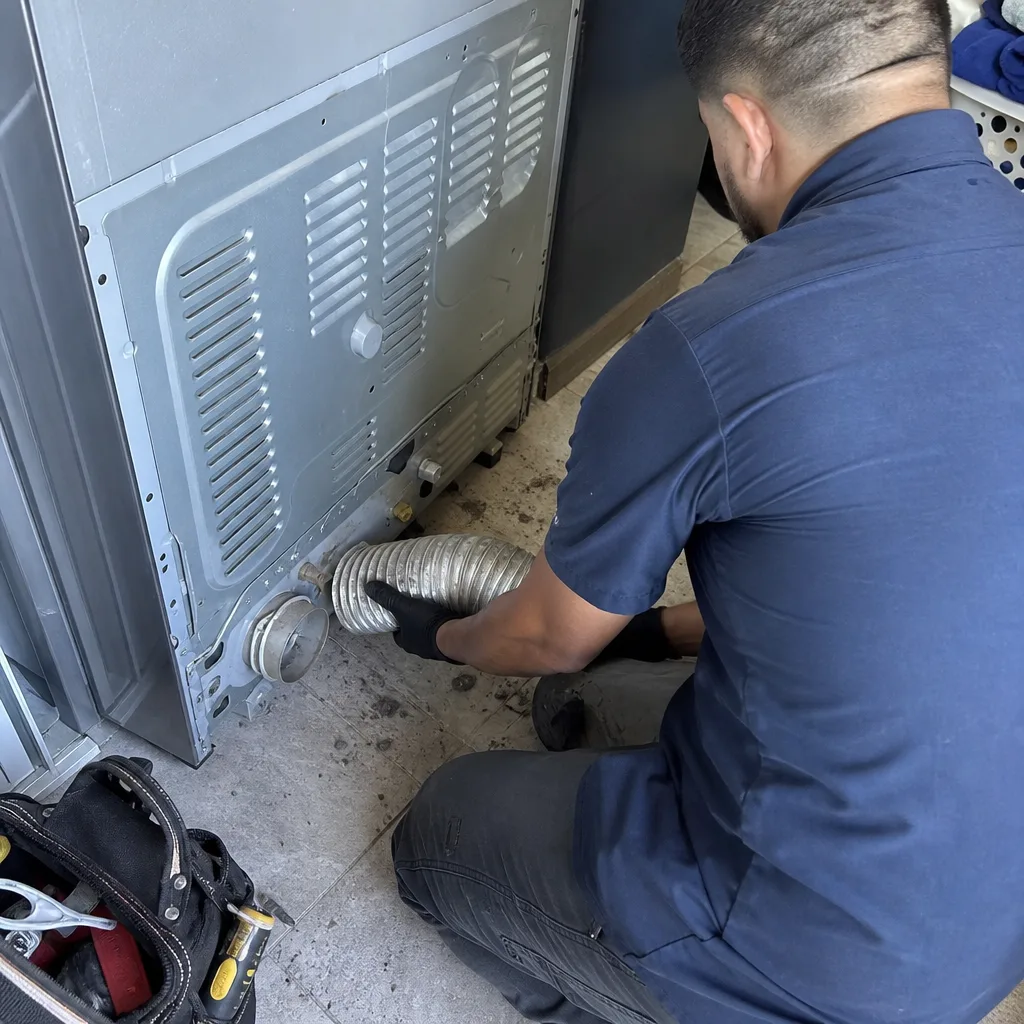
Call for evaluation when you notice visible dust emission from registers, persistent odors that don’t source to a specific room, uneven heating or cooling across rooms, or a sudden increase in energy bills without thermostat changes. After any water intrusion event - slab leak, roof leak, or flooding - duct inspection should follow within days, not months, to prevent microbial establishment. If you’ve received a coupon quote that seems incomplete, bring it for a Free Second Opinion and we’ll put our written scope and price beside it. CleanRun Air Duct Cleaning Katy home offers free estimates in Katy - call (346) 666-7165.
Frequently Asked Questions
Professional air duct cleaning in Katy typically ranges from $400 for smaller homes with 8-10 ducts to $900 for large homes with 20+ ducts or heavy contamination. The $79-$129 coupon prices advertised widely do not include complete system cleaning and typically result in upsells to $400-$800 once the technician arrives. Call (346) 666-7165 for a written quote with no upsell risk - estimates are free.
Low quotes usually exclude essential components: return duct cleaning, trunk line cleaning, access panel installation, or HEPA vacuum collection. Some operators use shop-vacs or blower-only passes that don’t meet NADCA source removal standards. The cheaper quote often costs more when the upsell begins, or when the incomplete job requires re-cleaning. Always request a written scope with line-item inventory and equipment specification before comparing prices.
Demand photographic documentation of every duct run, before and after, delivered as part of the job record. Verbal assurances or a single “representative” photo are not verification. CleanRun’s Documented Photo Record has been standard practice since 2013 - every customer receives images of every duct run, with timestamps, as a standard deliverable.
In Katy’s climate, a well-filtered residential system typically needs cleaning every 5-7 years. Homes with pets, recent construction, or 1-inch panel filters may need attention every 3-4 years. More frequent cleaning is rarely beneficial and may indicate an unresolved underlying problem - leaky ducts, poor filtration, or moisture intrusion - that cleaning alone won’t fix.
Not automatically. Sanitizing (applying an EPA-registered antimicrobial to duct surfaces) is indicated when microbial growth is documented through visual inspection or laboratory swab, not as a routine add-on. In Katy’s humidity, we evaluate for microbial conditions during our five-step diagnostic and recommend sanitizing only when evidence supports it. Routine sanitizing without documented need is unnecessary chemical exposure.
Air duct cleaning addresses the distribution network - the ducts, registers, and boots that move air through your home. HVAC Cleaning in Katy addresses the air handler itself: evaporator coil, blower assembly, drain pan, and cabinet interior. The two services complement each other but are distinct. If your evaporator coil is dirty, cleaning ducts alone will result in recontamination. We evaluate both and quote separately so you choose based on actual condition, not package pressure.
The Bottom Line
Air duct cleaning in Katy is a legitimate service with specific applications - and a market saturated with misapplied sales tactics. The right approach starts with diagnosis, not a predetermined cleaning. Katy’s humidity and clay soil create distinct duct conditions that require inspection before quoting. A legitimate provider documents findings with photos, names equipment and prices in writing, and guarantees the result. Anything less leaves you paying for vacuum noise while the real problem persists. Request evidence, compare scopes, and choose the provider whose documentation matches their promises. Explore more guides & resources on our blog.
Written by Tomas Reyes, Owner at CleanRun Air Duct Cleaning Katy, serving Katy since 2013.